


IP66 Solar Energy Storage Cabinet: The Robust Heart of Modern Power Systems
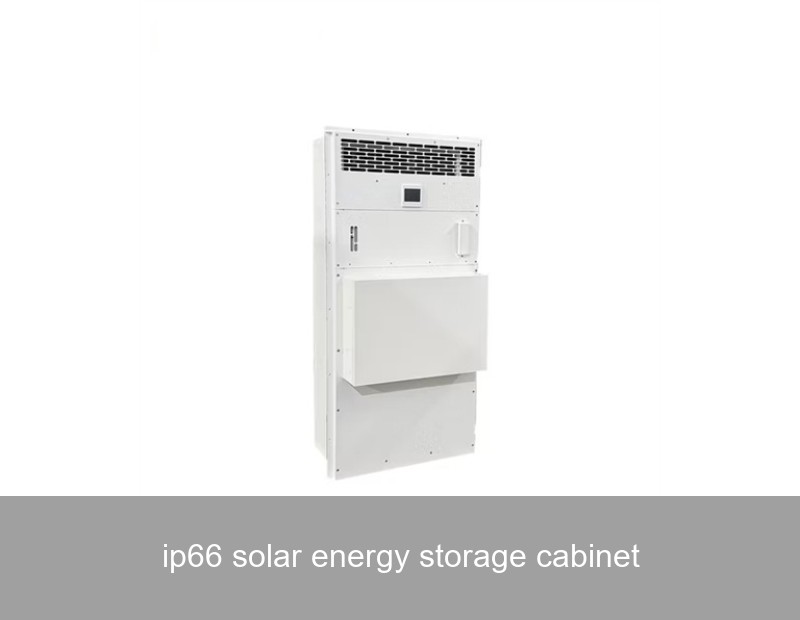
Have you ever wondered what protects the valuable battery storage in a solar installation from a torrential downpour, blowing dust, or even accidental spray from a garden hose? The answer lies in a critical but often overlooked component: the IP66 solar energy storage cabinet. This isn't just a metal box; it's a meticulously engineered fortress for your energy assets. As grid stability concerns grow and renewable adoption surges, ensuring the physical resilience of your energy storage system (ESS) is paramount. This article delves into why the IP66 rating is a non-negotiable standard for outdoor solar storage, exploring its technical meaning, real-world benefits, and how it forms the foundation of reliable, long-term energy independence.
Table of Contents
- What Exactly Does IP66 Mean for Solar Storage?
- The Rising Demand for Robust Outdoor Storage
- The Highjoule Approach: Engineering Resilience from the Inside Out
- Case Study: A German Winery's Sustainable Transformation
- Key Features of a High-Quality IP66 Solar Storage Cabinet
- Beyond the Box: Integration and Smart Management

Image Source: Unsplash - A representative outdoor energy storage installation requiring robust environmental protection.
What Exactly Does IP66 Mean for Solar Storage?
The IP (Ingress Protection) code, defined by the International Electrotechnical Commission (IEC 60529), is a universal standard that classifies the degree of protection provided by an enclosure. For a solar energy storage cabinet, this rating is your first line of defense. Let's break down "IP66":
- First Digit (6 - Solid Particles): The "6" signifies complete protection against dust ingress. The cabinet is dust-tight, meaning no harmful dust deposits can enter and interfere with sensitive battery management systems or electrical connections.
- Second Digit (6 - Liquids): The "6" indicates protection against powerful water jets. Water projected from a nozzle (12.5mm) against the enclosure from any direction shall have no harmful effects. This covers heavy rain, snow melt, and direct cleaning with a high-pressure hose.
In essence, an IP66-rated cabinet assures that your energy storage system can be safely and reliably installed outdoors, directly adjacent to solar arrays, without fear of weather-related failures. This is crucial for commercial and industrial sites where space indoors is at a premium or for residential applications where a garage or basement location isn't feasible.
The Rising Demand for Robust Outdoor Storage
The global shift towards decentralized energy is driving storage systems out of controlled environments and into the field. The phenomenon is clear: to maximize solar self-consumption and provide backup power, storage needs to be located close to the point of generation and consumption. However, the data reveals a vulnerability. A study by the National Renewable Energy Laboratory (NREL) on PV system reliability noted that environmental stressors are a significant factor in system downtime. Moisture and dust ingress can lead to:
- Corrosion of electrical terminals and busbars.
- Short circuits and ground faults.
- Thermal management issues due to clogged air filters.
- Premature failure of battery cells and control electronics.
The case for robust protection is compelling. Without an IP66 or equivalent rating, system owners face increased operational risks, higher maintenance costs, and a significantly shortened asset lifespan, undermining the financial and sustainability goals of their solar investment.
The Highjoule Approach: Engineering Resilience from the Inside Out
At Highjoule, with nearly two decades of experience since 2005, we understand that true reliability isn't just about the battery chemistry inside; it's about the ecosystem that houses and manages it. Our IP66 solar energy storage cabinets are not off-the-sheet enclosures. They are fully integrated, pre-assembled power solutions designed for global deployment, from the snowy Alps to the humid coasts of Florida.
Our HPC Series Commercial & Industrial Storage Units exemplify this philosophy. Each cabinet is a self-contained power hub featuring:
- Unibody IP66 Welded Enclosure: Constructed from marine-grade aluminum or galvanized steel with reinforced seams to guarantee long-term integrity against the elements.
- Integrated Climate Control: A dedicated, IP-rated thermal management system maintains optimal operating temperature for the lithium-ion battery modules (-20°C to 50°C ambient range), crucial for performance and longevity.
- Built-in Safety & Connectivity: The cabinet comes pre-wired with Highjoule's proprietary battery management system (BMS), fire suppression provisions, and remote monitoring interfaces, ready for seamless connection to inverters and grid services.
This turnkey approach reduces on-site installation complexity by up to 60%, ensuring that the system's protective rating is never compromised by field assembly errors.
Case Study: A German Winery's Sustainable Transformation
Consider the real-world challenge faced by a family-owned winery in the Rhineland-Palatinate region of Germany. Their goal was to achieve 95% energy autonomy, shifting from expensive grid power and diesel backup. The constraints were significant: limited indoor space in historic cellars and a requirement for equipment to withstand damp spring conditions and hot, dusty summers during harvest.
The solution deployed two Highjoule HPC-150 cabinets (each with 150 kWh capacity) installed on a concrete pad beside the vineyard's main solar array.
| Metric | Outcome |
|---|---|
| System Protection | IP66-rated cabinets with corrosion-resistant coating. |
| Installation Time | Fully operational within 3 days due to plug-and-play design. |
| Performance Data (First Year) | Achieved 91% self-consumption rate of solar power, reducing grid import by 88%. |
| Resilience Test | Systems operated flawlessly through a severe hailstorm and subsequent heavy rainfall (Q3 2023). |
| ROI Projection | Payback period estimated at 6.2 years, factoring in energy savings and German subsidy programs. |
"The reliability of the outdoor storage was our biggest concern," noted the winery's operations manager. "The IP66 rating gave us peace of mind. The system just works, rain or shine, allowing us to focus on making wine, not managing energy."

Image Source: Unsplash - Example of agrivoltaics, similar to the winery case study environment.
Key Features of a High-Quality IP66 Solar Storage Cabinet
When evaluating an outdoor storage solution, look beyond the IP rating alone. A holistic design is critical. Here are the essential features, as seen in Highjoule's product philosophy:
- Material & Construction: Robust, UV-resistant materials with proper sealing gaskets at all doors and cable entry points. Cable glands must also maintain the IP rating.
- Thermal Management: An active liquid cooling or forced-air system with IP66-rated external fans/heat exchangers is superior to passive cooling for maintaining battery health in extreme temperatures.
- Safety Integration: The cabinet should have provisions for gas venting, internal fire detection, and suppression systems compatible with battery off-gassing events, as recommended by standards like NFPA 855.
- Serviceability: Doors should open fully with easy access to components for maintenance, without compromising the seal when closed.
- Grid Services Ready: Built-in connectivity for frequency regulation, peak shaving, and other grid-support functions, which are increasingly valuable in both European and U.S. markets.
Beyond the Box: Integration and Smart Management
The future of the IP66 solar energy storage cabinet is intelligent. It's evolving from a protective shell into an intelligent grid node. At Highjoule, our cabinets are the physical layer for our EnergyOS platform—a cloud-based AI that optimizes energy flow based on weather forecasts, electricity tariffs, and consumption patterns.
Imagine your outdoor storage system not just sitting there, but actively deciding when to store energy, when to power your facility, and when to sell excess back to the grid at the most profitable times. This software-defined resilience maximizes the economic return on your hardware investment. For instance, by participating in a Demand Response program in the Texas ERCOT market or the UK's National Grid flexibility services, a business can generate significant additional revenue, accelerating the return on investment for the entire solar-plus-storage installation.
As battery technology advances, perhaps with solid-state cells on the horizon, the fundamental need for a secure, weatherproof, and smartly managed exterior will only become more pronounced. The cabinet is the constant, safeguarding today's and tomorrow's energy innovations.

Image Source: Unsplash - Technician monitoring a large-scale battery storage system.
Given the critical role of environmental protection in the 20-year lifecycle of a solar storage asset, what specific site challenges at your commercial or industrial facility make an IP66-rated, fully integrated storage cabinet the most viable solution for your energy resilience goals?
 Inquiry
 Online Chat