


Jakson Limited New Projects: Pioneering a Sustainable Future with Advanced Energy Storage
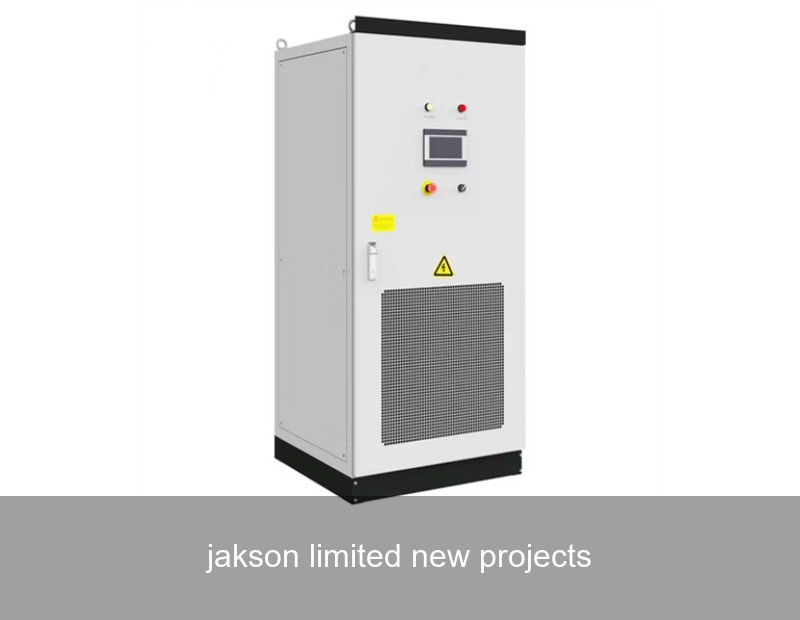
If you're following the energy sector, you've likely noticed a significant trend: major engineering and power companies are rapidly expanding their portfolios beyond traditional generation. A prime example is Jakson Limited's new projects, which increasingly feature a powerful duo—solar PV paired with sophisticated battery energy storage systems (BESS). This isn't just a minor upgrade; it's a fundamental rethinking of how we build resilient, efficient, and future-proof power infrastructure. For project developers, utilities, and commercial entities in Europe and the US, this shift represents both a challenge and a tremendous opportunity. The question is no longer *if* storage is needed, but *how* to integrate it seamlessly and intelligently. Let's explore why this integration is critical and what it takes to execute it successfully.
Jakson Limited's New Projects: A Strategic Shift Towards Integrated Energy
Jakson Limited, a well-established name in the Indian power and infrastructure ecosystem, is making strategic waves with its new projects. Historically strong in EPC (Engineering, Procurement, and Construction) for conventional power, their recent announcements and tenders reveal a clear pivot. They are actively developing and bidding on large-scale solar PV plants, microgrids for industrial and commercial campuses, and, most tellingly, hybrid projects that combine generation with storage. This mirrors a global pattern where forward-thinking companies are evolving from pure builders to long-term solution providers. The inclusion of storage transforms a one-way power generator into a flexible, grid-supportive asset. It's a smart business move, addressing client demands for reliability, cost predictability, and sustainability—needs that are equally pressing in the European and American markets.
The Data Behind the Demand: Why Energy Storage is Non-Negotiable
The drive behind projects like Jakson's isn't based on hype; it's grounded in hard data and grid realities. Consider these phenomena:
- Intermittency of Renewables: The sun doesn't always shine, and the wind doesn't always blow. This creates variability that traditional grids aren't designed to handle.
- Soaring Peak Demand Charges: For commercial and industrial (C&I) users, a significant portion of their electricity bill is based on their highest 15-30 minutes of power use each month. This can be cripplingly expensive.
- Grid Congestion and Instability: As more renewables come online without inherent inertia, grid operators face challenges in maintaining frequency and voltage stability.
The numbers tell a compelling story. According to the International Energy Agency (IEA), global energy storage capacity is set to multiply exponentially this decade, with grid-scale batteries leading the charge. In the US, the Federal Energy Regulatory Commission (FERC) Order 841 is breaking down market barriers for storage, allowing it to compete in wholesale markets for services like frequency regulation. In Europe, the EU's Green Deal and REPowerEU plan are accelerating storage deployment to ensure energy security alongside the clean transition. For any new project, ignoring these trends means building an asset that is less competitive, less resilient, and less valuable from day one.

Image: Modern solar farms increasingly integrate battery storage for stability. Source: Unsplash
A Real-World Case: How Energy Storage Powers a 24/7 Facility
Let's look at a concrete example from a market similar to those Jakson Limited is now targeting. A large food processing plant in Germany, operating 24/7, faced two major issues: unpredictable spikes in energy costs and a requirement for ultra-high power quality to protect sensitive refrigeration and automation equipment. Their existing 2 MW rooftop solar array often produced excess energy during midday that was sold to the grid at low prices, while they bought power back at night at high prices.
The Solution: The facility integrated a 1.5 MWh/1 MW battery energy storage system. Here's what happened:
| Metric | Before BESS | After BESS |
|---|---|---|
| Peak Demand Charges | €85,000 per month (avg.) | Reduced by 40% |
| Solar Self-Consumption | ~35% | Increased to ~80% |
| Grid Dependency During Peak | 100% | Less than 30% |
| ROI Period | N/A | Projected under 5 years |
The BESS acts as a buffer—storing cheap, midday solar energy and discharging it during evening peak hours. It also provides millisecond-fast response to smooth out voltage sags, protecting machinery. This is the tangible value proposition that is making storage a cornerstone of new industrial projects worldwide.
The Role of a Modern Battery Energy Storage System (BESS)
So, what exactly makes a BESS so transformative? It's far more than just a big battery. Think of it as the intelligent heart of a modern energy system. A sophisticated BESS, like those developed by Highjoule, comprises:
- Advanced Battery Modules: Utilizing proven, safe Lithium Iron Phosphate (LFP) chemistry for long life and thermal stability.
- Intelligent Power Conversion System (PCS): The "brain" that manages AC/DC conversion, efficiency, and grid communication.
- Integrated Energy Management System (EMS): This is the master controller. It makes real-time decisions based on weather forecasts, energy price signals, load patterns, and grid requirements to optimize every kilowatt-hour for economic or resilience goals.
- Robust Thermal Management & Safety Systems: Ensuring optimal performance and safety in all climates, a critical factor for projects in diverse geographies from Scandinavia to Southern Europe.
This system doesn't just store energy; it provides energy time-shifting, peak shaving, frequency regulation, black start capability, and backup power. For an EPC company managing new projects, offering this bundled intelligence is a key differentiator.
Highjoule's Intelligent Solutions for New Project Success
This is where a partner with deep domain expertise becomes invaluable. At Highjoule, we've been at the forefront of advanced energy storage since 2005. We understand that successful integration for projects like Jakson Limited's new ventures requires more than just hardware—it requires seamless, intelligent integration and long-term performance assurance.
Our product suite is engineered to meet these complex demands:
- HJ Cube™ Commercial & Industrial (C&I) Series: A modular, all-in-one storage solution designed for ease of integration into commercial buildings, factories, and renewable microgrids. Its scalable design allows project developers to start with a core system and expand as needs grow.
- HJ Matrix™ Utility-Scale Platform: Built for durability and maximum ROI in large-scale solar-plus-storage or standalone storage projects. Featuring our proprietary GridSync™ EMS, it can be configured for energy arbitrage, grid ancillary services, or congestion relief.
- Highjoule Hive™ Network Platform: For developers and asset owners managing multiple sites, our cloud-based platform provides centralized monitoring, performance analytics, and remote control, turning a portfolio of storage assets into a coordinated virtual power plant (VPP).
Our approach is to work as a technology partner from the design phase, ensuring the BESS is not an afterthought but a core, value-optimizing component of the project. We provide full lifecycle support, from initial feasibility studies and financial modeling to commissioning and long-term maintenance.

Image: Advanced control systems are key to maximizing storage value. Source: Unsplash
The Future of Project Development: Integrated, Intelligent, Resilient
The trajectory is clear. The next generation of power projects—whether led by established players like Jakson Limited or innovative developers in Europe and the US—will be defined by their intelligence and flexibility. Regulations like the EU's new electricity market design are actively encouraging this by promoting renewables paired with storage and demand response. The projects that will secure financing, win tenders, and deliver the highest returns will be those that leverage storage to create adaptive, multi-revenue stream assets.
It’s an exciting time to be in the energy business. The technology is proven, the economics are compelling, and the need for a stable, clean grid has never been greater. As you plan your next project, whether it's a corporate microgrid, a utility-scale solar park, or a resilient industrial facility, the critical question to ask is: How will you build in intelligence and flexibility from the ground up to ensure it thrives in the energy landscape of tomorrow, not just today?
 Inquiry
 Online Chat