


How Much Does a Battery from Jiangsu, China Really Cost? A Comprehensive Breakdown
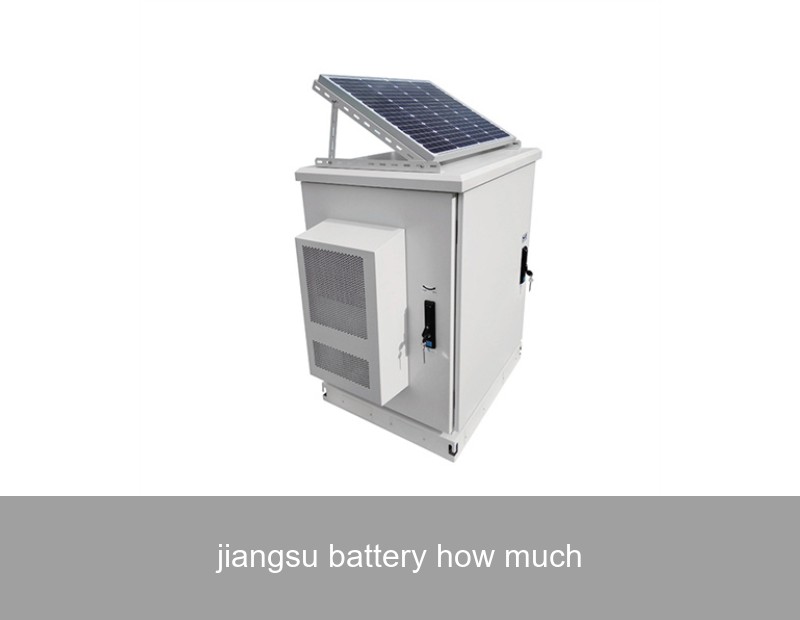
When businesses and homeowners in Europe and the US start researching energy storage, a common question arises: "How much does a battery from Jiangsu cost?" It's a logical starting point, given that China's Jiangsu province is a global powerhouse for lithium-ion battery manufacturing. But the sticker price you see online is just the tip of the iceberg. The true cost of a battery energy storage system (BESS) encompasses performance, safety, intelligence, and long-term value. Let's unpack the real economics behind your energy storage investment.
Table of Contents
- The Price Puzzle: More Than Just a Module
- The Real Cost Breakdown of a Complete Battery System
- Case Study: A German Manufacturer's Calculated Move
- The Highjoule Approach: Delivering Value Beyond Jiangsu
- How to Determine the Right System (and True Cost) for You
The Price Puzzle: More Than Just a Module
Searching for "Jiangsu battery price" yields a wide range, from $150 to $300 per kilowatt-hour (kWh) for a battery cell or module. This variation is due to chemistry (LFP vs. NMC), cycle life, and brand. However, purchasing a bare battery module is like buying a car engine without the chassis, wheels, or safety features. It's a component, not a solution.
The core module from Jiangsu is a critical part, but it must be integrated into a full Battery Energy Storage System (BESS). This system includes the Battery Management System (BMS), power conversion system (PCS), thermal management, safety enclosures, and system-level software. This integration is where performance, longevity, and safety are won or lost—and where the real cost differentiation lies.
The Real Cost Breakdown of a Complete Battery System
To understand "how much," we must look at the total installed cost. For commercial & industrial (C&I) applications, a functional, safe, and permitted system typically ranges from $400 to $800 per kWh installed, depending on scale and complexity.
| Cost Component | Description | % of Typical Total Cost |
|---|---|---|
| Battery Modules & Cells | The core energy storage units, often sourced from regions like Jiangsu. | 30-40% |
| System Integration & Balance of Plant (BOP) | BMS, PCS/inverter, enclosure, cooling, wiring, safety disconnects. | 25-35% |
| Software & Intelligence | Energy Management System (EMS), monitoring, control algorithms for optimization. | 10-15% |
| Installation & Labor | Professional electrical work, mounting, grid interconnection, permitting. | 15-25% |
As you can see, the module cost is significant but not dominant. A low module price can be quickly offset by inefficient integration, poor BMS leading to early degradation, or inadequate software that fails to maximize ROI.
Beyond the Sticker Price: The Value of Intelligence & Safety
Why does a system from a global provider like Highjoule represent a different value proposition? Because we build the intelligence around the cell. Think of it this way: a battery without smart software is like a powerful computer without an operating system. Our Highjoule Apex EMS is that crucial OS, constantly analyzing energy usage patterns, weather forecasts, and grid signals to make autonomous decisions that save you money.
- Cyclical ROI: A smarter system performs more valuable charge/discharge cycles—peak shaving, load shifting, demand charge reduction—paying for itself faster. The National Renewable Energy Laboratory (NREL) notes that software-driven optimization is key to unlocking the full value stack of storage.
- Safety as a Non-Negotiable: Safety isn't an add-on. Our systems feature multi-layered protection: from cell-level fusing and active thermal management in our Highjoule Hercules C&I Series to certified fire-resistant enclosures. The true cost of a battery incident is catastrophic, making this investment paramount.
- Longevity & Warranty: A cheaper system might offer 3,000 cycles. Our engineered systems are designed for 6,000+ cycles, effectively halving your long-term cost per cycle. We back this with robust performance warranties.
Case Study: A German Manufacturer's Calculated Move
Let's ground this in reality. A mid-sized automotive parts manufacturer in Bavaria faced steep "demand charges" based on their highest 15-minute power draw each month. They evaluated a low-cost, basic BESS versus Highjoule's integrated IntelliGrid Microgrid solution.
The Outcome: The Highjoule system, with its predictive EMS, strategically discharged batteries to "shave" peaks during simultaneous high-power operations. In the first year:
- Demand Charges Reduced: By 28%.
- Self-Consumption of Solar: Increased from 35% to over 70%.
- Effective Payback Period: Projected at 5.2 years, compared to 7+ years for the less intelligent option, due to higher operational savings.
The initial price per kWh was higher, but the cost per saved kWh and per avoided demand charge was significantly lower. This is the essence of total cost of ownership (TCO).

Image: A professional industrial battery installation. Source: Unsplash (Representative image)
The Highjoule Approach: Delivering Value Beyond Jiangsu
At Highjoule, we leverage global supply chains, including partnerships with top-tier cell manufacturers in Jiangsu and beyond, but our core expertise is system integration and digital intelligence. We don't just sell batteries; we deliver optimized energy assets.
Our product suites are tailored to different needs:
- For Commercial & Industrial: The Hercules Series offers scalable, containerized or modular solutions focused on demand charge management and backup power.
- For Residential & Small Business: The HomeGuard Series provides sleek, integrated storage with advanced self-consumption software for homeowners with solar.
- For Utilities & Microgrids: Our IntelliGrid Platform manages complex, multi-asset systems for grid stability and renewable integration.
This means when you partner with Highjoule, you're not just buying a commodity; you're acquiring a future-proof energy solution with continuous software updates and performance monitoring from our global operations centers.
How to Determine the Right System (and True Cost) for You
So, how much should your battery system cost? It depends entirely on your goals. Ask yourself and potential suppliers these questions:
- What is my primary use case? (Bill savings, backup power, sustainability, grid services?)
- What is the expected cycle life and degradation profile? What warranty backs it?
- How does the EMS work? Can it adapt to changing utility rates and my usage patterns?
- What are the total installation and permitting costs? Does the provider offer turnkey services?
- What are the projected financial returns over 10 years, not just the upfront price?
Data from the Energy Storage News market analyses consistently shows that markets like Germany and California, with high grid reliability needs and variable tariffs, see the fastest ROI for intelligent storage.

Image: Homeowner monitoring energy storage performance. Source: Unsplash (Representative image)
Your Next Step: From Price to Value
The question "Jiangsu battery how much?" is the beginning of your journey, not the end. The most economical choice is the system that delivers the lowest cost per valuable cycle over its entire lifespan. It's about investing in resilience, intelligence, and long-term control over your energy costs.
What specific energy challenge—be it volatile demand charges, unreliable grid power, or low solar self-consumption—is driving you to consider storage today, and how can we help you calculate its true solution cost?
 Inquiry
 Online Chat