


Solar Pumps in South Africa: A Sustainable Lifeline for Agriculture and Water Security
Imagine a farm in the rural heartland of South Africa, where the sun beats down with relentless energy, yet accessing water for crops and livestock remains a daily, costly struggle. This is the reality for many, but it's a reality being transformed by a powerful, clean technology: solar pumps in South Africa. These systems are more than just equipment; they are becoming a cornerstone of water security, agricultural resilience, and economic empowerment. For farmers, miners, and remote communities across the nation, the shift from erratic grid power or expensive diesel generators to solar-powered water solutions is not just an upgrade—it's a revolution. This article delves into how solar pumping technology, backed by intelligent energy storage, is addressing South Africa's unique challenges and how companies like Highjoule are pivotal in delivering reliable, off-grid power solutions that make these systems work day and night.
Table of Contents
- The Water-Energy Nexus in South Africa: A Pressing Challenge
- How Solar Pumps Work: Beyond the Panels
- The Storage Imperative: Why Solar Pumps Need a "Battery Buddy"
- Case Study: Boosting Crop Yield in Limpopo with a Hybrid Solar Pump System
- Highjoule's Role: Intelligent Storage for Uninterrupted Water Flow
- Future Trends and Considerations
The Water-Energy Nexus in South Africa: A Pressing Challenge
South Africa's landscape presents a paradox: it is a sun-drenched country frequently facing water scarcity and load-shedding. The agricultural sector, which employs millions and is crucial for food security, sits at the precarious intersection of these two resources. Traditional irrigation often relies on the national grid or diesel pumps. Grid power is increasingly unreliable due to load-shedding, while diesel is not only expensive and subject to price volatility but also contributes to carbon emissions and operational noise.
This is where solar photovoltaic (PV) technology offers a compelling alternative. According to the International Renewable Energy Agency (IRENA), South Africa possesses some of the best solar irradiance levels in the world, a vast untapped resource. Solar pumps convert this abundant sunlight directly into work, lifting water from boreholes, rivers, or dams with zero fuel cost and minimal maintenance. The initial investment, while significant, is increasingly supported by government incentives and offers a clear, long-term return on investment through eliminated fuel bills and reduced dependence on Eskom.

Image: A typical solar pump installation in a South African agricultural setting. Source: Wikimedia Commons
How Solar Pumps Work: Beyond the Panels
A solar pumping system is elegantly simple in concept but sophisticated in its optimal execution. The core components are:
- Solar PV Array: A set of panels that convert sunlight into direct current (DC) electricity.
- Solar Pump Controller: Often a variable frequency drive (VFD), this crucial device matches the pump motor's speed to the available solar power, allowing operation even under partial cloud cover.
- Water Pump: Can be a submersible pump for boreholes or a surface pump for open water sources. Modern pumps are highly efficient DC or AC models designed specifically for solar use.
- Water Storage Tank/Reservoir: This is a key element. Instead of trying to pump water only when the sun shines, water is pumped into a storage tank, creating a buffer that ensures 24/7 water availability.
However, there's a growing recognition that energy storage—a battery—can be as transformative for solar pumps as the water tank is for water. This brings us to the next critical piece of the puzzle.
The Storage Imperative: Why Solar Pumps Need a "Battery Buddy"
While a water tank stores the *output* (water), an energy storage system stores the *input* (electricity). Why is this important? Think about early mornings, late afternoons, or cloudy days when solar output is low but water demand for irrigation or livestock might be high. A pure solar-only pump system may not operate at these times, potentially limiting its effectiveness.
Integrating a battery energy storage system (BESS) with a solar pump creates a hybrid, truly resilient solution:
- Extended Operating Hours: Pump water before sunrise or after sunset.
- Enhanced Reliability: Maintain operation during brief cloudy periods without needing to switch to diesel.
- System Optimization: Intelligent controllers can prioritize solar charging of the battery, then use stored energy to run the pump at optimal times, protecting the battery's lifespan.
This is where Highjoule's expertise becomes directly relevant. While Highjoule does not manufacture water pumps, we are a global leader in advanced, intelligent energy storage systems. Our battery storage solutions are the perfect complement to solar pump installations, providing the stable, controllable power needed to maximize water output and system reliability.
Highjoule's Intelligent Storage: The Brain for Your Solar Pump's Brawn
For a commercial farm or an industrial mine in South Africa relying on solar pumps for critical water supply, the quality of the energy storage is paramount. Highjoule's HI-Series Commercial & Industrial (C&I) Energy Storage Systems are engineered for this demanding environment.
Our systems feature industry-leading lithium iron phosphate (LFP) battery cells, known for their safety, long cycle life (over 6000 cycles), and stability in high-temperature climates. More than just a battery bank, Highjoule systems come with integrated, smart energy management software. This "brain" can be programmed to coordinate with the solar pump controller, ensuring energy is allocated efficiently—for example, using excess midday solar power to charge the battery, then dispatching that energy to run the pump during peak evening water demand or during a grid outage.
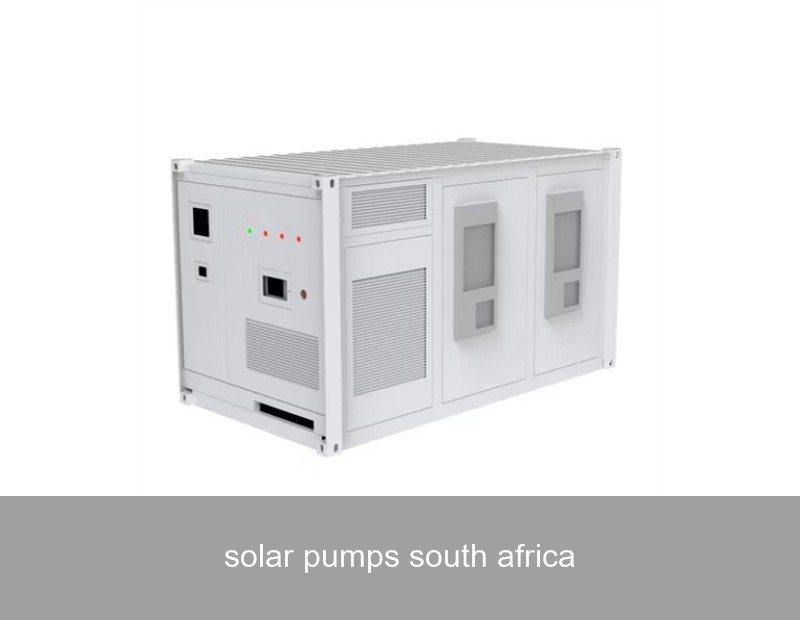
For larger agricultural cooperatives or micro-grid applications involving multiple pumps and other loads, Highjoule's containerized megawatt-scale solutions offer a turnkey, scalable power hub. This ensures that the entire operation's energy and water needs are met sustainably and independently.
Case Study: Boosting Crop Yield and Resilience in Limpopo
Let's look at a real-world application. A 50-hectare citrus farm in the Limpopo province was struggling with irrigation consistency due to daily load-shedding schedules. Their existing diesel backup was costly (approximately ZAR 18,000 per month in fuel) and logistically challenging.
In 2023, the farm implemented a hybrid solution:
- A 40kWp solar PV array
- A new 15kW submersible solar pump
- A Highjoule HI-30 C&I energy storage system with 30kW / 64kWh capacity
| Metric | Before Hybrid System | After Hybrid System (6 Months Data) |
|---|---|---|
| Monthly Diesel Cost | ~ZAR 18,000 | ZAR 0 |
| Irrigation Runtime Reliability | ~60% (limited by grid & diesel availability) | >98% |
| Estimated Crop Yield Impact | Baseline | +15% improvement due to consistent watering |
| CO2 Emissions Reduction | Baseline | ~12 tonnes per annum |
The Highjoule BESS was configured to power the pump controller for four critical hours every evening, aligning with the optimal irrigation window, completely independent of the grid. The farm's manager noted, "It's not just about saving money on diesel. It's about knowing, with certainty, that my trees will get water when they need it. The consistency has improved fruit quality noticeably." This case exemplifies the tangible benefits of pairing solar pumping with robust, intelligent storage.

Image: Modern drip irrigation powered by solar energy. Source: Flickr via Creative Commons
Future Trends and Considerations for Solar Pumps in South Africa
The future of solar pumping is intelligent and integrated. We are moving towards Internet of Things (IoT)-enabled systems where pump performance, water flow, tank levels, and battery state-of-charge are all monitored and controlled remotely via smartphone. This allows for predictive maintenance and precise water management based on soil moisture data, a crucial capability highlighted by research from institutions like the Water Research Commission (WRC) of South Africa.
For businesses and large landowners considering this technology, the key considerations are:
- Professional Site Assessment: Solar resource, water depth, and daily water requirements must be accurately sized.
- Quality of Components: Opt for high-efficiency pumps and reliable, climate-appropriate storage like Highjoule's LFP-based systems.
- Holistic Design: Integrate solar PV, pump, storage, and water storage from the planning stage for optimal results.
As a technology leader, Highjoule is at the forefront of this integration. Our systems are designed to communicate with other components, providing not just power, but also data and control, turning a simple pump into a smart water asset.
Your Next Step Towards Water and Energy Independence
The journey to a resilient, cost-effective water supply is clear. Solar pumps, especially when paired with intelligent energy storage, offer a proven path forward for South Africa's farmers, industries, and communities. The sun provides the fuel; technology provides the reliability. The question is no longer *if* solar pumping is viable, but *how* to design the most robust and intelligent system for your specific needs. What critical water-dependent operation in your business or community could be transformed by the 24/7 reliability of sun-powered water?
 Inquiry
 Online Chat