


Lithium Prismatic Battery: The Cornerstone of Modern Energy Storage Systems
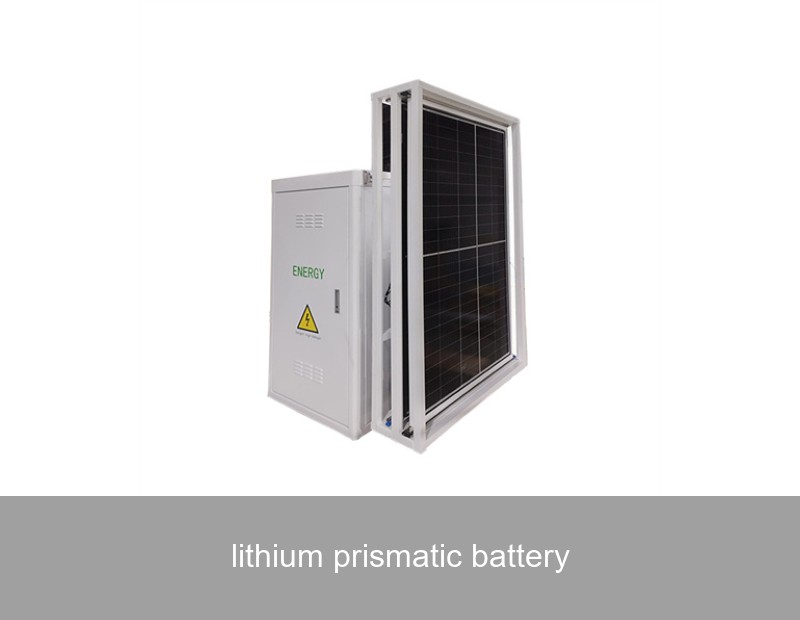
Have you ever wondered what's inside the sleek battery cabinets powering everything from your home's backup to entire industrial facilities? The answer increasingly is the lithium prismatic battery. This workhorse cell format is quietly revolutionizing how we store and use energy, offering a compelling blend of safety, space efficiency, and longevity. As grid instability rises and the push for renewables intensifies, understanding this technology is key for anyone considering a resilient and sustainable energy future. Let's unpack the phenomenon, the data, and the real-world impact of prismatic lithium batteries.
Table of Contents
What is a Lithium Prismatic Battery?
Unlike the cylindrical cells (think AA batteries) or pouch cells found in smartphones, a lithium prismatic battery is, as the name suggests, a rectangular or square-shaped cell. It's built by layering electrode sheets and separators into a sturdy, often aluminum or steel, hard casing. This fundamental design choice isn't just about shape; it leads to a dense, modular building block that is exceptionally efficient in packing energy into a given volume.
Think of it this way: if cylindrical cells are like soda cans, prismatic cells are like bricks. When building a wall (or a battery pack), bricks allow for much tighter, stronger, and space-efficient construction with less wasted air in between. This inherent advantage makes them the preferred choice for applications where space, structural integrity, and safety are paramount—exactly the requirements for commercial, industrial, and residential energy storage systems (ESS).

Image: A comparison of common lithium-ion cell formats. The rigid, rectangular prismatic cell (right) is ideal for structured battery systems. (Image source: U.S. Department of Energy)
Why Prismatic Cells Are Gaining Dominance in Energy Storage
The shift towards prismatic cells in stationary storage isn't accidental. It's driven by a clear set of advantages that address the core pain points of system integrators and end-users alike.
- Superior Space Utilization & Energy Density: Their rectangular shape allows for near-perfect stacking within a battery module, maximizing the use of available space. This translates to higher energy density at the pack level, meaning more kilowatt-hours (kWh) of storage in a smaller footprint—a critical factor for space-constrained commercial sites or residential garages.
- Enhanced Safety and Mechanical Stability: The rigid metal casing provides excellent mechanical protection for the internal components, reducing the risk of deformation or damage that could lead to internal short circuits. This robust housing also makes thermal management more predictable and contained.
- Longer Cycle Life: Prismatic cells are typically designed with longevity in mind, often using lithium iron phosphate (LFP) chemistry. LFP is renowned for its safety and ability to withstand thousands of charge-discharge cycles with minimal degradation. According to a 2021 NREL report, well-managed LFP batteries can achieve cycle lives exceeding 6,000 cycles while retaining 80% of their original capacity.
- Simplified System Integration: Their flat surfaces and standardized sizes make them easier to integrate into modular battery packs with efficient cooling systems (often liquid or cold plate cooling). This simplifies the design and manufacturing of large-scale ESS.
From Theory to Reality: Performance Data and a European Case Study
Let's move beyond specs and look at real-world performance. The true test of any storage technology is in the field, under variable loads, temperatures, and economic conditions.
Consider a recent project in Southern Germany, where a medium-sized manufacturing plant faced steep peak demand charges and sought to increase its consumption of on-site solar power. The challenge was to install a high-capacity, reliable storage system in a limited utility room space. A solution based on a lithium prismatic battery system was deployed.
| Metric | Project Data |
|---|---|
| System Capacity | 500 kWh |
| Cell Chemistry | Lithium Iron Phosphate (LFP) |
| Cycle Life (Warranted) | >7,000 cycles @ 80% DoD |
| System Footprint | Reduced by ~30% vs. alternative designs |
| Peak Shaving Result | Demand charges reduced by 22% annually |
| Solar Self-Consumption | Increased from 35% to over 80% |
The data speaks for itself. The space efficiency of the prismatic-based pack was a decisive enabler. More importantly, the system's high cycle life and stability ensure a rapid return on investment and long-term operational reliability. The plant manager noted, "We needed a 'set-and-forget' system that would work daily for decades. The compact, robust design gave us confidence from day one."
Beyond the Cell: Why the Battery System Matters Most
Here's a crucial insight that industry professionals know well: an advanced cell is only as good as the system that manages it. A lithium prismatic battery requires sophisticated orchestration to achieve its promised lifespan and safety. This is where the expertise of a seasoned system provider becomes invaluable.
At Highjoule, with nearly two decades of experience since 2005, we understand this intimately. Our intelligent energy storage solutions are built around high-quality LFP prismatic cells, but the real magic lies in our integrated technology:
- Advanced Battery Management System (BMS): Our proprietary BMS doesn't just monitor voltage and temperature. It performs cell-level balancing, state-of-health analytics, and predictive diagnostics to prevent stress and maximize every cycle.
- Liquid Cooling Thermal Management: We employ direct liquid cooling plates in contact with the large surfaces of the prismatic cells. This system maintains an optimal, narrow temperature range, which is the single biggest factor in extending battery life—far more effective than simple air cooling.
- Grid-Forming Inverter Technology: For our microgrid and critical backup solutions, our systems can "form" a stable grid independently. This means if the main grid goes down, your lights stay on seamlessly, and your operations continue without interruption.

Image: Inside a Highjoule energy storage cabinet: Prismatic cells, liquid cooling channels, and intelligent management systems work in unison. (Image source: Highjoule)
For commercial and industrial clients across Europe and North America, this system-level approach translates to a tangible business case: lower total cost of ownership, higher uptime, and a future-proof asset that adapts to evolving energy tariffs and sustainability goals.
The Future of Prismatic Technology and Your Energy Independence
The trajectory for lithium prismatic battery technology is one of continuous refinement. We are seeing trends towards even higher cell capacities, further improvements in energy density, and manufacturing processes that enhance consistency and drive down costs. Coupled with the global shift towards LFP chemistry for its safety and cobalt-free supply chain, the prismatic format is poised to remain the backbone of stationary storage for years to come.
But technology is just a tool. The ultimate goal is energy resilience and sustainability. Whether you're a homeowner looking to buffer against blackouts, a business aiming to cap energy costs, or a community developing a microgrid, the choice of your energy storage partner is critical. It's not just about buying a battery; it's about investing in a reliable, intelligent, and service-backed power solution.
At Highjoule, we provide exactly that—tailored solutions for residential, commercial, industrial, and microgrid applications. Our systems are designed to be intelligent, efficient, and sustainable, turning the inherent potential of prismatic lithium batteries into real-world power security and savings.
What's the First Step Towards Your Energy Resilience?
We've explored the technical strengths and real-world proof of prismatic lithium batteries. Now, consider your own situation: What single energy challenge—be it cost, reliability, or sustainability—would solving it have the biggest impact on your home or business operations today?
 Inquiry
 Online Chat