


Photovoltaic Materials: The Engine Behind Every Solar Panel's Performance
When you look at a solar installation, you see sleek, dark panels. But the true story of efficiency, durability, and return on investment is written in the photovoltaic materials hidden within. These materials are the fundamental building blocks that convert sunlight into electricity. From the dominant silicon wafers to revolutionary lab discoveries, the choice of materials directly impacts how much power your system generates, how long it lasts, and how it integrates into a complete energy solution. For businesses and homeowners in Europe and the US, understanding this material science is key to making an informed investment in solar technology. It's not just about buying panels; it's about choosing the right engine for your energy needs.
The Reign of Silicon: Mono vs. Poly vs. Thin-Film
For decades, silicon has been the undisputed king of photovoltaic materials, and for good reason. It's abundant, stable, and its technology is highly refined. But not all silicon is created equal. The crystalline structure dictates performance and cost.
- Monocrystalline Silicon (Mono-Si): Made from a single, pure crystal structure. These panels are easily identifiable by their uniform dark color and rounded cell edges. They offer the highest efficiency rates (typically 20% and above), meaning they produce more power per square meter. They also perform better in low-light conditions and have a longer lifespan, making them a premium choice for space-constrained rooftops.
- Polycrystalline Silicon (Poly-Si): Composed of multiple silicon crystals melted together. They have a blue, speckled appearance and slightly lower efficiency (around 15-17%). The manufacturing process is less wasteful, historically making them more cost-effective. They are a solid, reliable choice for larger areas where maximizing absolute efficiency per panel is less critical.
- Thin-Film (Amorphous Silicon, CdTe, CIGS): This category departs from rigid wafers. These photovoltaic materials are deposited in thin layers on surfaces like glass, metal, or plastic. They are lightweight, flexible, and often have a lower temperature coefficient (lose less efficiency in heat). While generally less efficient than crystalline silicon, they excel in large-scale utility projects, building-integrated photovoltaics (BIPV), and applications where flexibility is key. According to the National Renewable Energy Laboratory (NREL), thin-film technologies like Cadmium Telluride (CdTe) hold significant market share in the utility sector.

Image: A simplified comparison of major photovoltaic material cell structures. Credit: Wikimedia Commons.
Beyond Silicon: The Emerging Contenders
Research labs worldwide are buzzing with next-generation photovoltaic materials promising to shatter efficiency ceilings and open new applications.
Perovskite Solar Cells
Named after a specific crystal structure, perovskite materials are a revolutionary breakthrough. They can be formulated from abundant ingredients, processed from liquid solutions at low temperatures (reducing energy cost), and tuned to absorb different parts of the solar spectrum. Their efficiency has skyrocketed from 3% to over 25% in just a decade. The current challenge lies in long-term stability against moisture and heat, but encapsulation techniques are rapidly improving. Their potential for lightweight, flexible, and ultra-cheap solar coatings is immense.
Tandem (Multi-Junction) Cells
Why settle for one material? Tandem cells stack different photovoltaic materials on top of each other, each layer engineered to capture a specific slice of sunlight's energy. A common high-efficiency configuration pairs a perovskite top cell with a silicon bottom cell. The perovskite captures high-energy photons (blue light), while the silicon captures lower-energy photons (red and infrared). This allows the cell to surpass the theoretical efficiency limit of single-material cells. NREL charts show tandem cells already achieving laboratory efficiencies over 33%, a number once thought impossible for terrestrial solar.
The Unsung Heroes: Balance of System (BOS) Materials
The conversation about photovoltaic materials must extend beyond the cell itself. The Balance of System components ensure generated power is safely converted, managed, and stored.
| Component | Material & Technology Focus | Impact on System |
|---|---|---|
| Encapsulation (EVA, POE) | Polymer sheets that seal cells from moisture and UV. | Prevents degradation, ensures 25-30+ year panel life. |
| Inverters | Silicon carbide (SiC) or gallium nitride (GaN) semiconductors. | Enable higher efficiency, smaller size, and cooler operation than traditional silicon inverters. |
| Battery Storage | Lithium-ion (NMC, LFP), flow batteries, or emerging solid-state. | Defines energy density, cycle life, safety, and overall storage economics. |
From Lab to Grid: A Spanish Case Study in Material Impact
Let's ground this in reality. A 2022 deployment for a medium-sized agricultural cooperative in Andalusia, Spain, highlights how material choices drive outcomes. The goal was to reduce daytime irrigation costs and provide night-time security lighting.
- Phenomenon: High ambient temperatures (often above 35°C/95°F) were causing standard panels to lose efficiency precisely when energy was needed most.
- Data & Material Choice: The solution used monocrystalline PERC (Passivated Emitter and Rear Cell) panels. PERC technology adds a rear dielectric layer, a clever material innovation that boosts efficiency by reflecting light back into the cell and improving electron capture. Crucially, these panels had a better temperature coefficient (-0.34%/°C vs. an average -0.40%/°C).
- Case & Result: A 250 kW system was installed. Over the first year, data logging showed the system outperformed initial yield projections by 4.2% during peak summer months, directly attributable to the superior temperature performance of the chosen photovoltaic materials. This translated to an additional €3,200 in annual energy savings against the baseline model.
The Future is Integrated: How Materials Shape Smart Energy Storage
The true potential of advanced photovoltaic materials is unlocked when paired with intelligent storage. Higher-efficiency panels produce more energy in a smaller footprint, but that energy must be managed wisely to maximize self-consumption and grid independence.
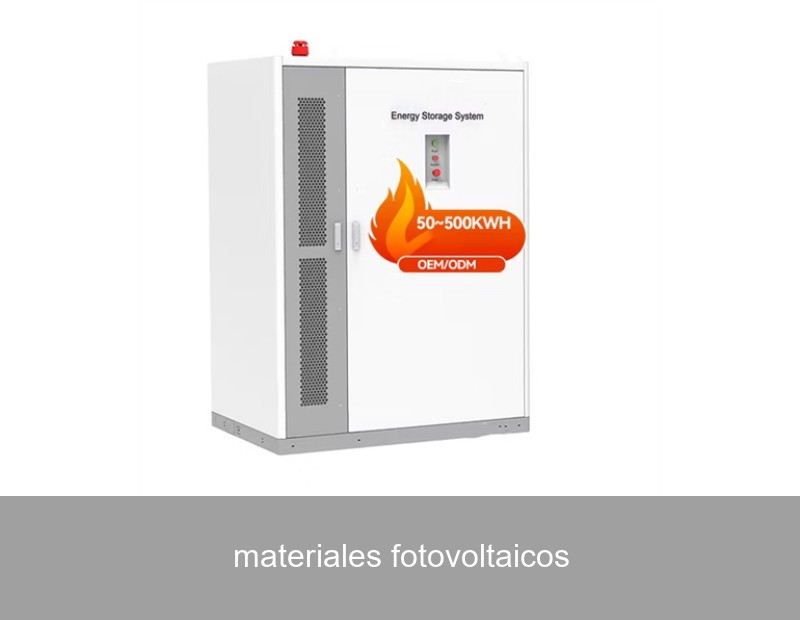
This is where a holistic system design becomes critical. At Highjoule, we don't just see panels; we see an integrated energy ecosystem. Our Highjoule HPS Series commercial battery storage systems, for instance, are built with Lithium Iron Phosphate (LFP) battery chemistry. Why LFP? This material choice prioritizes safety and longevity—offering exceptional thermal stability and a cycle life that often exceeds 6,000 cycles—making it ideal for the daily charge/discharge cycles of solar storage. Coupled with our AI-driven energy management platform, the system intelligently decides when to store excess power from your premium panels and when to dispatch it, ensuring not a single watt of your material-optimized solar harvest goes to waste.
For residential applications, our Highjoule Home Energy Vault uses similar LFP technology in a compact, safe design. It seamlessly integrates with high-efficiency rooftop systems, allowing homeowners to power through the night or during grid outages. Furthermore, for large-scale or off-grid applications like microgrids, Highjoule's containerized Megapack Solutions provide utility-grade storage that balances the intermittent nature of solar generation, regardless of the specific photovoltaic materials used in the field. Our expertise lies in creating the perfect synergy between the generation side (defined by its materials) and the storage side (defined by our technology).

Image: A modern home solar and battery storage setup, representing integrated energy independence. Credit: Unsplash / Andres Siimon.
Your Material Question
The landscape of photovoltaic materials is dynamic, offering a spectrum from proven, reliable silicon to groundbreaking perovskites and tandem architectures. The "best" material is not a universal answer but a function of your specific geography, roof space, energy consumption patterns, and long-term resilience goals. As you evaluate your path to solar, what specific challenge—be it limited space, extreme climate, or the desire for maximum energy independence—will guide your investigation into the materials that will power your future?
 Inquiry
 Online Chat