


Unlocking Solar Potential: How an MPPT Energy Storage Cabinet Maximizes Your Investment
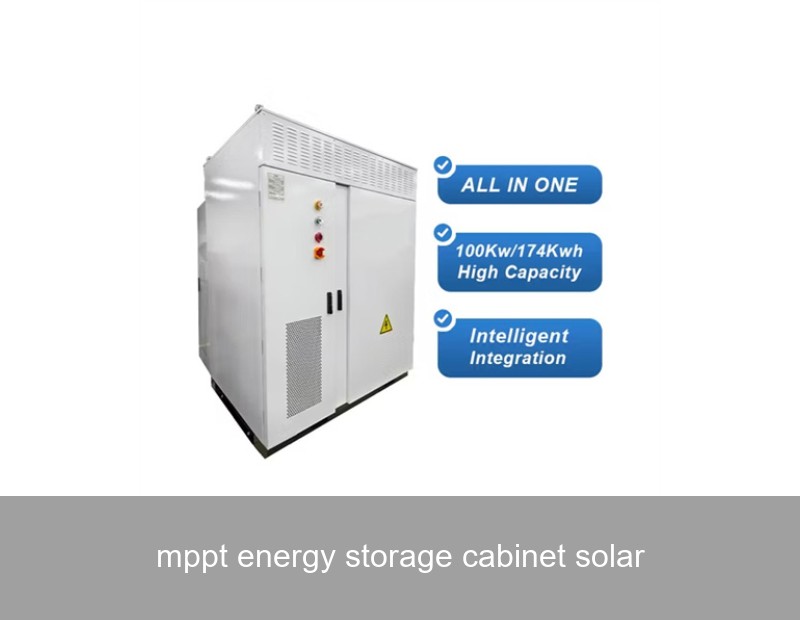
Have you ever looked at your solar panels on a cloudy day and wondered if you're truly getting the most out of them? You're not alone. For homeowners and businesses across Europe and the US, the initial excitement of generating clean energy can sometimes be tempered by the reality of system inefficiencies and wasted potential. The sun doesn't shine at a constant voltage, and that variability is where precious energy is often lost. This is where advanced technology steps in, and the MPPT energy storage cabinet emerges as the unsung hero of a high-performance solar setup. It's not just a battery box; it's the intelligent brain that ensures every possible kilowatt-hour from your solar array is harvested, stored, and ready for use.
Table of Contents
- The Challenge: Why Your Solar System Isn't Performing Optimally
- MPPT Explained: The Intelligent Heart of Energy Harvesting
- From Component to Ecosystem: The Evolution of the Storage Cabinet
- Real-World Impact: A Case Study from Bavaria
- Choosing the Right System: Key Features to Look For
- The Future Outlook: Smarter Grids and Greater Independence
The Challenge: Why Your Solar System Isn't Performing Optimally
Solar panels produce direct current (DC) electricity, but its power output fluctuates dramatically with sunlight intensity, temperature, and shading. A traditional charge controller might simply connect the panels to the batteries, forcing them to operate at a non-optimal voltage. Studies have shown that without Maximum Power Point Tracking (MPPT), systems can lose up to 30% of their potential energy harvest. That's like buying ten solar panels but only ever getting the benefit of seven. For commercial and industrial operations, this inefficiency translates directly to a longer return on investment (ROI) and a larger carbon footprint than necessary.
MPPT Explained: The Intelligent Heart of Energy Harvesting
Think of an MPPT charge controller as a sophisticated "tracker" that constantly hunts for the sweet spot. It does this hundreds of times per second, adjusting the electrical load to find the voltage and current combination (the Maximum Power Point) where the solar array produces its absolute maximum wattage. It then converts this high-voltage DC into the precise lower voltage needed to charge the battery bank with minimal loss.
An MPPT energy storage cabinet takes this critical technology and integrates it seamlessly into a complete, safe, and manageable unit. It's no longer about separate components wired together on a wall. Instead, it's a unified system that typically includes:
- High-Efficiency MPPT Charge Controllers: The core intelligence for optimal solar harvesting.
- Lithium-Ion Battery Bank: Often using stable Lithium Iron Phosphate (LFP) chemistry for safety and longevity.
- Advanced Battery Management System (BMS): Monitors and protects each cell for performance and safety.
- Bi-Directional Inverter: Converts DC to AC for your home and AC back to DC for charging.
- Integrated Safety & Thermal Management: Enclosed protection, circuit breakers, and cooling systems.
- Smart Energy Management System (EMS): The software brain that decides when to store, use, or even sell back energy.

Image Source: Unsplash (Representative image of a modern energy storage system)
From Component to Ecosystem: The Evolution of the Storage Cabinet
Companies like Highjoule have been at the forefront of this evolution since 2005. We don't just sell components; we engineer integrated solutions. For instance, our Highjoule H-Cube Commercial Series is a prime example of a next-generation MPPT energy storage cabinet. Designed for the demanding needs of European and American businesses, it features multiple parallel MPPT trackers to manage different solar array orientations, modular LFP battery packs for scalable capacity, and a cloud-connected EMS that can participate in demand response programs. This transforms a simple storage unit into a grid-interactive asset that maximizes economic return.
Real-World Impact: A Case Study from Bavaria
Let's move from theory to practice. Consider a mid-sized dairy farm in Bavaria, Germany. Facing high energy costs for refrigeration and milking operations, they installed a 100 kW solar array. Initially, they used a basic inverter system with no storage, exporting excess midday power at low feed-in tariffs and drawing expensive power in the evening.
In 2022, they installed a Highjoule H-Cube 80kWh storage system with advanced MPPT control. The results, monitored over one year, were significant:
| Metric | Before Installation | After Installation | Change |
|---|---|---|---|
| Solar Self-Consumption Rate | 35% | 92% | +163% |
| Grid Energy Import (Annual) | 48,000 kWh | 6,500 kWh | -86% |
| Effective Energy Cost | €0.28/kWh | €0.09/kWh | -68% |
The farm's MPPT energy storage cabinet ensured that even weak morning and late afternoon sun was efficiently captured, not wasted. The system's intelligence prioritized charging batteries before exporting, creating a reliable, low-cost power supply for 24/7 operations. You can read more about the importance of MPPT efficiency from the National Renewable Energy Laboratory (NREL).
Choosing the Right System: Key Features to Look For
Not all storage cabinets are created equal. When evaluating an MPPT energy storage cabinet for your home or business, prioritize these features:
- MPPT Efficiency & Tracking Speed: Look for efficiencies above 98% and rapid tracking to capture energy during fast-moving cloud cover.
- Battery Chemistry & Warranty: LFP batteries offer longer cycle life and superior safety. A 10-year warranty is a good benchmark.
- Scalability: Can you easily add more battery modules later? Systems like Highjoule's residential EcoStack series are designed for easy expansion.
- Grid Services & Software: For commercial applications, ensure the system can provide frequency regulation or peak shaving. The software interface should be clear and actionable.
- Safety Certifications: Mandatory certifications (like UL 9540 in the US, CE in Europe) are non-negotiable for insurance and compliance.

Image Source: Unsplash (Representative image of an industrial-scale energy storage installation)
Where Highjoule Fits In
With nearly two decades of specialization, Highjoule provides tailored solutions across this spectrum. For the residential market in the US, our EcoStack units offer plug-and-play installation with integrated MPPT management. For complex industrial and microgrid applications, our engineering team designs containerized or cabinet-based systems that can include multiple MPPT channels and manage megawatt-hours of storage, ensuring every project, big or small, achieves its maximum potential.
The Future Outlook: Smarter Grids and Greater Independence
The integration of MPPT energy storage cabinet technology is a cornerstone for the future energy landscape. As grid volatility increases and electricity prices remain unpredictable, the ability to generate, store, and manage your own power is transitioning from a luxury to a strategic necessity. These systems are becoming the building blocks for resilient microgrids in communities and campuses, allowing them to operate independently during outages. The International Energy Agency (IEA) highlights the critical role of storage in the clean energy transition.
So, the question is no longer just about installing solar panels. It's about how intelligently you can capture and utilize that energy. Is your current system equipped with the technology to adapt to every change in the weather and every shift in energy demand, or are you settling for less than your solar investment promises?
 Inquiry
 Online Chat