


Network Equipment Cabinets: The Unsung Heroes of Our Digital World and Their Hidden Power Challenge
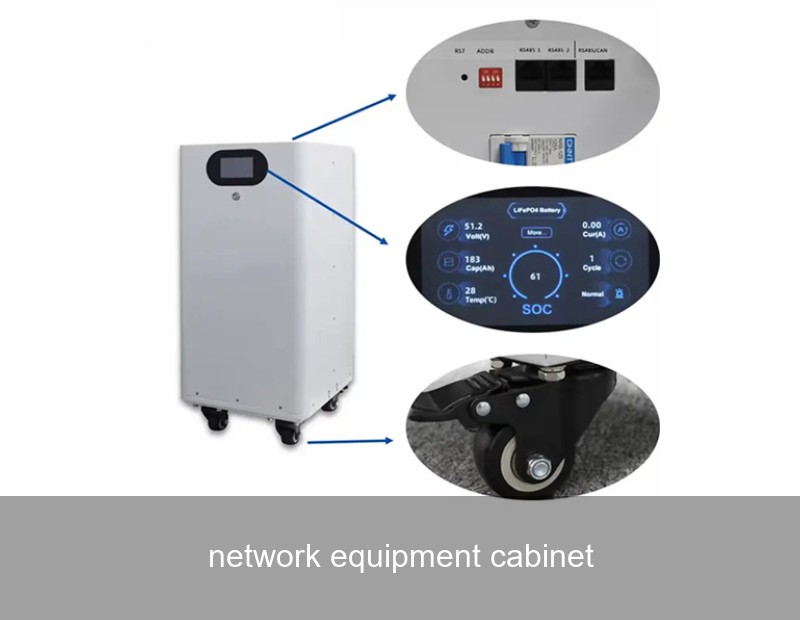
You walk past them every day. Those sleek, metallic, often humming cabinets on street corners, in office basements, or at the edge of industrial parks. They’re network equipment cabinets, the silent, unassuming guardians of our connected lives. But have you ever stopped to think about what happens inside when the power goes out? Or the immense, growing energy demand required to keep our data flowing 24/7? This is where the critical story of power resilience begins, and it's a challenge that forward-thinking companies are solving with advanced energy storage.
Table of Contents
- The Silent Power Phenomenon
- By the Numbers: The Soaring Energy Demand of Network Infrastructure
- Case Study: Securing a 5G Network Rollout in Germany
- Beyond Backup: The Smart Grid Integration of Network Cabinets
- The Highjoule Solution: Intelligent Energy Storage for Critical Infrastructure
- What Will the Network Cabinet of the Future Look Like?
The Silent Power Phenomenon
Network equipment cabinets—housing routers, switches, servers, and fiber optic gear—form the backbone of telecommunications, internet service providers, and smart city grids. Their primary mandate is unwavering uptime. A momentary lapse in power doesn't just mean a dropped call; it can disrupt financial transactions, emergency services, and entire supply chains. Traditionally, this reliability has been managed by Uninterruptible Power Supplies (UPS) with lead-acid batteries. However, these systems are facing a perfect storm: they are bulky, have a limited lifespan, require frequent maintenance, and are ill-suited for the new era of network equipment cabinet demands driven by 5G and IoT.
The modern cabinet is no longer a passive box. It's becoming an intelligent node, consuming more power for edge computing and processing data locally to reduce latency. This evolution turns a simple power backup need into a complex energy management opportunity.
By the Numbers: The Soaring Energy Demand of Network Infrastructure
Let's look at the data. A 2023 report by the European Commission highlighted that Information and Communication Technologies (ICT) are estimated to consume between 5-9% of global electricity. Within this, network infrastructure is a significant and growing portion. For instance, a single 5G base station can consume up to three times more power than its 4G predecessor. When you multiply this by hundreds of thousands of cabinets and towers across a continent, the scale of the energy challenge—and carbon footprint—becomes clear.
This isn't just an operational cost issue; it's a grid stability concern. Clusters of high-power cabinets can strain local transformers, especially during peak hours. The solution requires a shift in perspective: viewing each network equipment cabinet not just as a power consumer, but as a potential point of energy storage and grid support.

Credit: ThisisEngineering RaEng / Unsplash. Modern network cabinets are evolving into high-power, intelligent edge nodes.
Case Study: Securing a 5G Network Rollout in Bavaria, Germany
Consider a real-world scenario. A major European telecom operator was rolling out its 5G network in suburban and rural areas of Bavaria. Their challenge was twofold: ensuring zero-downtime power for the new, energy-hungry outdoor cabinets, and mitigating the cost and complexity of upgrading local grid connections for hundreds of sites.
Their traditional approach of large lead-acid UPS units was impractical due to space constraints and maintenance logistics for remote sites. The operator needed a compact, highly reliable, and maintenance-free solution.
They partnered with Highjoule to deploy integrated lithium-ion battery energy storage systems (BESS) specifically designed for outdoor network equipment cabinets. Here are the results after 18 months:
| Metric | Outcome |
|---|---|
| Space Saved per Cabinet | Over 40% compared to old UPS setup |
| System Efficiency | Increased from ~85% (lead-acid) to 96% |
| Projected Lifespan | 10+ years vs. 3-5 years for previous batteries |
| Grid Connection Costs | Reduced by avoiding costly upgrades at 30% of sites |
| Operational Downtime | Zero power-related incidents recorded |
This case demonstrates that the right energy storage technology directly enables network expansion and resilience while controlling capital and operational expenditures.
Beyond Backup: The Smart Grid Integration of Network Cabinets
The future of the network equipment cabinet lies in its dual role. With intelligent, grid-interactive storage like the systems Highjoule provides, these ubiquitous boxes can become assets for the broader energy transition. Imagine a network of thousands of cabinets, each with a small battery reserve. Collectively, they form a vast, distributed virtual power plant (VPP).
- Peak Shaving: The system can draw power from the grid during off-peak, low-cost hours, store it, and use it during expensive peak periods, saving significant money for the operator.
- Grid Services: During times of grid stress, these aggregated systems can provide frequency regulation services, helping to stabilize the national grid—a potential new revenue stream.
- Renewable Integration: Cabinets co-located with solar panels can store excess solar energy during the day to power critical loads through the night, maximizing green energy use.
This transforms the cabinet from a cost center into a smart, revenue-generating grid citizen. You can read more about the potential of distributed energy resources in this IEA Renewables 2023 report.
The Highjoule Solution: Intelligent Energy Storage for Critical Infrastructure
At Highjoule, with nearly two decades of expertise since 2005, we see the network equipment cabinet as a critical piece of infrastructure deserving of the most reliable and intelligent power solutions. Our approach is not just about selling a battery; it's about providing a holistic, intelligent power management system.
Our CubeStack Commercial & Industrial ESS and modular CellBlock battery platforms are engineered for precisely these scenarios. They offer:
- Ultra-Compact Design: Maximizing power density to fit into the limited real estate of a standard cabinet or be deployed as a companion unit.
- Lithium Iron Phosphate (LFP) Chemistry: Renowned for safety, long cycle life (10,000+ cycles), and stable performance across a wide temperature range—perfect for outdoor installations.
- Advanced Battery Management System (BMS): Our proprietary BMS ensures optimal performance, safety, and longevity through precise monitoring and thermal management.
- Smart Grid Readiness: Built-in communication protocols (like Modbus, CAN, or IEEE 2030.5) allow seamless integration with energy management systems for peak shaving and grid services.

Credit: ThisisEngineering RaEng / Unsplash. Modular, high-density battery systems are key to modernizing cabinet power.
For telecom giants and network operators, this means achieving their core mission of "five-nines" (99.999%) availability while future-proofing their infrastructure for energy volatility and sustainability goals. Learn about the safety standards for stationary storage from sources like NFPA 855.
What Will the Network Cabinet of the Future Look Like?
We are moving towards a paradigm where every network equipment cabinet will be an intelligent energy node. It will generate, store, manage, and even share power locally. It will communicate with the grid operator to provide support when needed and optimize its own consumption based on real-time electricity prices and carbon intensity.
This vision requires a deep partnership between network engineers and energy experts. It requires rethinking the humble cabinet's design from the ground up, integrating storage and power conversion as a core subsystem, not an afterthought.
So, as you pass by that nondescript cabinet tomorrow, consider this: Is it a silent drain on resources, or is it a hidden pillar of a resilient, sustainable, and intelligent energy future? The difference lies in the technology inside and the vision behind it.
What's the biggest power resilience challenge your network infrastructure is facing as you plan for the next decade of growth?
 Inquiry
 Online Chat