


NFPA Lithium Ion Batteries: Understanding Safety Standards for Modern Energy Storage
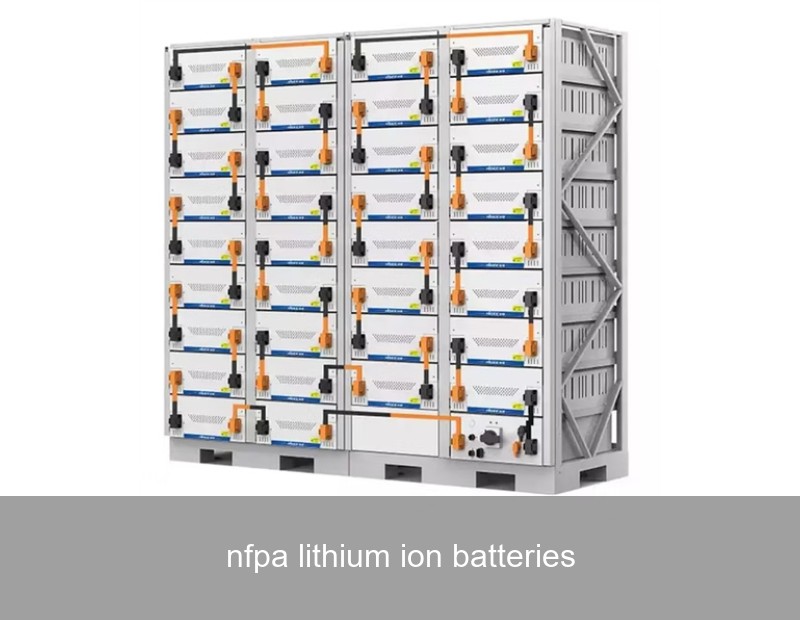
As lithium-ion batteries power everything from our phones to our homes and businesses, a critical question emerges: how do we ensure their safe integration into our daily lives? This is where the National Fire Protection Association (NFPA) and its codes, particularly NFPA 855: Standard for the Installation of Stationary Energy Storage Systems, become the cornerstone of safety. For anyone considering a battery energy storage system (BESS), understanding NFPA lithium ion batteries regulations isn't just about compliance—it's about ensuring peace of mind and long-term system reliability. At Highjoule, we've built our product philosophy around not just meeting, but exceeding these vital safety standards, because we believe the power of the future must be both clean and secure.
Table of Contents
- The Safety Imperative: Why NFPA Standards Exist
- NFPA 855 Decoded: Key Requirements for Lithium-Ion Systems
- Beyond Compliance: The Highjoule Approach to Integrated Safety
- Case Study: A U.S. Community Microgrid Navigates NFPA 855
- Choosing the Right System: Your Safety Checklist

Image: Safety-focused installation and maintenance are paramount for lithium-ion battery systems. Source: Unsplash
The Safety Imperative: Why NFPA Standards Exist
Let's address the elephant in the room. Lithium-ion batteries store a tremendous amount of energy in a compact space. While thermal runaway events—where a cell overheats and can trigger a chain reaction—are rare, the potential consequences demand rigorous preventative measures. The NFPA, a globally recognized authority, developed NFPA 855 specifically to mitigate these risks for stationary storage. The standard isn't meant to scare you away from this transformative technology. Instead, it provides a clear, science-based roadmap for safe deployment. Think of it as the building code for battery systems; it dictates how and where systems should be installed, with requirements on spacing, fire suppression, hazard mitigation, and emergency response. For authorities having jurisdiction (AHJs)—your local fire marshals and building inspectors—NFPA 855 is the primary reference for permitting and approval. Navigating this landscape successfully is the first major hurdle for any energy storage project.
NFPA 855 Decoded: Key Requirements for Lithium-Ion Systems
NFPA 855 is a comprehensive document, but several key clauses directly impact system design and selection for commercial, industrial, and residential applications.
- Separation and Clearances: The standard mandates minimum distances between energy storage system (ESS) units, between ESS units and walls, and between ESS installations and building exposures. These "stand-off" distances are designed to limit fire spread.
- System Size Limitations (Capacity): NFPA 855 sets maximum allowable energy capacities for systems installed indoors, outdoors, and in different occupancy settings. For example, an unprotected ESS inside a sprinklered warehouse has a different size limit than one outdoors. This often leads to designs using multiple, segregated "racks" or "units" rather than one massive block.
- Fire Suppression and Detection: It requires approved, listed detection systems (like smoke and gas detectors) and often mandates fire suppression systems, specifying the need for testing against lithium-ion battery fires.
- Hazard Mitigation: This includes ventilation for flammable gas venting, thermal management systems to keep batteries within safe operating temperatures, and listed equipment that has passed rigorous safety testing.
- Emergency Response Planning: The standard requires clear signage, access for first responders, and documentation outlining system shutdown procedures and hazards.
| Application | Primary NFPA 855 Focus Areas | Typical Highjoule Solution |
|---|---|---|
| Commercial (e.g., Office Building) | Indoor capacity limits, detection/suppression, clearance from exits. | Modular Highjoule CubeSeries with integrated monitoring, designed for room-based installation with specified clearances. |
| Industrial (e.g., Manufacturing Plant) | Large capacity needs, outdoor vs. indoor placement, hazard communication. | Outdoor Highjoule MegaRack enclosures with built-in fire suppression and remote thermal management. |
| Residential (e.g., Home Backup) | Wall-mounted clearances, detachment from living spaces, UL 9540 listing. | Highjoule HomePower system, UL 9540/9540A tested, with wall-mount bracket meeting spacing rules. |
| Microgrid & Utility-Scale | Separation between units, fire department access, explosion control. | Containerized Highjoule PowerPlatform with unit-level segregation and full-site safety integration plans. |
Beyond Compliance: The Highjoule Approach to Integrated Safety
At Highjoule, we view NFPA 855 not as a barrier, but as a baseline. Our engineering begins with safety inherently designed into the product, making compliance a natural outcome rather than an afterthought. For instance, our proprietary CellGuard™ technology goes beyond standard battery management. It continuously monitors not just voltage and temperature at the module level, but also cell-level impedance and pressure differentials, providing the earliest possible warning of potential cell anomalies. This data feeds into our VigilantAI platform, which uses predictive analytics to advise on maintenance and optimize performance while prioritizing safety thresholds.
Furthermore, our MegaRack and CubeSeries commercial products are designed as pre-engineered, pre-tested units. They come with clear documentation packs that include detailed floor plans, clearance diagrams, and recommended fire suppression specs—exactly what AHJs and installers need to streamline permitting. We don't just sell hardware; we provide a certification-ready safety package. This proactive design philosophy, honed since our founding in 2005, minimizes installation delays and gives our clients in Europe and the U.S. unwavering confidence in their investment.

Image: Advanced monitoring and data analytics are key to proactive battery safety management. Source: Unsplash
Case Study: A U.S. Community Microgrid Navigates NFPA 855
Let's look at a real-world application. In 2023, a planned resilient community microgrid in California faced a significant challenge. The design called for a 2 MWh lithium-ion battery system to provide backup power for critical community services during public safety power shutoffs (PSPS). The local fire marshal, deeply familiar with NFPA 855, raised concerns about the proposed installation's proximity to a protected wildlife area and the initial single-container design.
The Challenge: Meeting the capacity need while adhering to NFPA 855's outdoor installation spacing rules and satisfying environmental concerns.
The Highjoule Solution: Our team redesigned the storage array using four separate, smaller Highjoule PowerPlatform 500 containers instead of one large unit. This modular approach:
- Kept each unit under the capacity thresholds for reduced spacing requirements.
- Allowed for strategic placement with natural firebreaks between units, satisfying the fire marshal.
- Provided built-in, container-level fire suppression (Clean Agent) and continuous gas detection.
- Included a dedicated emergency response plan with shutoff switches clearly marked and accessible on all sides of each container.
The Result: The project received permit approval in record time. The fire marshal commended the "defense-in-depth" safety approach. The microgrid is now operational, having already provided over 72 hours of continuous backup power during winter storms, safeguarding a medical clinic and communication hub. This case underscores that a deep understanding of NFPA lithium ion batteries standards enables innovative, safer, and ultimately more successful project outcomes.
Choosing the Right System: Your Safety Checklist
When evaluating a battery energy storage system, your due diligence on safety should be as rigorous as your financial analysis. Here are the essential questions to ask any provider:
- Is the system listed to UL 9540 and has it undergone UL 9540A test reporting? This is the gold standard that NFPA 855 references. UL 9540A results, in particular, provide critical data on how a system design mitigates thermal runaway propagation.
- Does the provider offer detailed installation manuals with AHJ-ready documentation? Look for clear, engineered drawings showing required clearances and suppression system interfaces.
- What is the architecture of the safety systems? Are there multiple, redundant layers (cell, module, rack, system level)? How is thermal management handled?
- Can the provider share case studies or references from projects that have successfully passed inspection in your region? Local experience is invaluable.
Highjoule's products are engineered with these questions already answered. Our systems are UL 9540 listed, and we make our 9540A summary reports available to serious clients and AHJs. Our project teams work hand-in-hand with your installers to prepare the complete submission package, leveraging our extensive experience across hundreds of deployments in North America and Europe.
Staying Informed: A Note on Continuous Evolution
It's important to remember that NFPA codes are living documents. They are revised on a regular cycle to incorporate new research and field learnings. For the most current information, always refer to the official NFPA 855 standard page. Additionally, resources like the U.S. Department of Energy's Solar Energy Technologies Office publish valuable safety research, and the DNV Energy Storage Safety portal offers industry insights.
As you contemplate integrating battery storage to achieve energy independence, reduce costs, or bolster resilience, how will you ensure that your chosen partner's commitment to safety is as robust and forward-thinking as your own vision for a sustainable energy future?
 Inquiry
 Online Chat