


Finding the Right SolarHub kW Supplier: Your Guide to Smart Solar Energy Procurement
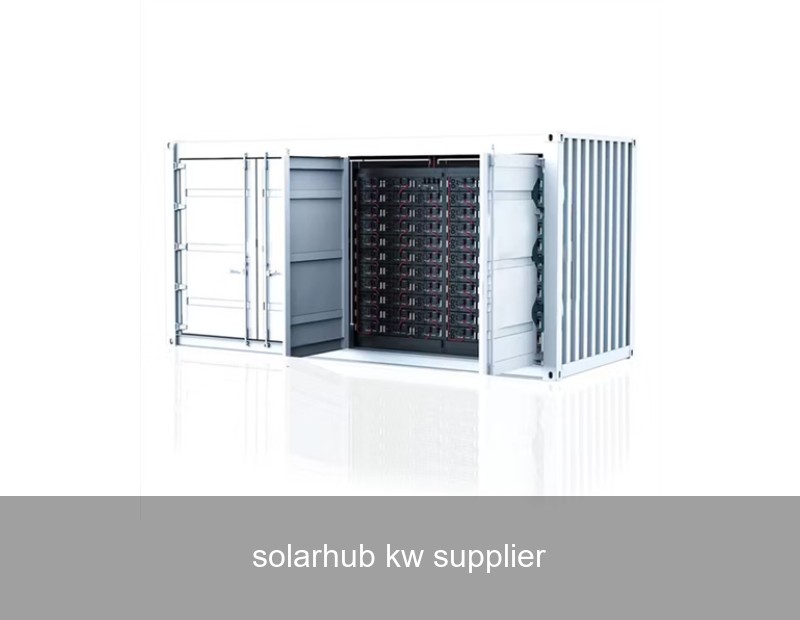
You've made the smart decision to invest in solar energy. The promise of energy independence, lower electricity bills, and a reduced carbon footprint is compelling. But as you dive into the planning, a critical question emerges: Who is the right SolarHub kW supplier for my project? This isn't just about buying panels; it's about procuring a complete, intelligent energy ecosystem. The kW rating of your solar hub—the brain of your photovoltaic (PV) system—directly impacts efficiency, monitoring, and long-term return on investment. Choosing the wrong supplier can lead to underperformance, compatibility headaches, and hidden costs. This guide will navigate the key considerations, blending technical insight with practical procurement strategy to ensure your solar investment delivers its full potential.
Table of Contents
- The kW Conundrum: More Than Just a Number
- Data Don't Lie: The High Cost of Inefficient Hubs
- Case Study: A Berlin Bakery's Recipe for Success
- Beyond the Inverter: The Hallmarks of a Premier Supplier
- The Highjoule Approach: Intelligence at Every kW
- Your Next Step: Questions to Ask Your Potential Supplier
The kW Conundrum: More Than Just a Number
When discussing a "SolarHub," we're referring to the integrated system that manages energy flow. Traditionally, this centered on the inverter, which converts DC solar power to usable AC power. Today, a modern SolarHub encompasses the inverter, smart energy management, battery storage integration, and advanced grid-interaction capabilities. The "kW" rating—be it 5kW, 10kW, 50kW, or more—signifies the system's power capacity. However, the real magic lies in how intelligently that kW capacity is utilized.
Think of it this way: two cars might have 300 horsepower engines. One is meticulously engineered for optimal fuel injection, torque distribution, and cooling, delivering smooth, efficient power. The other is poorly tuned, wasting fuel and straining under load. Similarly, a 10kW solar hub from a cut-rate supplier might clip (waste) energy during peak sun, struggle to communicate with your battery, or lack the software to optimize self-consumption. The right supplier ensures every kilowatt-hour generated is harvested, managed, and deployed with precision.

Image Source: Unsplash - A modern energy hub is more than just hardware; it's the command center for your power.
Data Don't Lie: The High Cost of Inefficient Hubs
The industry has moved far beyond simple conversion efficiency. Let's look at the data points that separate basic suppliers from advanced technology partners.
| Performance Metric | Entry-Level SolarHub | Advanced SolarHub (Highjoule Standard) | Impact on a 50kW System |
|---|---|---|---|
| Peak Inverter Efficiency | 96-97% | >98.5% | Captures 75+ more kWh annually |
| Wide Power Band Efficiency | Sharp drop-off below 30% load | High efficiency maintained from 10-100% load | Better performance on cloudy days & dawn/dusk |
| Integrated Energy Management | Often add-on or non-existent | Native, AI-driven for self-consumption | Can increase use of own solar by up to 40% |
| Grid Services Readiness (VPP) | No | Yes (e.g., frequency regulation) | Potential for additional revenue streams |
As you can see, the gap isn't marginal. Over a 25-year system lifespan, these differences compound into tens of thousands of euros or dollars in lost energy or missed opportunities. A study by the National Renewable Energy Laboratory (NREL) emphasizes that system-level design and component interoperability are critical for maximizing lifetime value, often outweighing the cost of individual components.
Case Study: A Berlin Bakery's Recipe for Success
Let's ground this in reality. Bäckerei Schmidt, a family-run bakery in Berlin with high early-morning energy demand, installed a 45kW rooftop PV system in 2020. Their initial, budget-focused supplier provided a standard string inverter system. While it produced energy, the bakery only consumed about 30% of its solar generation directly—the rest was fed back to the grid at a low feed-in tariff. Their energy bills remained stubbornly high, especially during winter mornings when the ovens fired up.
In 2023, they partnered with a Highjoule-certified installer to retrofit a true SolarHub solution. The upgrade included:
- A Highjoule HJ-Commander 50kW hybrid inverter with integrated grid management.
- A Highjoule IntelliBatt 40kWh lithium-ion storage system.
- The Highjoule EnergyOS platform for AI-powered forecasting and load scheduling.
The results after one year?
- Self-Consumption Rate: Increased from 30% to 85%.
- Grid Energy Purchases: Reduced by 78%.
- Payback Period: The enhanced system's payback is projected at 7 years, thanks to bill savings and participation in a local virtual power plant (VPP) program, which the Highjoule hub seamlessly enables.
"We didn't just buy a battery; we bought a smart energy partner," said the owner. "The system now 'knows' our baking schedule and weather forecasts, pre-charging the battery optimally. Our search for the right SolarHub kW supplier ended with finding a provider of intelligent solutions, not just hardware."
Beyond the Inverter: The Hallmarks of a Premier Supplier
So, what should you look for? A top-tier SolarHub kW supplier differentiates itself on three pillars:
1. System Integration & Interoperability
The supplier should offer a cohesive ecosystem. Ask: Do their inverters, batteries, and software communicate natively using secure, open protocols? Can they integrate with third-party assets (like EV chargers) or building management systems? Fragmented systems from different vendors create complexity and potential failure points.
2. Software Intelligence & Monitoring
The hardware is the body; the software is the brain. A true hub provides real-time monitoring, granular energy analytics, and predictive algorithms. Can it learn your consumption patterns? Can it receive grid signals for demand response? The platform should be user-friendly but offer deep insights for energy managers.

Image Source: Unsplash - Advanced software turns raw data into actionable energy intelligence.
3. Long-Term Partnership & Support
Your relationship shouldn't end at installation. Premier suppliers offer extended warranties, remote firmware updates to add features, and access to a network of certified installers. They are invested in the 25-year performance of your asset. Check their track record and service-level agreements (SLAs).
The Highjoule Approach: Intelligence at Every kW
At Highjoule, our philosophy is that every kilowatt of solar capacity deserves an equal measure of intelligence. Since 2005, we've evolved from a component manufacturer to a global provider of integrated energy resilience solutions. For commercial, industrial, and large residential clients, our role as a SolarHub kW supplier is defined by our holistic product suite:
- Highjoule PowerHub Inverters: Our hybrid and string inverters (3kW to 1MW+) are renowned for their rugged reliability and industry-leading efficiency curves, ensuring maximum harvest in diverse conditions.
- Highjoule IntelliBatt Storage Systems: Scalable, modular battery solutions with sophisticated battery management systems (BMS) for safety and longevity, designed for seamless integration with our PowerHubs.
- Highjoule EnergyOS: The cloud-based platform that unites everything. It provides real-time control, automated optimization for self-consumption and time-of-use savings, and enables participation in grid stability programs. It’s the "smart" in your Smart SolarHub.
We don't just supply kW; we supply guaranteed performance. Our solutions are designed with the future in mind, compliant with grid codes in both the EU and North America, and ready for the transition to bidirectional, service-oriented energy grids, as outlined by research from the Electric Power Research Institute (EPRI).
Your Next Step: Questions to Ask Your Potential Supplier
Armed with this knowledge, your procurement process becomes more strategic. Before you sign a contract, pose these questions to your shortlisted SolarHub kW suppliers:
- "Can you provide a detailed simulation of my system's annual energy production and self-consumption, not just at peak, but across seasonal variations?"
- "How does your system specifically manage the integration and charging/discharging cycles of the battery to maximize its cycle life?"
- "What is your protocol for remote monitoring, troubleshooting, and issuing firmware updates? Is there an associated cost after the first year?"
- "Can you demonstrate how your hub would respond to a grid signal for demand response or frequency regulation, and what economic value could that generate for my business?"
The energy landscape is shifting from passive consumption to active prosumership. Your choice of SolarHub supplier is your choice of a navigator for that journey. Is your current frontrunner equipped to be that guide for the next decade?
 Inquiry
 Online Chat