


Centrale Solare Fotovoltaica: Maximizing Output with Advanced Energy Storage
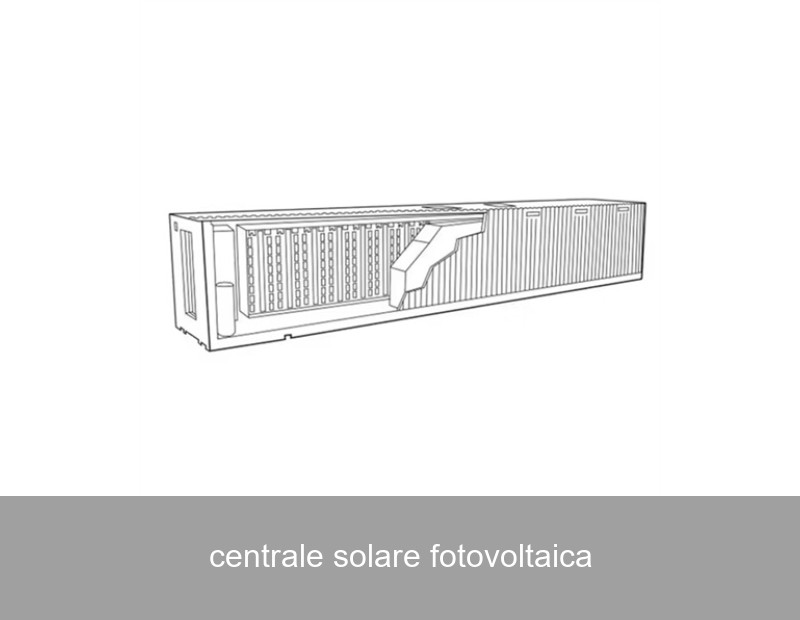
When we think of a centrale solare fotovoltaica (photovoltaic power plant), the image is often one of vast, silent fields of panels harvesting the sun's energy. It's a powerful symbol of the clean energy transition, particularly in sun-drenched regions like Southern Europe and the American Southwest. But industry experts and grid operators know a hidden challenge: what happens when the sun sets, or when clouds pass overhead? The true potential of a solar farm isn't just in generation—it's in deliverable, reliable power. That's where the conversation shifts from panels alone to the integrated brain and battery of the modern plant: the Battery Energy Storage System (BESS).

Image Source: Unsplash - A modern centrale solare fotovoltaica. The next step is integrating storage to capture every kilowatt-hour.
Understanding the Modern Photovoltaic Power Plant
Today's centrale solare fotovoltaica is a sophisticated energy asset. Moving beyond simple DC-to-AC conversion, it is increasingly a hub of smart technology. At its core, the system comprises:
- PV Modules: The primary energy harvesters, converting sunlight into direct current (DC) electricity.
- Inverters: The workhorses that transform DC into grid-compatible alternating current (AC).
- Transformers & Grid Connection: The interface that steps up voltage for efficient transmission.
- SCADA & Monitoring Systems: The digital nervous system for performance tracking and control.
Yet, this traditional setup has a fundamental constraint: its output is intrinsically intermittent. This variability creates a mismatch between supply and demand, leading to curtailment (wasted energy) during peak production and a reliance on fossil-fuel peaker plants at night.
The Storage Imperative: Moving Beyond Sunlight Hours
The data paints a clear picture. According to the International Renewable Energy Agency (IRENA), solar PV capacity is set to dominate global power expansion. However, the value of solar energy dips when it floods the grid at midday. The solution is temporal arbitrage—storing energy when it's abundant and cheap, and dispatching it when it's scarce and valuable.
This is not a futuristic concept. In markets like California (CAISO) and Italy (TERNA), grid operators actively manage congestion and frequency. A centrale solare fotovoltaica coupled with a large-scale BESS can:
- Shift Energy: Store daytime solar for evening peak demand, often increasing revenue per kWh.
- Provide Ancillary Services: Stabilize grid frequency and voltage, creating a new income stream.
- Ensure Firm Capacity: Guarantee a certain power output, making solar a reliable grid citizen.
The Critical Role of BESS in Grid Stability
Think of the grid as a finely balanced scale. Traditional power plants provide inertia, a physical buffer against sudden changes. Inverter-based resources like solar can introduce volatility. A modern BESS, with sub-second response times, acts as a shock absorber. It can inject or absorb power in milliseconds to correct frequency deviations, a service increasingly mandated by grid codes in Europe and North America.
Real-World Case Study: The Spanish Solar Farm Integration
Let's examine a concrete example from southern Spain, a region with exceptional solar resources. A 50 MW centrale solare fotovoltaica was experiencing an average of 8% annual curtailment due to grid saturation during peak sun hours. Furthermore, its participation in the electricity market was limited to daylight periods.
The operator integrated a 20 MW / 40 MWh Battery Energy Storage System. The results over the first 18 months of operation were telling:
| Metric | Before BESS | After BESS Integration |
|---|---|---|
| Energy Curtailment | ~8% of annual production | Reduced to <1% |
| Revenue Streams | Daytime market sales only | Added evening peak sales & frequency regulation services |
| Capacity Factor (Value-Adjusted) | ~24% | Increased to ~41% |
| Grid Compliance | Met basic connection requirements | Exceeded requirements, eligible for stability premiums |
This case, documented in a 2021 study in the Journal of Energy Storage, highlights the transformative financial and operational impact of pairing storage with solar. The BESS turned a passive generator into an active, grid-supportive asset.

Image Source: Unsplash - A battery storage system installation at an energy site. Integration is key.
Highjoule's Tailored Solutions for Solar Farms
This is precisely where Highjoule's expertise comes into play. Since 2005, we have focused on making renewable energy assets more intelligent, efficient, and profitable. For a centrale solare fotovoltaica, we don't just provide a battery; we deliver a fully integrated Solar-Storage Optimization System.
Our H-Series Utility BESS is engineered for the rigorous demands of large-scale solar coupling. Its features directly address the challenges outlined above:
- Advanced DC-Coupling Option: Our systems can integrate directly with the solar array's DC bus, reducing conversion losses and hardware costs compared to traditional AC-coupled setups. This means more of your harvested sunlight ends up in the battery.
- AI-Powered Energy Management System (EMS): The true brain of the operation. Our EMS doesn't just store and release energy. It forecasts solar generation, analyzes real-time market prices (crucial for EU and US markets), and automatically optimizes dispatch for maximum revenue—whether from energy arbitrage or grid services.
- Grid-Forming Inverter Technology: Moving beyond grid-following, our inverters can help "black start" a section of the grid if needed, providing essential stability as fossil fuel plants retire.
- Containerized & Scalable Design: Pre-assembled and tested for rapid deployment alongside your existing solar farm, with a modular design that allows for capacity expansion as your needs grow.
For developers and operators, Highjoule acts as a single point of responsibility, from initial feasibility studies and financial modeling to commissioning and long-term performance monitoring. We ensure your centrale solare fotovoltaica transitions from a weather-dependent generator to a predictable, high-value power source.
The Future of Solar Energy is Intelligent Storage
The trajectory is undeniable. Regulatory bodies like the U.S. Federal Energy Regulatory Commission (FERC) are enacting rules (e.g., FERC Order 841) to remove barriers for storage participation in wholesale markets. In Europe, the EU's Clean Energy Package mandates similar integration. The standalone centrale solare fotovoltaica is becoming an economic and regulatory relic.
The next-generation plant is a hybrid, resilient, and intelligent energy hub. It leverages storage not as an add-on, but as a core, value-driving component. This evolution requires a partner with deep technological expertise and a practical understanding of energy markets.
Image Source: Unsplash - Intelligent control systems are vital for managing hybrid solar-storage assets.
Is your solar asset operating at its full potential, or is a significant portion of its value—and our collective progress toward a stable grid—slipping through the cracks every time the sun goes down?
 Inquiry
 Online Chat