


The Oukitel P5000 Solar Generator and the Rise of Accessible Clean Energy
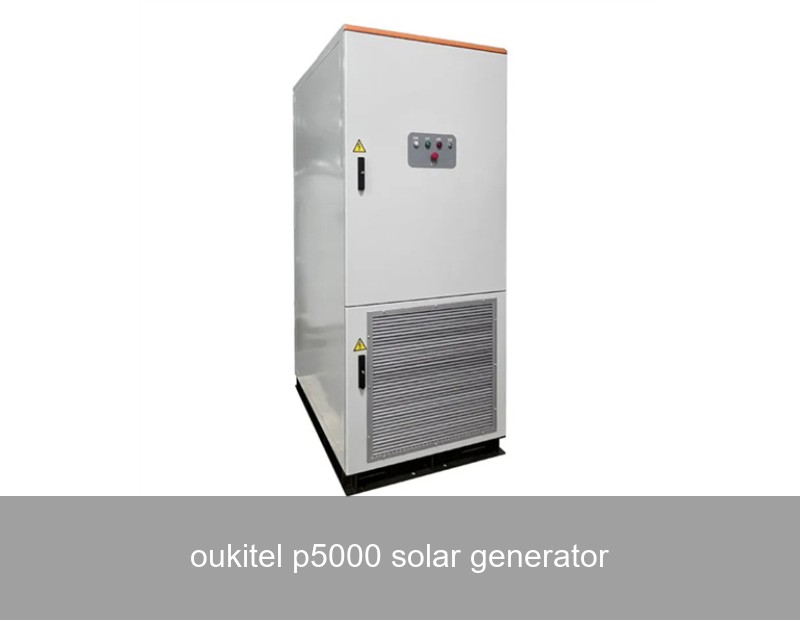
Have you ever been caught in a power outage, your phone battery blinking red, and wished for a magic box of electricity? Or perhaps you've dreamed of taking your home office deep into the woods without sacrificing your laptop's life? For millions in Europe and the US, this isn't just a daydream anymore. Portable power stations, especially when paired with solar panels, are turning this into a reality. Products like the Oukitel P5000 solar generator are leading this charge, making off-grid and backup power more accessible than ever. But what does this trend tell us about our broader energy future? Let's unpack the phenomenon, the data, and what it means for powering our lives, from backyard adventures to entire businesses.
The Oukitel P5000: A Deep Dive into Portable Power
The term "solar generator" can be a bit misleading. Unlike a gas-powered generator, devices like the Oukitel P5000 are essentially large, sophisticated battery packs (often using Lithium-ion or LiFePO4 chemistry) with built-in inverters and charge controllers. They store energy that you can then use to power your devices. The "solar" part comes from the ability to recharge them using compatible solar panels, creating a clean, silent, and renewable power cycle.
So, what does the Oukitel P5000 bring to the table? Its specifications paint a picture of robust, user-friendly design:
- High-Capacity Battery: A 5120Wh LiFePO4 battery, known for its long cycle life (3,500+ cycles) and enhanced safety compared to standard lithium-ion.
- Powerful Output: A 2400W pure sine wave AC inverter can handle sensitive electronics like laptops and medical devices, plus surge support for tools up to 4800W.
- Versatile Charging: It accepts input from solar panels (up to 1200W), AC wall outlets, and even car chargers, offering flexibility in how you top it up.
- Portability: While hefty at around 55kg, it's on wheels, making it movable for campsites, worksites, or around the home.

Image: Portable solar generators enable clean power anywhere. (Source: Unsplash)
The appeal is undeniable. For the average homeowner in California facing Public Safety Power Shutoffs (PSPS) or a family camping in the Scottish Highlands, it provides peace of mind. It's a tangible step towards energy independence on a personal scale. According to a Grand View Research report, the global portable power station market size was valued at USD 3.9 billion in 2022 and is expected to grow at a compound annual growth rate (CAGR) of 8.5% from 2023 to 2030, driven by increasing power outage concerns and outdoor recreational activities.
Beyond Portable Power: The Bigger Picture of Energy Resilience
While the Oukitel P5000 solar generator solves immediate, mobile power needs, it represents a microcosm of a much larger global shift: the demand for resilient, decentralized, and intelligent energy storage. The principles that make it useful—storing renewable energy, providing backup power, and managing electricity flow—are the same principles driving the transformation of our entire grid.
This is where the conversation expands from portable units to permanent, integrated solutions. For homes, businesses, and communities, the need is for systems that are not just backup, but active participants in energy management. This is the core expertise of companies like Highjoule. Since 2005, Highjoule has been at the forefront of developing advanced, stationary Battery Energy Storage Systems (BESS) for residential, commercial, industrial, and microgrid applications.
Think of it this way: a portable solar generator is your emergency flashlight. A Highjoule residential system, like the Highjoule Home Energy Hub, is your whole-house automated security lighting and power system. It's permanently installed, integrates seamlessly with your rooftop solar, and uses intelligent software to:
- Maximize self-consumption of solar energy, drastically reducing grid reliance.
- Provide automatic, uninterrupted backup power during outages for essential or whole-home circuits.
- Participate in utility demand-response programs (where available), potentially generating revenue.
- Offer sophisticated monitoring and control via a user-friendly app.
Real-World Case Study: Powering a Remote Agricultural Research Station
Let's look at a concrete example that bridges the concept of portable and permanent storage. In 2023, a remote agricultural research station in the Andalusian region of Spain faced a critical challenge. Their work on sustainable crop cycles required reliable power for data loggers, sensor arrays, and communication equipment, but connecting to the main grid was prohibitively expensive. Diesel generators were noisy, polluting, and required frequent fuel deliveries.
Their solution was a hybrid approach:
| Component | Role | Outcome |
|---|---|---|
| 15kW Rooftop Solar Array | Primary energy generation | Achieved 98% energy independence, eliminated diesel costs (~€5,000/year), and ensured continuous operation of critical research equipment. The system paid for itself in under 4 years. |
| Highjoule C&I Stack 20 | Stationary storage (20kWh capacity), managing daily charge/discharge cycles | |
| Oukitel P5000 Units (2) | Mobile power for field teams and as a redundant backup for the most critical sensors. |
This case illustrates the perfect synergy. The Highjoule C&I system handles the heavy, daily lifting of energy arbitrage, while the portable P5000 units offer tactical flexibility and redundancy. Data from the station’s monitoring showed a reduction of 8.2 tons of CO2 emissions annually, a key metric for their sustainability goals. You can explore more about the science behind solar efficiency from authorities like the National Renewable Energy Laboratory (NREL).
Choosing the Right System for Your Needs
So, how do you decide between a portable power station and a full-scale storage system? It's about scale, permanence, and intelligence.
- The Oukitel P5000 Solar Generator is ideal for: Camping, tailgating, RV trips, as a backup for short-duration outages for small appliances, powering tools at a remote job site, or as a supplementary mobile power source.
- A Highjoule Residential BESS is designed for: Homeowners with rooftop solar looking to maximize investment, regions with unreliable grids, achieving true whole-home backup power, and long-term energy cost management and sustainability.

Image: Integrated home energy systems with solar and storage are the future. (Source: Unsplash)
The Future is in Integrated, Intelligent Systems
The popularity of the Oukitel P5000 solar generator is a fantastic sign. It means consumers are becoming more comfortable with battery storage and renewable energy. It's a gateway technology. However, the ultimate goal for energy resilience and a sustainable grid lies in integrated, smart systems. These systems, like those developed by Highjoule, don't just store energy; they communicate with solar inverters, grid signals, and home energy management systems to optimize every kilowatt-hour.
For a business, this could mean significant savings on peak demand charges. For a microgrid on an island community, it means stable, clean power 24/7. For a family, it means never worrying about a storm knocking out power for their home office or medical equipment. The technology is here, and it's evolving rapidly, building on the same foundational concept that makes a portable solar generator so appealing: taking control of your power.
What's the first step you could take towards your own energy independence—is it starting with a portable unit for your next adventure, or scheduling a consultation to understand how a whole-home system could transform your energy bills and security?
 Inquiry
 Online Chat