


Unlocking the Philippines' Renewable Potential: The Critical Role of Hydropower and Battery Energy Storage Systems (BESS)
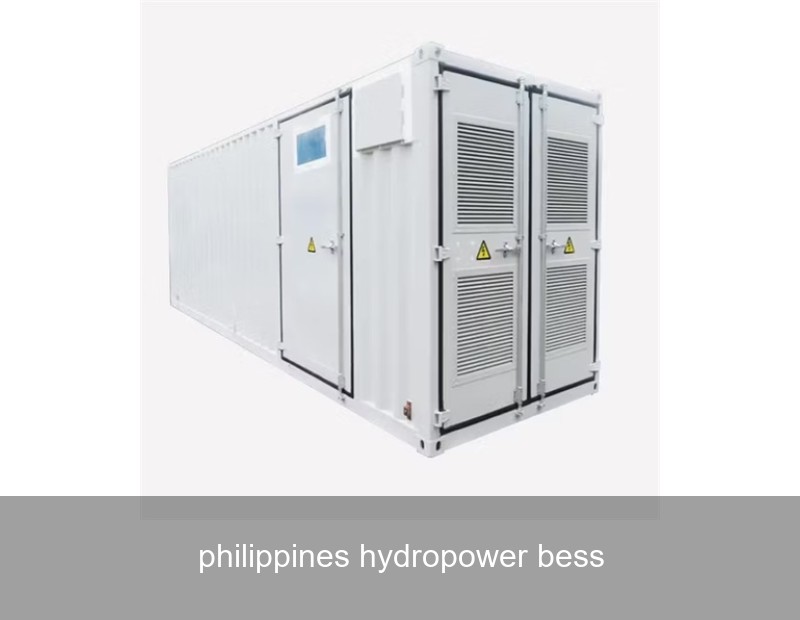
Imagine a nation blessed with abundant sunshine, powerful winds, and a rich network of rivers and lakes. The Philippines is a renewable energy powerhouse in the making. Yet, a persistent challenge shadows this bright potential: how to deliver clean, reliable, and stable power 24/7. The intermittent nature of solar and wind is well-known, but even the country's established hydropower faces its own hurdles—seasonal droughts and variable rainfall. This is where a transformative duo comes into play: Philippines hydropower BESS (Battery Energy Storage Systems). By integrating advanced BESS with existing and new hydropower plants, the country can stabilize its grid, maximize renewable output, and build true energy resilience. Let's explore how this synergy is not just an option but a necessity for the Philippines' sustainable future.
Table of Contents
The Challenge: Hydropower's Vulnerability in a Changing Climate
Hydropower is the backbone of the Philippines' renewable energy mix, contributing a significant portion of its clean electricity. However, it's a resource at the mercy of the weather. Prolonged dry seasons, like the El Niño phenomenon, can drastically reduce reservoir levels, crippling power generation precisely when demand might be high. This creates a double bind: reliance on imported fossil fuels for backup, leading to higher costs and increased emissions, or risking brownouts and blackouts.
Furthermore, the grid itself faces modern challenges. The rapid integration of variable renewable energy (VRE) like solar can cause frequency fluctuations and voltage instability. Traditional hydropower can help regulate this, but its response might not be fast or flexible enough for the second-by-second balancing a modern grid requires. The result? A grid that is cleaner in theory but less stable in practice, potentially slowing down the very renewable transition the country seeks.
The Solution: Hydropower-BESS Hybrid Systems
This is where Battery Energy Storage Systems (BESS) enter as the perfect partner for hydropower. Think of it as giving a hydropower plant a superpower. A hydropower-BESS hybrid system combines the massive energy storage capacity of a reservoir (storing water) with the instantaneous, precise power delivery of a battery (storing electrons).
Here’s how this synergy works in practice:
- Frequency Regulation & Grid Stability: BESS can respond to grid frequency changes in milliseconds, far faster than any turbine. This stabilizes the grid, making it more resilient to fluctuations from other renewables.
- Optimizing Water Use: During low demand or high solar output, the BESS can be charged (often by the hydropower plant itself). Then, during evening peaks or dry spells, the BESS discharges, conserving precious water in the reservoir for longer-term use. This effectively turns "spilled" or underutilized energy into a bankable asset.
- Black Start Capability: In the event of a total grid outage, a BESS can provide the initial "jolt" of power to restart hydropower turbines, a critical feature for enhancing national energy security.

Image: A conceptual representation of a hybrid energy site. Source: Unsplash
Technical Synergy in Action
| Grid Need | Traditional Hydropower Response | Hydropower + BESS Response | Benefit |
|---|---|---|---|
| Sudden Drop in Solar Generation | Minutes to ramp up turbine | Milliseconds to inject power from BESS | Prevents voltage sags, maintains grid code compliance |
| Evening Peak Demand | Use water from reservoir | Discharge BESS (charged earlier by hydro/solar), conserve water | Maximizes resource, extends plant operation during drought |
| Grid Outage (Black Start) | Requires external power source to restart | BESS provides immediate power to restart control systems and turbines | Enhanced resilience and faster recovery |
Case Study: A Model from the Global Market
While large-scale hydropower-BESS projects are emerging in the Philippines, we can look to a successful global precedent to understand the impact. Consider the Korea Western Power (KOWEPO) project in South Korea. They integrated a 150 MW / 300 MWh utility-scale BESS with an existing pumped-storage hydropower complex.
The Phenomenon: The need to better regulate the grid with high nuclear baseload and growing renewables, while optimizing the use of the pumped-storage facility.
- The BESS provided ultra-fast frequency regulation (FFR), responding within 1 second to grid signals.
- It reduced the wear and tear on the hydropower turbines by handling short-duration, rapid-cycling tasks.
- The system improved the economic dispatch of the entire complex, allowing the hydropower plant to operate in its most efficient modes while the BESS handled volatility. (IEA, Energy Storage Report) highlights the growing role of such hybrid systems globally.
The Insight: This project proves that BESS doesn't replace hydropower; it augments it. The two technologies create a sum greater than their parts, delivering both energy capacity (from hydro) and instantaneous power capacity (from BESS). For the Philippines, adapting this model to run-of-river or reservoir-based plants offers a clear blueprint for upgrading existing infrastructure.
Highjoule's Expertise in Grid-Scale Stabilization
At Highjoule, with nearly two decades of experience since 2005, we specialize in designing and deploying intelligent BESS solutions that make grids more resilient and efficient. Our systems are engineered for the harsh conditions and specific challenges of markets like the Philippines.
For a hydropower-BESS application, our GridMasterTM Industrial Series is particularly relevant. This isn't just a battery container; it's an integrated power plant controller. Key features include:
- Advanced Grid-Forming Inverters: These allow our BESS to not just follow the grid but actively support it, creating stable voltage and frequency "islands" if needed—a crucial feature for ancillary services and black start scenarios.
- AI-Powered Energy Management System (EMS): Our EMS doesn't just react; it predicts. By analyzing weather data (rainfall, solar irradiance), grid load forecasts, and electricity market signals, it optimally decides when to charge the BESS from the hydropower plant or the grid, and when to discharge, maximizing revenue and resource conservation.
- Containerized & Robust Design: Pre-assembled and tested for rapid deployment in remote areas near hydropower facilities, with climate control built to withstand tropical humidity and heat.
Imagine a major hydropower plant on Luzon integrating a Highjoule BESS. Our system would act as a shock absorber for the grid, smoothing out the variability from nearby solar farms, allowing the dam to generate at a more constant, efficient rate, and ensuring more reliable power for Manila during critical peak hours.

Image: Advanced control systems are key to hybrid plant management. Source: Unsplash
The Path to Implementation in the Philippines
The journey to widespread Philippines hydropower BESS integration involves multiple stakeholders and strategic steps.
Policy and Regulatory Enablers
The Philippine Energy Regulatory Commission (ERC) has made strides with rules for Energy Storage Systems. The next step is creating specific market mechanisms that value the unique services BESS provides: frequency regulation, spinning reserve, and capacity. Clear policies can attract the investment needed for these capital-intensive projects. The Department of Energy (DOE) has a pivotal role in setting these long-term signals.
Project Structuring and Finance
Hybrid projects can be structured as retrofits to existing plants or as new builds. Development finance institutions (DFIs) and green bonds are increasingly interested in funding such climate-resilient infrastructure. The proven levelized cost of storage (LCOS) for BESS has fallen dramatically, making the business case stronger than ever.
Technology Partnership and Local Expertise
Success hinges on partnering with technology providers who have global experience and a commitment to local support. Highjoule's approach is to work closely with local EPC (Engineering, Procurement, and Construction) firms and utilities, transferring knowledge and ensuring the system is tailored to the specific hydrological and grid conditions of each site.
A Question for the Future
The potential is clear. The technology is proven and available. The question for utility executives, project developers, and policymakers in the Philippines is no longer "if" but "how soon?" Which major hydropower facility will be the first to fully harness this hybrid potential, setting a new standard for reliability and sustainability in the Philippine grid and creating a template for the entire ASEAN region to follow?
 Inquiry
 Online Chat