


Decoding the Power Station Price in Nigeria: A Smart Investor's Guide to Energy Resilience
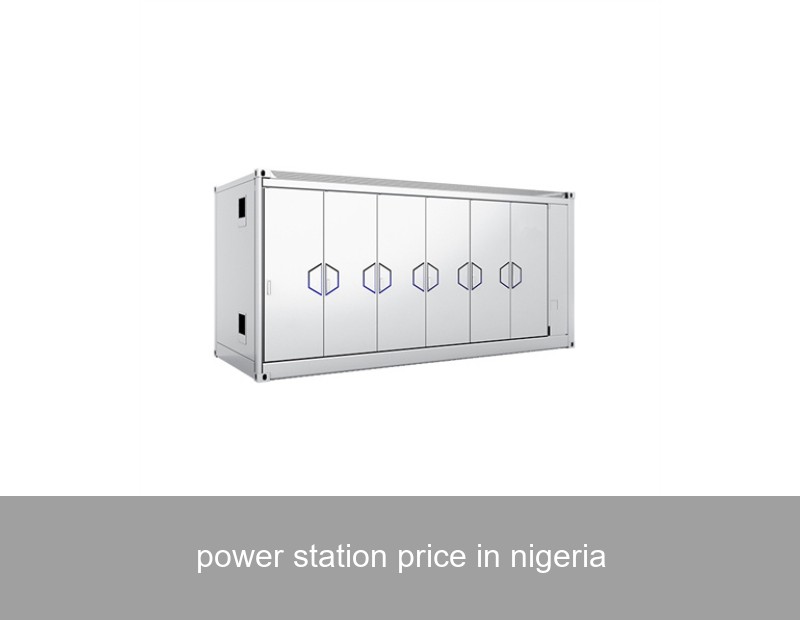
If you're searching for "power station price in Nigeria," you're likely facing a familiar frustration: unreliable grid power. The initial quote you see is just the tip of the iceberg. In Nigeria's dynamic market, the true cost of power encompasses not just the equipment, but the long-term value of reliability, operational savings, and business continuity. As a global leader in advanced energy storage, Highjoule understands that for businesses and communities in Nigeria, power isn't a commodity—it's the backbone of productivity and growth. This guide will help you look beyond the sticker price to understand the total value of a modern, battery-based power solution.
The Phenomenon: Nigeria's Energy Paradox
Nigeria, Africa's largest economy, faces a stark energy paradox. Despite its vast resources, the national grid struggles to meet demand, leading to frequent outages. The immediate response for many has been diesel generators—a noisy, polluting, and increasingly expensive stopgap. The cost of this dependency is staggering. According to a World Bank report, Nigerians spend an estimated $14 billion annually on backup generators. This isn't just about inconvenience; it's a direct tax on competitiveness, health, and environmental sustainability.

Image Source: Unsplash - Depicting the vibrant commercial energy demand in urban Nigeria.
This phenomenon has shifted the conversation. The question is no longer just "What is the price of a power station?" but "What is the price of reliable, clean, and affordable power for my specific needs?"
The Real Cost Breakdown: What Makes Up a Power Station Price?
Let's demystify the components. When evaluating a solar hybrid or battery backup power station, the total system price typically includes:
- Core Hardware: Battery racks, inverter/chargers, the battery management system (BMS), and safety equipment.
- Energy Source: Solar panels (for hybrid systems) or the cost of grid electricity for charging.
- Balance of System (BoS): Cabling, switchgear, mounting structures, and cooling systems.
- Software & Intelligence: The brain of the system. This is where companies like Highjoule add immense value. Our proprietary energy management system (EMS) optimizes every kilowatt-hour, extending battery life and maximizing savings.
- Installation & Commissioning: Professional design, engineering, and labor.
- Long-Term Operational Costs: This is the critical, often overlooked factor. It includes fuel (for generators), maintenance, battery replacements, and the financial impact of downtime.
For example, a standard diesel generator might have a low upfront cost but a cripplingly high operational cost. A Highjoule battery energy storage system (BESS) flips this model—offering a higher initial investment that is quickly offset by near-zero "fuel" costs (sun or off-peak grid power), minimal maintenance, and seamless backup.
Comparing Total Cost of Ownership (TCO)
| Cost Factor | Diesel Genset | Basic Battery Backup | Highjoule Intelligent BESS |
|---|---|---|---|
| Upfront Capital Cost | Low | Medium | Medium-High |
| Fuel Cost (5-year period) | Very High & Volatile | Low (Grid Charging) | Very Low (Solar/Grid Optimization) |
| Maintenance Cost | High | Low | Very Low (AI-Powered Monitoring) |
| System Lifespan | ~5-7 years | 8-12 years (battery dependent) | 15+ years (with advanced cycle life) |
| Noise & Emissions | Very High | None | None |
| Grid & Solar Integration | Limited | Basic | Fully Optimized |
Case Study: A Lagos Business's Journey Beyond Diesel
Let's ground this in reality. A medium-sized plastic manufacturing company in Ikeja, Lagos, was spending approximately ₦25 million annually on diesel for two 500kVA generators to cover 8-10 hours of daily grid outages. The noise was a nuisance, emissions were a concern, and price fluctuations created budgeting chaos.
In 2022, they partnered with Highjoule and a local solar EPC to install a hybrid power station:
- 400kW Solar PV Array
- Highjoule H2-Stack™ Commercial Battery System (500kWh capacity)
- Highjoule GridMaster™ Inverter System with integrated EMS
The power station price for this turnkey solution was a significant investment. However, let's look at the 18-month outcome:
- Diesel Spend Reduction: 95% eliminated, saving ~₦35 million to date.
- ROI Timeline: Projected payback period reduced to under 4 years.
- Operational Bonus: Silent operation improved the work environment. The EMS intelligently uses solar priority, then battery, and only uses the grid during off-peak tariff periods, squeezing maximum value from every asset.
This case, echoed by the International Energy Agency's emphasis on Nigeria's solar potential, demonstrates that the right system pays for itself.
The Highjoule Solution: Intelligent Storage for Nigerian Resilience
At Highjoule, we don't just sell hardware; we deliver predictable power outcomes. Our products are engineered for markets like Nigeria, where grid conditions are tough and reliability is non-negotiable.
Our core offering for the commercial and industrial segment includes:
- H2-Stack™ Modular Battery Systems: Scalable from 100kWh to multi-MWh. Using lithium iron phosphate (LFP) chemistry, they are safer, longer-lasting, and perfectly suited for high-cycle applications like daily grid backup.
- GridMaster™ Multi-Mode Inverters: These seamlessly switch between grid, solar, and battery power without a flicker—critical for sensitive manufacturing equipment.
- Highjoule Apex™ EMS Platform: This is our secret weapon. This cloud-based platform uses AI to learn your load patterns, forecast solar generation, and control your energy assets to minimize cost and maximize uptime. You can monitor and manage your entire power station from anywhere in the world.

Image Source: Unsplash - Representing modern energy system monitoring and control.
For residential and microgrid applications, our HomePower™ series brings the same intelligence to smaller scales, allowing communities and estates to create their own resilient power networks.
Future-Proofing Your Investment
The energy landscape is evolving. When considering the power station price today, you must ask: Is this system ready for tomorrow?
Key Future-Proofing Questions:
- Scalability: Can I easily add more batteries or solar panels as my needs grow?
- Software Upgrades: Will my system receive updates to improve its logic and efficiency?
- Grid Services: As regulations change, could my system potentially generate revenue by providing grid support services?
Highjoule's modular architecture and software-first approach are designed with this exact flexibility in mind. Your investment is protected for the long term.
Your Next Step Towards Energy Independence
The conversation about power station price in Nigeria is ultimately a conversation about your priorities. Is it the lowest upfront cost, or the lowest total cost of ownership? Is it about simply having backup, or about securing a clean, quiet, and intelligent energy foundation for your future growth?
We invite you to reframe the question. Instead of "What does a power station cost?" ask us: "What could my business save, and achieve, with a resilient, Highjoule-powered energy system?" What would you do with the savings from eliminating diesel, and the confidence of uninterrupted power?
 Inquiry
 Online Chat