


Powering the Future: Why the Modern Telco Supplier is Your Energy Partner
If you're in the telecommunications industry, you know the game has changed. You're no longer just a provider of connectivity; you're the backbone of the digital economy, a lifeline for remote work, and the enabler of smart cities. But with this critical role comes an immense challenge: power. The relentless demand for 24/7 uptime, the explosive growth of data traffic, and the push for sustainability are putting unprecedented strain on your energy infrastructure. This is where the definition of a power telco supplier is being rewritten. It's no longer just about selling you electricity or diesel generators. The modern power telco supplier is a strategic partner in resilience, efficiency, and decarbonization, leveraging cutting-edge energy storage and management solutions. Let's explore this transformation.
Table of Contents
- The Silent Crisis: Energy Demands Threatening Network Stability
- Data Doesn't Lie: The Soaring Cost of Unreliable Power
- Case Study: A European Telco's Grid-Independence Journey
- The Modern Power Telco Supplier: Architect of Energy Resilience
- Highjoule's Intelligent Solutions for Telco Energy Challenges
- Building Your Resilient Network: A Practical Framework
The Silent Crisis: Energy Demands Threatening Network Stability
Picture a typical cell tower or a critical data hub. It's humming with activity 24/7. The equipment generates significant heat, requiring constant cooling. Traffic peaks during the day, surges in the evening for streaming, and must remain rock-solid for emergency services. Now, layer on top of this the rollout of 5G. 5G networks, while faster, are notoriously power-hungry—estimates suggest they can consume up to three times more energy per gigabyte than 4G, though overall network efficiency aims to improve. This creates a perfect storm: rising energy costs, increased vulnerability to grid outages, and stricter carbon emission targets. Relying on the traditional grid and backup diesel gensets is becoming a risky, expensive, and unsustainable strategy for any forward-thinking telco.
Data Doesn't Lie: The Soaring Cost of Unreliable Power
Let's talk numbers. A single network outage can cost a telecom operator millions in lost revenue, not to mention the incalculable damage to brand reputation and customer trust. According to a study by the Ponemon Institute, the average cost of a data center outage in 2022 reached a staggering $9,000 per minute. For telcos, whose networks are distributed across thousands of sites, even short, localized outages accumulate massive costs. Furthermore, energy often constitutes one of the top three operational expenditures (OPEX) for a telecom company. With volatile energy prices, particularly in European markets, this financial exposure is significant. The traditional model is breaking down, and the data clearly signals the need for a new kind of power telco supplier—one focused on intelligent control and storage, not just supply.

Modern data centers and network hubs are at the heart of our connected world, but their energy appetite demands smarter solutions.
Case Study: A European Telco's Grid-Independence Journey
Consider the real-world example of a mid-sized European telecom operator in Southern Europe, facing frequent grid instability during summer heatwaves, which led to cooling system failures and network downtime. Their goals were clear: ensure 99.99% site availability, reduce diesel generator runtime by over 95%, and cut energy costs.
Their solution involved partnering with a modern energy solutions provider to deploy a hybrid power system at over 200 of their most critical cell tower sites. The system integrated:
- On-site solar PV panels
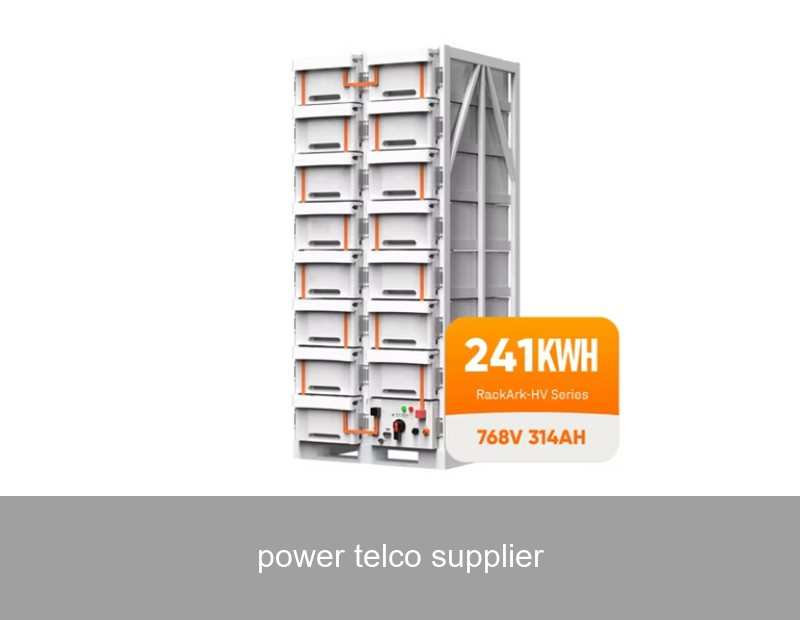
- High-cycle life, containerized lithium-ion battery energy storage systems (BESS)
- An advanced energy management system (EMS) for intelligent dispatch
The results after 18 months were transformative:
| Metric | Before | After | Improvement |
|---|---|---|---|
| Grid Dependency | 100% (with diesel backup) | < 40% | >60% reduction |
| Diesel Fuel Use | ~15,000 liters/site/year | < 500 liters/site/year | >95% reduction |
| Energy Cost Volatility | High, tied to grid tariffs | Low, predictable solar generation | ~30% OPEX saving |
| Site Availability | 99.7% | 99.99% | Critical resilience achieved |
This case exemplifies the new paradigm. The power telco supplier here didn't just provide a commodity; they delivered a customized, resilient energy ecosystem.
The Modern Power Telco Supplier: Architect of Energy Resilience
So, what should you look for in this new partner? The modern power telco supplier acts as an architect of energy resilience. Their expertise spans:
- Advanced Energy Storage (BESS): Providing the "buffer" that smooths out grid intermittency, stores renewable energy, and ensures instantaneous backup power without the noise, emissions, and maintenance of diesel generators.
- Intelligent Energy Management Software: The brain of the operation. A good EMS can predict energy usage, automate dispatch between grid, solar, and batteries, and even participate in grid services like frequency response for additional revenue.
- Renewable Integration: Seamlessly incorporating solar, and in some cases wind, to create a hybrid microgrid for each site or cluster of sites.
- Lifecycle Partnership: Offering everything from design and financing (like Energy-as-a-Service models) to installation, remote monitoring, and maintenance.
Highjoule's Intelligent Solutions for Telco Energy Challenges
At Highjoule, with nearly two decades of experience as a global leader in advanced energy storage, we've built our solutions around these very principles. We understand that a one-size-fits-all approach doesn't work for the complex, distributed nature of telecom networks.
Our IntelliBESS™ platform is specifically engineered for demanding commercial and industrial applications like telecom. These modular, containerized battery systems offer unparalleled power density and cycle life, perfect for the daily charge/discharge cycles of a solar-integrated site. Coupled with our GridMind® Energy Management Platform, telcos gain full visibility and control. GridMind® can be configured to prioritize solar self-consumption, schedule battery charging during low-tariff periods, and ensure critical load is always supported, all while providing real-time performance dashboards.
For telecom operators looking to future-proof their infrastructure, Highjoule acts as that strategic power telco supplier. We provide the hardware, the software, and the expertise to build a decentralized, resilient, and profitable energy network that supports your core business for decades to come.

Containerized Battery Energy Storage Systems (BESS), like Highjoule's IntelliBESS™, provide the silent, emission-free backbone for modern telecom power resilience.
Building Your Resilient Network: A Practical Framework
Transitioning to a resilient energy model is a journey. Here’s a practical framework to start the conversation within your organization:
- Audit & Prioritize: Conduct a detailed energy audit of your network sites. Identify which sites are most critical, have the highest energy costs, or are in areas with poor grid reliability. These are your prime candidates for a hybrid power system.
- Explore Financing: Capex constraints are real. Investigate OpEx-based models like Highjoule's Energy-as-a-Service (EaaS) offerings, where we own, operate, and maintain the energy assets, and you pay a predictable monthly fee for the energy service.
- Pilot a Project: Start with a pilot at a handful of diverse sites. Measure performance against clear KPIs: availability, fuel savings, carbon reduction, and total cost of energy. Use this data to build a business case for wider rollout.
- Plan for Scale: Work with a partner who can scale with you. The solution for a single cell tower is different from a large data center or a network of thousands of sites. Ensure your chosen technology and partner have a proven track record at scale.
Remember, this shift isn't merely an infrastructure upgrade—it's a strategic rethinking of power as a core component of network reliability and business continuity. As you plan your next network expansion or infrastructure refresh, the question is no longer just "who will supply our power?" but rather, "who will architect our energy resilience?".
What is the single biggest energy vulnerability your telecom network faces today, and how would addressing it transform your service reliability and bottom line?
 Inquiry
 Online Chat