


Beyond the Price of a Backup Generator: The Smart Energy Shift for Homes and Businesses
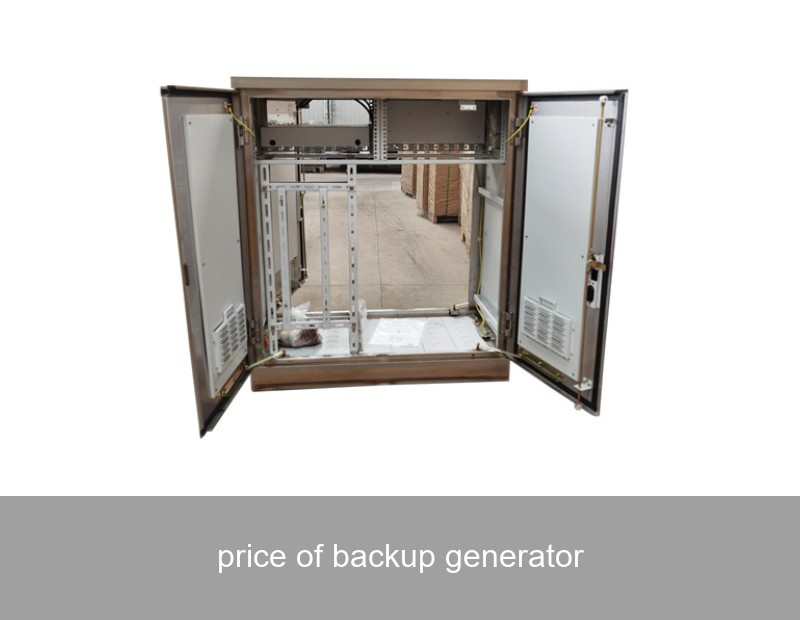
When the lights flicker and go out, the immediate thought for many homeowners and business operators is: "We need a backup generator." The initial price of a backup generator often seems like the primary hurdle. However, focusing solely on that upfront cost is like buying a car based only on the sticker price, ignoring fuel, maintenance, and long-term value. Today, a smarter, more sustainable, and ultimately more economical solution is reshaping the backup power landscape: modern battery energy storage systems (BESS). This article will explore the true total cost of ownership, why the energy storage paradigm is shifting, and how companies like Highjoule are leading this charge with intelligent, integrated solutions.
Table of Contents
- The True Cost: More Than Just the Purchase Price
- The Data Reality: Fuel, Maintenance, and Inefficiency
- Case Study: A California Winery's Calculated Switch
- The Modern Solution: Battery Storage as a Dynamic Asset
- Highjoule's Role: Intelligent Storage for Resilience and Savings
- Making the Choice: Key Questions to Ask
The True Cost: More Than Just the Purchase Price
The advertised price of a backup generator—whether a portable gasoline unit or a permanent natural gas standby system—is merely the entry fee. The real financial impact unfolds over years of operation. Let's break down the often-overlooked expenses:
- Fuel Costs: Generators consume fuel (gasoline, diesel, propane, natural gas) continuously while running. During a prolonged multi-day outage, fuel costs can skyrocket, and supply can become scarce or dangerous to store.
- Routine Maintenance: To ensure reliability, standby generators require regular servicing: oil changes, filter replacements, spark plug changes, and testing. This is a recurring annual cost.
- Operational Noise & Pollution: While not a direct line-item cost, generator noise can disrupt neighborhoods and violate local ordinances. Emissions also contribute to air pollution and may conflict with sustainability goals.
- Limited Functionality: Traditional generators typically power a limited set of circuits. They also have a short delay (seconds) before switching on, which can still interrupt sensitive electronics and digital infrastructure.

Image Source: Unsplash (Representative image of a backup generator)
The Data Reality: Fuel, Maintenance, and Inefficiency
To move from anecdote to evidence, let's look at some numbers. According to the U.S. Department of Energy, a typical 7kW residential standby generator running on natural gas can consume about 118 cubic feet of gas per hour. During a 24-hour outage, that's over 2,800 cubic feet—significantly increasing utility bills on top of the generator's capital cost.
For businesses, the numbers are even starker. A report by analysts highlights that operational expenses (fuel and maintenance) for diesel generators can account for 70-80% of their total lifecycle cost, dwarfing the initial purchase price. Furthermore, generators operate at a fixed RPM to produce stable power, often leading to poor fuel efficiency during partial loads. This is a stark contrast to the silent, zero-fuel-cost discharge of a battery system that you've previously charged, potentially from your own solar panels.
Case Study: A California Winery's Calculated Switch
Consider the real-world example of a mid-sized winery in Sonoma County, California, an area prone to Public Safety Power Shutoffs (PSPS) due to wildfire risk. Their old 100kW diesel generator had a purchase price of a backup generator of approximately $40,000 five years ago.
| Cost Category | Annual Estimate (Diesel Generator) | Notes |
|---|---|---|
| Fuel for 100+ hours of outages | $8,000 - $12,000 | Variable with diesel prices |
| Scheduled Maintenance & Testing | $2,500 | Contracts required for reliability |
| Unplanned Repairs | $1,000 (average) | Parts for aging units |
| Carbon Footprint | ~20 tons of CO2 | Significant impact on brand image |
Facing rising costs and aligning with their sustainable viticulture brand, the winery explored alternatives. They installed a 120kW / 300kWh battery storage system integrated with their existing solar array. The system was designed to keep critical refrigeration, fermentation control, and tasting room operations online. While the capital investment was higher, it eliminated ongoing fuel costs, reduced maintenance to minimal electrical checks, and provided silent, clean backup. It also allows them to participate in a grid services program with their utility, generating revenue during non-outage periods—a feat impossible for a standalone generator.
The Modern Solution: Battery Storage as a Dynamic Asset
This is where the fundamental shift occurs. A modern battery energy storage system isn't just a backup source; it's a dynamic energy asset. Unlike a generator that sits idle 99% of the time, a BESS can deliver daily value.
- Solar Self-Consumption: Store excess solar energy produced during the day for use at night, maximizing your renewable investment.
- Load Shifting & Bill Management: In regions with time-of-use (TOU) rates, store cheap grid electricity at night to power your home or business during expensive peak hours, slashing demand charges for commercial users.
- Instantaneous Backup: Provides seamless transition to backup power in milliseconds—no loud startup, no fuel smell, just lights staying on.
- Grid Services (for advanced systems): As seen in the case study, some systems can support grid stability and generate revenue.

Image Source: Unsplash (Representative image of a home battery system)
Highjoule's Role: Intelligent Storage for Resilience and Savings
At Highjoule, we've been at the forefront of this energy transition since 2005. We understand that the decision isn't just about the price of a backup generator versus a battery. It's about investing in a comprehensive energy resilience strategy. Our product suite is designed to provide this intelligent, multi-purpose solution.
For residential customers, our HomePower Stack series integrates seamlessly with solar inverters. Its AI-driven energy management software learns your consumption patterns, automatically optimizing when to charge from solar or the grid, and when to discharge to protect you from outages and high rates. You monitor and control everything from an intuitive app.
For commercial & industrial clients, our GridMax Pro scalable containerized solutions are game-changers. These systems provide critical backup for manufacturing lines, data centers, and cold storage, but their primary role is often demand charge reduction and renewable firming. By discharging batteries during short periods of peak demand, businesses can dramatically reduce the most significant portion of their electricity bill. Our industrial systems come with advanced monitoring and control for facility managers.
Furthermore, Highjoule's microgrid controllers can orchestrate a mix of solar, storage, and even existing generators, creating optimized, sustainable microgrids for campuses, communities, and remote industrial sites. This approach future-proofs your investment.
Making the Choice: Key Questions to Ask
So, when evaluating your backup power and energy management options, move beyond the initial sticker shock. Ask yourself and potential suppliers these broader questions:
- What is the total cost of ownership over 10 years, including all fuel, maintenance, and potential repairs?
- Does this solution provide value every single day, or only during emergencies?
- How does it align with my sustainability or corporate ESG (Environmental, Social, and Governance) goals?
- Can the system integrate with my current or future solar PV installation?
- What intelligence does the software offer for monitoring, control, and optimizing my energy costs?
The landscape of power resilience has evolved. The conversation is no longer defined by the simple price of a backup generator. It's about the value of a smart, clean, and versatile energy system.
Is your organization ready to analyze not just the cost of backup, but the ongoing value of your energy assets? What would a daily return on investment from your power system look like for your bottom line or household budget?
 Inquiry
 Online Chat