


The 10 Kilowatt Solar Inverter: Your Gateway to Energy Independence and Savings
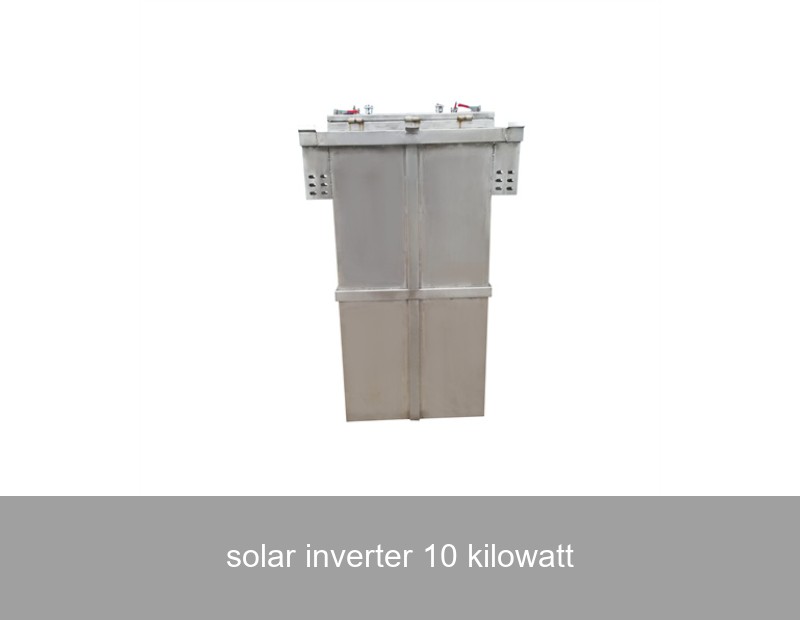
Have you ever looked at your electricity bill and wondered, "What if I could generate my own power?" For many homeowners and business owners across Europe and the US, this thought is becoming a reality, and at the heart of this revolution is a key piece of technology: the solar inverter. Specifically, the solar inverter 10 kilowatt (10kW) model has emerged as a sweet spot for substantial energy production. But what makes it so special, and is it the right choice for your energy goals? Let's demystify this powerhouse.
Table of Contents
What is a 10kW Solar Inverter?
In simple terms, a solar inverter is the brain of your photovoltaic (PV) system. While solar panels capture sunlight and produce direct current (DC) electricity, our homes and the grid run on alternating current (AC). The inverter's primary job is this crucial conversion from DC to usable AC. A 10 kilowatt solar inverter is designed to handle a maximum continuous AC output of 10,000 watts. This typically pairs with a solar array sized slightly larger (around 12-13 kW DC) to account for real-world conditions like heat and shading, ensuring the inverter operates at its efficient peak for most of the day.
The 10kW Sweet Spot: Power, Performance, and Payback
Why is the 10kW capacity so popular? It's a perfect balance of scale and economics.
- Ideal for Energy-Intensive Homes & Small Businesses: A 10kW system can generate approximately 30-45 kWh of electricity per day (depending on location), enough to cover the needs of a large family home with electric vehicles, pool pumps, or air conditioning, or a small commercial operation like a workshop or farm building.
- Strong Return on Investment (ROI): In markets with net metering or favorable feed-in tariffs, a system of this size can significantly slash electricity bills. The payback period in sun-rich regions of Southern Europe or the American Southwest can be remarkably attractive.
- Grid Support & Future-Proofing: Modern 10kW inverters are no longer just converters. They are grid-interactive units that can provide essential services like voltage and frequency regulation, helping to stabilize the local grid—a feature increasingly valued by utilities.

Image Source: Unsplash (Representative image of a modern inverter installation)
Beyond Conversion: The Smart Heart of a Modern Solar System
The latest 10 kilowatt solar inverters are technological marvels. Look for these advanced features:
- Dual MPPT Trackers: Most premium 10kW inverters feature two or more Maximum Power Point Trackers. Think of these as independent "channels" for your solar panels. If part of your roof is shaded in the afternoon, each MPPT can optimize the output of different panel strings independently, minimizing energy loss.
- High Efficiency (>98%): Every percentage point of efficiency matters. A 98%+ efficient inverter wastes less energy as heat, translating directly to more power delivered to your home and higher savings.
- Integrated Energy Management: This is where the future lies. Advanced inverters can communicate with battery storage systems, electric vehicle chargers, and smart home devices. They intelligently decide whether to power your home, charge your battery, or export to the grid based on real-time electricity prices and your consumption patterns.
Real-World Impact: A Case Study from California
Let's move from theory to practice. Consider the Johnson family in Sacramento, California. Facing average monthly bills of $220 and planning for an EV, they installed a 12.6 kW DC solar array with a 10kW solar inverter in Q2 2022.
| Metric | Before Solar | After Solar (First Year) |
|---|---|---|
| Average Monthly Bill | $220 | $18 (Grid Connection Fee) |
| Annual Energy Consumption | 14,000 kWh | 14,000 kWh |
| System Annual Production | 0 kWh | 17,500 kWh |
| Self-Consumption Rate | N/A | ~75% |
| Exported to Grid | N/A | ~25% |
The system generated a surplus during sunny days, credited via net metering to offset nighttime usage. Their projected payback period is under 7 years. The robust 10kW inverter ensured they captured nearly all available energy, even on partially cloudy days, thanks to its advanced MPPT technology. Data like this underscores the tangible benefits of correctly sizing your inverter and solar array. (For more on solar adoption data, see the Solar Energy Industries Association (SEIA) report).
How Highjoule Elevates Your 10kW Solar Investment
This is where expertise and product quality become non-negotiable. At Highjoule, with nearly two decades of experience since 2005, we understand that a solar inverter 10 kilowatt is not a commodity; it's the critical intelligence hub for your energy assets.
Our HPS Series Hybrid Power Station is engineered precisely for this tier of energy independence. It seamlessly integrates a high-efficiency, multi-MPPT 10kW inverter with modular lithium-ion battery storage. What does this mean for you?
- Uninterrupted Power: During a grid outage, the system automatically switches to backup power, keeping your essential loads running.
- Maximized Self-Consumption: The Highjoule energy management system (EMS) prioritizes using your solar generation to power your home and charge your batteries, only exporting excess. This maximizes your ROI, especially as feed-in tariffs decrease.
- Scalability for the Future: Starting with a 10kW inverter and, for instance, 10kWh of battery storage? You can easily add more battery modules later as your needs grow, all managed by the same robust inverter platform.
- Global Support: As a global provider, Highjoule offers certified installation networks and monitoring support across Europe and North America, ensuring your system performs optimally for decades.

Image Source: Unsplash (Representative image of solar system monitoring)
Choosing the Right 10kW Inverter for Your Needs
Selecting your inverter is a crucial decision. Here’s a quick guide:
- For Pure Bill Savings (Grid-Tie): A high-efficiency string inverter with multiple MPPTs is ideal. Ensure it has monitoring capabilities.
- For Backup Power & Resilience: A hybrid inverter, like Highjoule's HPS Series, is essential. It has built-in circuitry to safely disconnect from the grid and form a microgrid to power your home.
- For Complex Roofs: If you have multiple roof planes with different orientations, prioritize inverters with a high number of independent MPPT trackers.
- Warranty & Service: Opt for a product with a long warranty (10+ years is standard for premium brands) and a manufacturer with a proven local service track record.
Remember, the inverter's specifications should match your solar panel configuration and your future energy goals. Consulting with a certified expert, like Highjoule's network of partners, is always recommended. They can perform a detailed site analysis using tools that model shading and production (tools like NREL's PVWatts Calculator are industry-standard).
So, as you contemplate taking control of your energy future, ask yourself this: Is your goal simply to lower your bill, or is it to build a resilient, intelligent energy system that powers your life sustainably for the next 20 years? The choice of your 10 kilowatt solar inverter will define that path.
 Inquiry
 Online Chat