


PV Store Europe: How Much Does a Solar Battery System Really Cost?
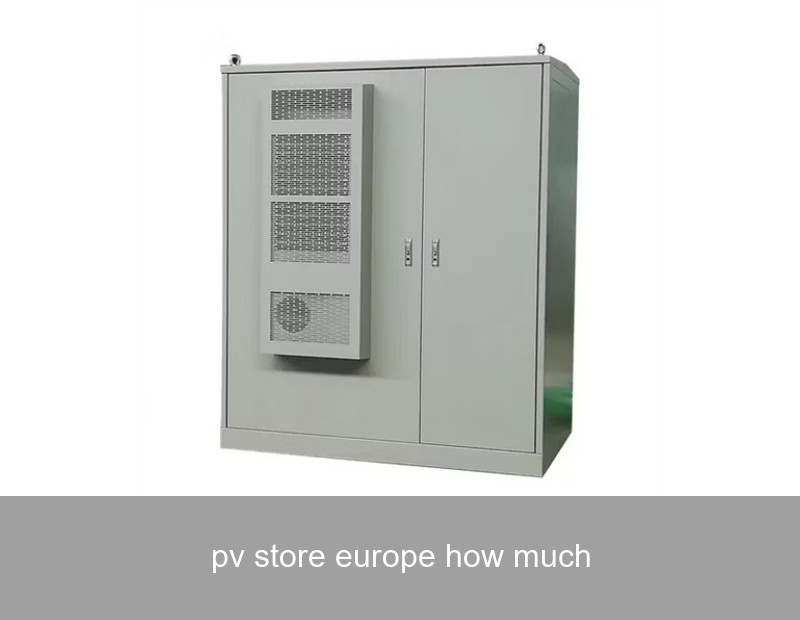
If you're in Europe and have been looking into solar panels, you've likely encountered the term "PV store." But the real question on most homeowners' minds is: PV store Europe, how much? The initial price tag you see for a battery can be surprising, but the true cost—and value—of a solar storage system is a more nuanced story. It's not just a purchase; it's an investment in energy independence and resilience. As energy prices remain volatile and the desire for sustainable living grows, understanding the full financial picture is key. Let's break down the costs, the savings, and the smart choices you can make for your home.
Table of Contents
- The Real Cost Breakdown: More Than Just a Battery
- The European Market: Prices, Trends, and Incentives
- A Real-World Case: The Schmidt Family Home in Germany
- Value Beyond the Price Tag: Resilience and Intelligence
- Choosing Your System: Key Questions for Your PV Store
- The Highjoule Approach: Integrated, Intelligent Storage
The Real Cost Breakdown: More Than Just a Battery
Asking "how much for a battery?" is like asking "how much for a car?" The answer depends dramatically on capacity, power, brand, technology, and installation complexity. A complete solar-plus-storage system involves several core components:
- The Battery Bank (Storage): Measured in kilowatt-hours (kWh), this is your energy "tank." Prices in Europe typically range from €400 to over €1,000 per kWh of usable capacity, depending on chemistry (like Lithium Iron Phosphate, or LFP, which is now the safety and longevity standard).
- The Hybrid Inverter or Battery Inverter: This is the brain and the converter. It manages energy flow between your solar panels, battery, home, and the grid. It can be a separate unit or integrated with the battery.
- Balance of System (BoS): This includes cabling, switchgear, safety disconnects, mounting hardware, and an energy management system (EMS).
- Installation & Professional Services: This is a significant portion of the cost. A certified electrician must ensure the system meets all local grid codes (VDE-AR-N 4105 in Germany, CEI 0-21 in Italy, etc.) and safety standards.
So, when you walk into a PV store in Europe, the quote for a typical 5-10 kWh residential storage system, fully installed, can broadly range from €7,000 to €15,000 or more, before any subsidies. The key is to look at the total system solution, not just an isolated product price.
The European Market: Prices, Trends, and Incentives
The European solar storage market is booming. Driven by high electricity prices and supportive policies, the continent saw a record deployment of over 17 GWh of battery storage in 2023, with homes and businesses leading the charge. A critical factor in the "how much" calculation is the availability of state and regional incentives.
| Country | Example Incentive (Varies by Region) | Potential Impact on Net Cost |
|---|---|---|
| Germany | KfW Development Loan (Low-interest credit) | Can reduce financing costs significantly |
| Italy | Superbonus 110% (Historic, now revised) / Regional subsidies | Has led to massive adoption; newer schemes still active |
| Austria | Climate Bonus (Klimabonus) & State-level grants | Direct cash rebates per kWh of storage |
| Sweden/Nordics | Green Technology Deductions & Municipal Programs | Reduces tax burden or offers upfront support |
These incentives can slash the upfront cost by 20-40% or more. Furthermore, the levelized cost of storage (LCOS)—the total cost of owning and operating the system per kWh cycled—has fallen dramatically. According to the International Renewable Energy Agency (IRENA), battery costs have fallen by over 90% in the last decade, making payback periods more attractive than ever.

Credit: Photo by Andreas Gücklhorn on Unsplash. A modern European home with a wall-mounted battery storage unit, a common sight as adoption grows.
A Real-World Case: The Schmidt Family Home in Germany
Let's move from theory to practice. The Schmidt family in Bavaria, Germany, installed a 8.2 kWp solar PV system in 2022. They were exporting most of their daytime production and buying expensive power at night. In early 2023, they decided to add storage.
- System Chosen: They selected a Highjoule HES-10.0 all-in-one storage system, featuring 10.2 kWh of safe LFP battery capacity and an integrated hybrid inverter.
- Total Installed Cost: €11,500 (before incentive).
- Incentive Received: A low-interest KfW loan combined with a Bavarian state grant reduced their effective upfront cost by approximately €2,300.
- Result: Their self-consumption rate (the share of solar power they use directly) jumped from 35% to over 85%. Their annual electricity bill dropped from €1,850 to an average of €210 (covering grid fees and winter purchases).
- Payback Period: Based on their savings and assuming modest energy price inflation, their net system is projected to pay for itself in under 8 years. With a product warranty of 10 years and an expected lifespan beyond 15, this represents a solid long-term investment.
This case highlights that the question isn't just "PV store Europe, how much?" but "How much can I save, and how quickly will it pay back?"
Value Beyond the Price Tag: Resilience and Intelligence
The pure financial payback is only part of the story. Modern systems like those from Highjoule deliver value that doesn't always fit on an invoice:
- Blackout Protection (Backup Power): Many systems, including Highjoule's Resilience Series, can automatically form an island grid during a power outage, keeping your lights, fridge, and internet on. What's the value of never losing power during a storm?
- Smart Energy Management: Advanced systems use AI-driven software to learn your consumption patterns, forecast weather, and optimize charging/discharging based on real-time electricity tariffs. This maximizes savings in dynamic pricing markets.
- Grid Support & Sustainability: By storing excess solar and discharging it during peak demand, you're actively supporting grid stability and accelerating the renewable transition.
Choosing Your System: Key Questions for Your PV Store
When consulting with a PV store specialist, arm yourself with these questions to get beyond the basic price:
- What is the usable capacity (not just nominal) and what is the battery's expected degradation after 10 years?
- Is the system AC-coupled or DC-coupled? (DC is often more efficient for new solar+storage installations).
- Does the inverter have grid-forming capability for seamless backup power?
- How intuitive is the monitoring app? Can I see real-time flows, savings, and system health?
- What is the complete warranty (battery, inverter, workmanship) and what is the after-sales service model?
The Highjoule Approach: Integrated, Intelligent Storage
At Highjoule, we believe the right answer to "PV store Europe, how much?" should be transparent and focused on long-term value. Since 2005, we've engineered storage solutions that are more than just components in a box. Our Home Energy Stack (HES) series is a prime example: a sleek, all-in-one unit that combines a high-cycle LFP battery, a powerful hybrid inverter, and our proprietary Neuron OS energy management platform into a single, simple-to-install system.
This integration eliminates compatibility guesswork, reduces installation time (and cost), and provides homeowners with a single point of responsibility. Our systems are designed for the European market, complying with all relevant standards and readily configurable for various incentive programs. We focus on delivering not just kilowatt-hours, but energy resilience, intelligence, and peace of mind.
Credit: Photo by Pipon Lora on Unsplash. Smart monitoring apps, like Highjoule's, put energy intelligence in the palm of your hand.
Ready to Define Your Own Cost-Benefit Equation?
The journey to energy independence starts with the right information. While the upfront investment is a consideration, the combination of falling technology costs, generous incentives, rising utility rates, and added resilience makes solar storage one of the most compelling home upgrades today. We encourage you to look at the total lifecycle value. What would a 70-90% reduction in your electricity bill and uninterrupted power mean for your household's budget and comfort over the next decade? What's the first question you'll ask your local PV store specialist when you visit?
 Inquiry
 Online Chat