


PV System Connected to Grid: Your Guide to Smart, Sustainable Energy
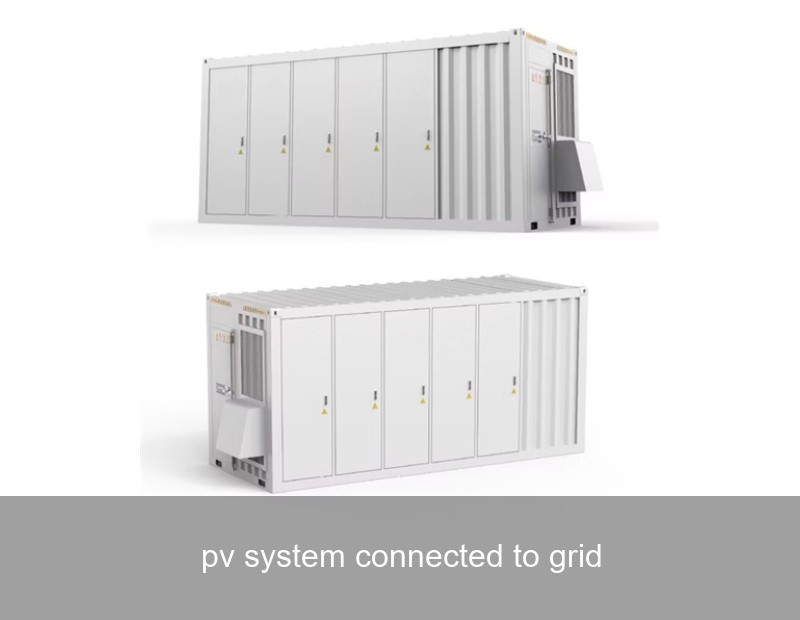
You’ve seen the solar panels on rooftops, and perhaps you’ve even considered them for your own home or business. But have you ever wondered how that clean, self-generated power interacts with the traditional electricity network? A PV system connected to grid is more than just panels on a roof; it's a sophisticated energy partnership. It allows you to generate your own renewable power, reduce your bills, and contribute to a more resilient grid—all while keeping the security of the utility connection as a backup. For over 18 years, Highjoule has been at the forefront of designing and optimizing these intelligent energy systems for customers across Europe and the U.S., turning the simple act of connecting solar to the grid into a strategic advantage.
Table of Contents
- How a Grid-Connected PV System Works: The Seamless Partnership
- Beyond the Panels: Key Components of a Modern Grid-Tied System
- Case Study: A U.S. Manufacturing Plant's Grid-Tie Success
- Highjoule's Role: From Connection to Intelligent Energy Management
- The Future of Grid-Connected Solar
How a Grid-Connected PV System Works: The Seamless Partnership
Think of the electrical grid as a vast, two-way street. Traditionally, power flowed in one direction: from the utility to your home. A grid-tied PV system turns you into an active participant on that street. Here’s the simple magic: your solar panels generate direct current (DC) electricity during the day. An inverter—the brain of the operation—instantly converts this DC power into the alternating current (AC) that powers your appliances and the grid.
- When You Generate More Than You Use: The excess solar energy doesn’t go to waste. It flows back onto the grid, spinning your electricity meter backwards in many cases (through net metering) and earning you credits.
- When You Need More Power: At night or on cloudy days, your system seamlessly draws the shortfall from the grid. This ensures you never experience an interruption.
This elegant dance is managed automatically by your system's components, creating a reliable and efficient energy flow. The key to maximizing this partnership lies in intelligent control and high-quality components, areas where expert design from a provider like Highjoule makes a profound difference.
Beyond the Panels: Key Components of a Modern Grid-Tied System
Understanding the pieces of the puzzle helps you see the value in a well-engineered system. It's not just about the panels.
| Component | Primary Function | Why It Matters |
|---|---|---|
| Solar Panels (PV Modules) | Convert sunlight into DC electricity. | Efficiency and durability determine long-term energy yield. |
| Grid-Tie Inverter(s) | Convert DC to grid-compliant AC; synchronize with grid frequency. | The core of safety and efficiency. Advanced inverters offer smart grid functions. |
| Bi-Directional Meter | Measures power drawn from and exported to the grid. | Essential for net metering accounting and monitoring system performance. |
| Mounting & Racking | Securely attaches panels to roof or ground. | Critical for system longevity, safety, and optimal panel angle. |
| Advanced Energy Management System (EMS) | Intelligently controls energy flow, storage, and consumption. | This is where modern systems shine. It optimizes self-consumption, manages battery storage (if present), and can respond to grid signals. |
Speaking of battery storage, while not mandatory for a basic grid-tie system, adding a battery like Highjoule's H-Cell Commercial Series transforms the setup. It allows you to store excess solar energy for use at peak tariff times or during brief grid outages (in islanding mode), increasing your independence while providing valuable grid services.
The Real-World Impact: Benefits and Modern Challenges
The benefits of a grid-connected PV system are compelling. For the owner, it means significant savings on electricity bills, protection against rising energy costs, and a reduced carbon footprint. For the community and grid, distributed solar generation reduces strain on power plants and transmission lines during peak demand, enhancing local energy resilience.
However, the rapid growth of solar brings challenges. High solar generation on sunny days can lead to local voltage fluctuations. As the International Energy Agency (IEA) notes, integrating variable renewables requires grid flexibility. This is where outdated, "dumb" inverters fall short, and why modern solutions are critical.

Image Source: Unsplash - A modern commercial PV installation.
The solution lies in smart, grid-responsive technology. Advanced inverters with features like volt-var regulation can automatically adjust their output to help stabilize grid voltage. This turns a potential problem into a grid-supportive feature.
Case Study: A U.S. Manufacturing Plant's Grid-Tie Success
Let's look at a concrete example. A mid-sized automotive parts manufacturer in Ohio faced steep demand charges and wanted to lock in long-term energy costs. In 2022, they partnered with Highjoule to install a 1.2 MW rooftop PV system connected to grid, integrated with a 500 kWh H-Cell battery storage system and our proprietary GridSync EMS.
- The Data: The system offsets 85% of the facility's annual electricity consumption. The battery is programmed to discharge during the 4-7 PM peak window, slashing demand charges by an average of 30% monthly.
- The Grid Interaction: The Highjoule GridSync platform enables the plant to participate in a utility demand response program. When the grid is stressed, the utility can send a signal to the system to use stored battery power, reducing the plant's draw from the grid and earning them additional revenue.
- The Outcome: The project delivers a projected payback period of under 6 years and provides the company with predictable energy costs, enhanced sustainability credentials, and a role as a proactive grid citizen.
Highjoule's Role: From Connection to Intelligent Energy Management
At Highjoule, we view a PV system connected to grid as the foundation of a smart energy asset. Our expertise moves beyond simple installation. We provide end-to-end solutions:
- Custom Design & Engineering: We model your energy load, site specifics, and local utility rules to design a system that maximizes ROI and grid compatibility.
- Advanced Product Ecosystem: From high-efficiency inverters to our scalable H-Cell battery systems, we supply integrated, certified components that are built to communicate seamlessly.
- Intelligent Software: The Highjoule Energy Platform provides real-time monitoring, performance analytics, and automated control strategies to optimize self-consumption, storage cycles, and grid service participation.
- Ongoing Support & Grid Services Integration: We help commercial and industrial clients navigate complex utility interconnection agreements and even monetize their system's flexibility in emerging energy markets.

Image Source: Unsplash - Energy management system dashboard.
The Future of Grid-Connected Solar
The evolution is clear: passive grid-tie systems are becoming active grid-interactive assets. With the rise of electric vehicles and heat pumps, intelligent management of a PV system connected to grid will be essential. Future trends, as highlighted by resources like the National Renewable Energy Laboratory (NREL), point toward inverter-based resources forming the backbone of a decentralized, resilient grid.
This means your solar investment can become even more valuable, providing services that keep the grid stable for everyone. The question is no longer just "how do I connect solar to the grid?" but "how can my energy system actively partner with the grid for maximum economic and environmental benefit?"
Is your organization ready to explore how an intelligent, grid-interactive solar and storage system could transform your energy costs and sustainability profile? What specific grid challenges or energy goals are you facing in your region?
 Inquiry
 Online Chat