


Unlocking the Full Potential of Renewable Energy: The Critical Role of Solar and Wind Power ESS
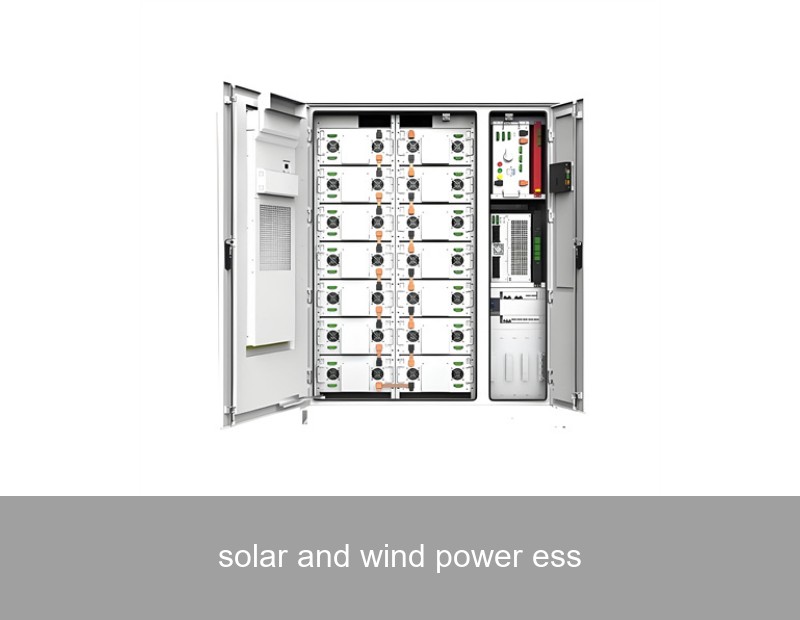
You've seen the headlines: solar panels are breaking efficiency records, and wind turbines are growing taller than skyscrapers. The transition to clean energy is accelerating. But if you're a business owner, facility manager, or even a homeowner with a keen eye on sustainability and energy independence, you've likely encountered a persistent challenge. What happens when the sun doesn't shine, or the wind doesn't blow? This is where solar and wind power ESS (Energy Storage Systems) transition from a supportive technology to the absolute cornerstone of a reliable, clean energy future. Let's explore why.
Table of Contents
- The Intermittency Challenge: More Than Just a Cloudy Day
- The ESS Solution: More Than Just a Battery
- How a Modern Solar and Wind Power ESS Works
- A Real-World Case: Stabilizing a Microgrid in Southern Europe
- Highjoule's Approach: Intelligent Storage for a Demanding Grid
- The Future Outlook and Your Next Step
The Intermittency Challenge: More Than Just a Cloudy Day
The phenomenon is clear. Renewable generation is variable. A sudden cloud cover can cause a solar farm's output to plummet in minutes. A calm day leaves wind turbines idle. This isn't just an engineering puzzle; it's a grid stability and economic issue. The traditional grid was built for steady, predictable power from fossil fuels. Injecting large amounts of variable renewable energy without a buffer is like trying to replace a steady river with unpredictable rain showers—you'll either have droughts or floods.
Consider this data point: In 2023, the International Energy Agency (IEA) reported that renewables are set to contribute 80% of new power capacity globally by 2030. However, they also note that grid integration remains a top barrier. The variability can lead to "curtailment," where grid operators are forced to pay renewable generators to *stop* producing because the grid can't handle the excess during peak generation times. This is wasted clean energy and lost revenue.
The ESS Solution: More Than Just a Battery
This is where the solar and wind power ESS enters the stage as the definitive solution. Think of it not just as a battery, but as an intelligent energy reservoir and manager. Its primary function is to time-shift energy: absorbing excess power when generation is high (a sunny, windy afternoon) and discharging it when generation is low or demand is high (evening peaks, calm periods).
The benefits cascade from this core function:
- Grid Stability: ESS provides frequency regulation and voltage support, acting as a shock absorber for the grid.
- Increased Renewable Utilization: Drastically reduces curtailment, maximizing the return on investment for solar and wind assets.
- Energy Independence & Resilience: For businesses and communities, it provides backup power and reduces reliance on the volatile wholesale energy market.
- Cost Savings: By storing cheap renewable energy and using it during expensive peak-rate hours, significant operational savings are achieved.

Image Source: Unsplash - A utility-scale energy storage system co-located with solar generation.
How a Modern Solar and Wind Power ESS Works
Let's break down the components of a sophisticated system, moving beyond the basic battery cell.
| Component | Function | Why It Matters |
|---|---|---|
| Battery Rack (Li-ion, LFP) | The core energy storage medium. Lithium Iron Phosphate (LFP) is now the dominant chemistry for stationary storage due to its safety, longevity, and stability. | Provides the actual "fuel tank" for electrons. LFP chemistry, used in Highjoule systems, offers a longer lifecycle and superior thermal stability. |
| Power Conversion System (PCS) | The "translator" between DC (battery) and AC (grid/load). It's a bidirectional inverter. | Determines charge/discharge speed and efficiency. Advanced PCS can respond to grid signals in milliseconds. |
| Battery Management System (BMS) | The "brain" of the battery pack, monitoring voltage, temperature, and state of charge for each cell. | Ensures safety, maximizes battery life, and prevents damage from overcharge or deep discharge. |
| Energy Management System (EMS) | The system-level "orchestrator." It makes intelligent decisions on when to charge or discharge based on weather forecasts, energy prices, and consumption patterns. | This is where the true intelligence and ROI optimization happens. It turns a simple battery into a smart grid asset. |
A Real-World Case: Stabilizing a Microgrid in Southern Europe
Let's move from theory to practice. A compelling example comes from a coastal industrial park in Spain. The site had invested heavily in both rooftop solar and a small wind turbine, aiming for 70% renewable coverage. However, they faced two major issues: 1) Their afternoon solar peak often exceeded their immediate load, leading to wasted energy fed back to the grid at low tariffs. 2) Evening operations relied almost entirely on the expensive grid, as wind was unreliable at that time.
The Solution & Data: In 2022, they deployed a 500 kWh / 250 kW solar and wind power ESS from Highjoule, integrated with their existing assets. The Highjoule EMS was programmed to prioritize self-consumption and peak shaving. The results after one year were quantified by an independent audit:
- Renewable Self-Consumption Rate Increased: From 35% to over 85%.
- Peak Grid Demand Reduced: By 40%, translating to substantial savings on capacity charges.
- ROI Timeline: The project achieved its calculated return on investment in under 5 years, factoring in local incentives and avoided energy costs.
This case, documented in part by the U.S. Department of Energy's Solar Energy Technologies Office publications on hybrid systems, illustrates the transformative impact of adding intelligent storage to a renewable mix.
Highjoule's Approach: Intelligent Storage for a Demanding Grid
At Highjoule, with nearly two decades of experience since 2005, we've seen the evolution of storage from a novelty to a necessity. Our philosophy is that a solar and wind power ESS must be more than hardware; it must be a seamlessly integrated, intelligent, and safe solution.
Our product suite is built on three pillars:
- Highjoule H-Series Commercial & Industrial (C&I) Systems: Scalable, containerized or skid-mounted solutions designed for factories, data centers, and large commercial facilities. They feature our proprietary AegisAI EMS, which uses machine learning to optimize dispatch strategies based on real-time weather data and tariff structures, a crucial feature in volatile European and U.S. energy markets.
- Highjoule H-Dome Residential & Community Storage: Aesthetically designed, safe, and intuitive systems for homeowners and housing developments. They allow users to maximize their rooftop solar investment and provide essential backup power during outages, a growing concern in many regions.
- Highjoule GridSync Utility-Scale Solutions: Engineered for front-of-the-meter applications, these large-scale systems provide grid services like frequency regulation, renewable firming, and transmission deferral. They are the workhorses that enable higher national penetration of wind and solar power.

Image Source: Unsplash - A technician performing maintenance on a large battery storage system.
Our systems universally utilize LFP battery chemistry, coupled with multi-layer safety protocols that include active cooling, advanced fire suppression, and continuous remote monitoring from our Global Operations Center. This commitment to safety and reliability is non-negotiable.
The Future Outlook and Your Next Step
The trajectory is undeniable. As noted by research from sources like BloombergNEF, the cost of energy storage continues to fall while performance improves. The integration of solar and wind power ESS is becoming a standard part of any serious renewable energy project, from a single-family home to a national grid.
The question is no longer "if" storage is needed, but "how" to implement it effectively. How will your organization navigate the shift from being a passive consumer to an active prosumer, managing your own energy generation, storage, and consumption? What specific energy resilience or cost-saving goal could a tailored storage solution help you achieve in the next 18 months?
We invite you to explore this question further. What's the first challenge you'd want a smart energy storage system to solve for you?
 Inquiry
 Online Chat