


Beyond the Rooftop: Exploring the Expanding Universe of Modern Solar Panel Applications
When you hear "solar panels," a familiar image likely springs to mind: sleek, blue-black arrays mounted on residential rooftops. While that remains a vital application, the story of solar energy is rapidly evolving. Today, solar panel applications are diversifying at an astonishing pace, driven by innovation and the urgent need for sustainable, resilient power. From powering our commutes to reviving agricultural land and hardening community infrastructure, solar is breaking free from its traditional boundaries. This expansion isn't just about placing panels in new locations; it's about integrating intelligent energy storage to ensure that the sun's power is available precisely when and where it's needed. As a leader in this transformation, Highjoule is at the forefront, designing smart storage solutions that unlock the full, 24/7 potential of these diverse solar applications.
Table of Contents
- The Phenomenon: Solar is No Longer Just a Rooftop Guest
- The Data: Quantifying the Solar Application Boom
- Case Study: Agrivoltaics - A Dual-Use Solution in France
- Beyond the Basics: Innovative Solar Panel Applications Reshaping Markets
- The Storage Imperative: Why Every Solar Application Needs a Brain
- Highjoule's Role: Enabling Intelligent Solar-Plus-Storage Ecosystems
- Future Horizons: Where Do We Go From Here?
The Phenomenon: Solar is No Longer Just a Rooftop Guest
The energy landscape is undergoing a quiet revolution. You can now see solar panels integrated into the facades of office buildings, deployed as noise barriers along highways, and even floating on reservoirs. This shift is fueled by a powerful combination: plummeting solar module costs, rising policy support, and growing corporate sustainability goals. But there's a catch. The sun, famously, doesn't shine all the time. The true value of these innovative solar panel applications is only realized when the generated energy can be stored and managed intelligently. This is where the conversation moves from simple generation to comprehensive energy resilience.
The Data: Quantifying the Solar Application Boom
Let's look at the numbers. While rooftop residential solar continues to grow, the non-residential segments are accelerating. According to the International Energy Agency (IEA), global renewable capacity additions soared by almost 50% in 2023, with solar PV accounting for three-quarters of this expansion. In the U.S., the Solar Energy Industries Association (SEIA) reports that community solar (a model allowing multiple customers to subscribe to a shared off-site array) is expected to add 6 gigawatts of capacity over the next five years, a 118% increase. In Europe, ambitious REPowerEU plans are directly stimulating novel applications like agro-PV and floating PV to maximize land and resource use.
| Application | Key Driver | Growth Indicator |
|---|---|---|
| Agrivoltaics | Land-use efficiency, crop protection | Global capacity expected to exceed 14 GW by 2031 (source: research firms) |
| Floating Solar (FPV) | Water conservation, reduced land use | Global installations projected to grow 25%+ annually through 2030 |
| Vehicle-Integrated PV | Extended EV range, reduced grid dependence | Multiple OEMs launching solar-assisted EV models by 2025 |

Agrivoltaics: Combining solar energy and agriculture. Source: Unsplash
Case Study: Agrivoltaics - A Dual-Use Solution in France
A compelling example comes from a pilot project in France's Rhône Valley. A vineyard partnered with a solar developer to install semi-transparent solar panels several meters above the grapevines. The results, monitored over three growing seasons, were insightful. The panels provided partial shade, reducing water evaporation from the soil by an estimated 30%—a critical advantage in drought-prone regions. While the vines received slightly less direct sunlight, the microclimate created reduced plant stress. The 200 kW solar installation, coupled with a dedicated 400 kWh battery storage system, not only powered the vineyard's operations but also fed stable power into the local grid during peak evening hours. This case highlights how dual-use solar panel applications can address both energy and environmental challenges when paired with storage.
Beyond the Basics: Innovative Solar Panel Applications Reshaping Markets
Let's delve into some of the most promising frontiers for solar technology:
- Building-Integrated Photovoltaics (BIPV): Solar is becoming the building material itself. Think solar roof tiles, spandrel glass, and curtain walls that generate power. This turns every sun-facing surface of a skyscraper into a potential power plant.
- Transportation and Mobility: From solar-assisted electric vehicles (extending range by 10-40 km per day) to solar-powered charging corridors for trucks, the transport sector is beginning to harness the sun directly.
- Solar for Microgrids and Resilience: In areas prone to outages or for critical facilities like hospitals, solar-plus-storage microgrids are becoming the gold standard for energy independence. They operate connected to the main grid or island themselves during blackouts.
The Storage Imperative: Why Every Solar Application Needs a Brain
Here's the central insight: an advanced solar application without storage is like a smartphone without a battery—powerful but tethered and unreliable. The intermittent nature of solar power means generation peaks midday, often not aligning with peak demand (which is typically morning and evening). Intelligent battery storage systems solve this by:
- Time-Shifting Energy: Storing excess solar production for use later.
- Providing Grid Services: Stabilizing frequency and relieving congestion.
- Ensuring Resilience: Providing backup power during grid failures.
Without storage, the full economic and operational value of these innovative solar investments cannot be captured.

Battery Energy Storage System (BESS) for grid stability. Source: Unsplash
Highjoule's Role: Enabling Intelligent Solar-Plus-Storage Ecosystems
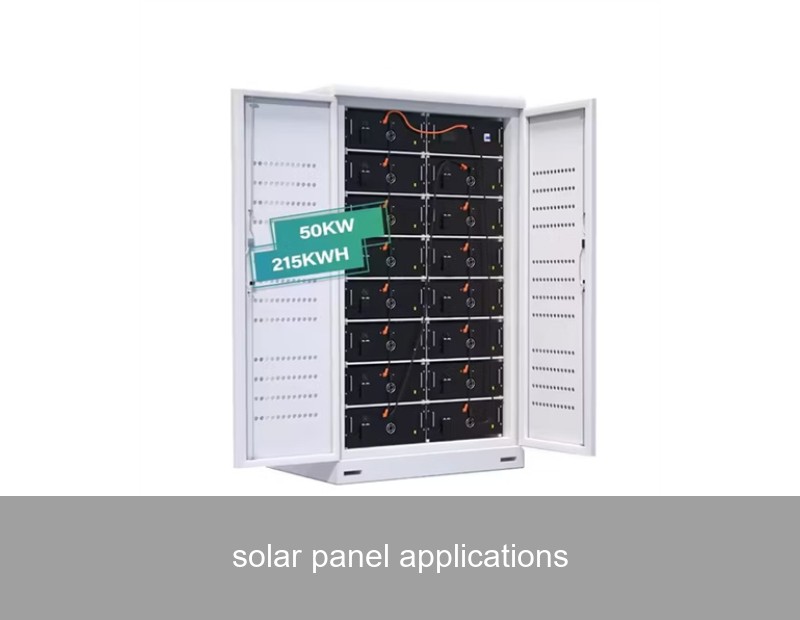
This is precisely where Highjoule's expertise becomes critical. Since 2005, we have focused on designing and deploying advanced battery energy storage systems (BESS) that act as the intelligent core for modern solar panel applications. Our solutions are not one-size-fits-all. For a commercial agrivoltaics project, we might deploy our containerized H-Joule Cube, offering robust, high-capacity storage for grid feed-in management. For a BIPV-equipped office building, our H-Joule Pulse commercial storage system seamlessly integrates with building management systems to maximize self-consumption and reduce demand charges.
Our technology goes beyond hardware. The Highjoule Energy Management Platform uses AI-driven forecasting to optimize when to store solar energy, when to use it on-site, and when to dispatch it to the grid for maximum revenue. For a microgrid application, this intelligence ensures critical loads are always powered, prioritizing solar-stored energy. By providing these smart, scalable storage solutions, Highjoule transforms solar installations from simple generators into predictable, dispatchable, and resilient energy assets.
Future Horizons: Where Do We Go From Here?
The trajectory is clear: solar power will continue to permeate every facet of our built environment and infrastructure. The next wave of innovation will likely focus on even higher integration—think solar films on every vehicle, or synergistic systems where the waste heat from certain solar panels is used for industrial processes. The constant across all these advancements will be the non-negotiable need for sophisticated, software-driven energy storage. It's the key that unlocks true sustainability and resilience.
As you consider the future of energy for your business, community, or project, we pose this question: How could your operations or assets benefit from not just generating solar energy, but from truly controlling and optimizing its use, 24 hours a day? The potential extends far beyond the meter.
 Inquiry
 Online Chat