


Beyond the Glass: How Advanced Electronics Unlock the True Power of Your Solar Panel & Electronics System
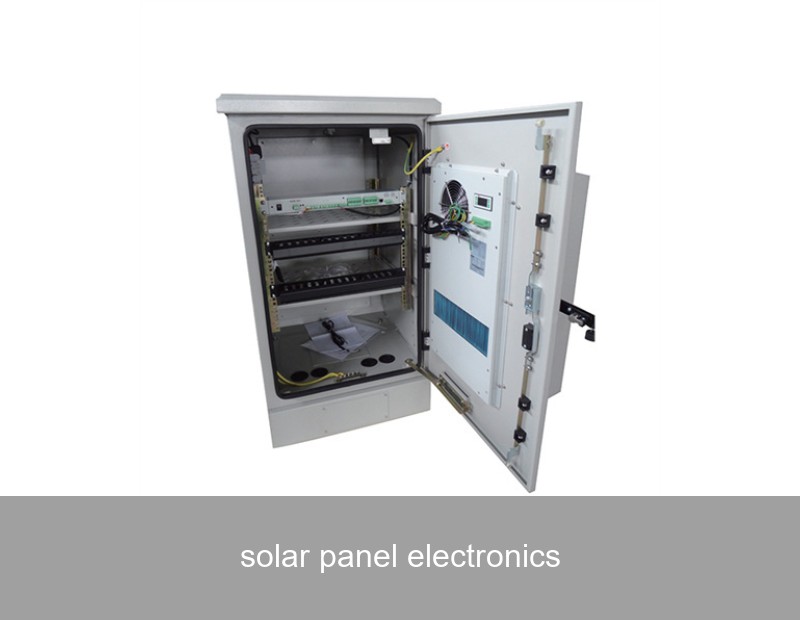
When you picture solar energy, you likely see the iconic blue-black panels glinting on a rooftop. They are the face of the renewable revolution. But here's a truth every savvy homeowner and business owner should know: a solar panel is only as good as the electronics that support it. The real magic, the efficiency, the resilience, and the return on investment are all forged in the sophisticated world of power electronics and smart system management. This is where the simple capture of sunlight transforms into reliable, usable, and intelligent power for your home or business.
The Hidden Electronics: More Than Just a Panel
Think of your solar array as a high-performance orchestra. The solar panels are the brilliant string section, producing the raw melody of direct current (DC) electricity. But without a conductor and skilled musicians to interpret and harmonize, the music falls flat. In a solar system, the "conductor" and "musicians" are the often-overlooked electronics: inverters, power optimizers, charge controllers, and battery management systems (BMS). These components determine how much of that raw solar potential actually powers your appliances, charges your electric vehicle, or gets stored for a rainy day.

Image source: Unsplash - The intricate electronics inside a solar system.
The Heart: Power Electronics
This category handles the fundamental conversion and management of electrical current. It's the core muscle of your system.
The Inverter's Crucial Role
The inverter is the undisputed workhorse. Its primary job is to convert the DC electricity from your panels into the alternating current (AC) that powers everything in your building. But modern inverters are so much more than simple converters.
- Maximum Power Point Tracking (MPPT): This intelligent software constantly hunts for the optimal voltage at which your panels produce the most power, adjusting for shading, temperature changes, and panel aging.
- Grid Interaction: For grid-tied systems, the inverter synchronizes your solar output with the utility grid's frequency and voltage, ensuring safe and stable operation.
- System Monitoring: Most now include connectivity, providing you with real-time and historical data on your system's performance via a smartphone app.
Optimizers & Controllers: The Fine-Tuners
To further combat efficiency loss from shading or mismatched panels, module-level power electronics (MLPE) like DC optimizers are a game-changer. Attached to each panel, they allow each one to operate independently at its own peak performance, preventing a single shaded panel from dragging down the output of the entire string. Similarly, charge controllers are vital for off-grid or battery-backed systems, meticulously regulating the flow of electricity to and from your battery bank to prevent overcharging and damage.
The Brain: Battery & System Electronics
When you add storage, the electronic complexity—and potential—skyrockets. This is the brain of your energy ecosystem.
- Battery Management System (BMS): The guardian of your battery. A high-quality BMS, like those integrated into every Highjoule system, continuously monitors every cell for voltage, temperature, and current. It ensures safe operation, balances cells, maximizes lifespan, and provides precise state-of-charge data.
- Hybrid or Storage Inverters: These advanced inverters can manage multiple energy flows simultaneously: from solar panels, to the grid, to the battery, and to your home loads. They make decisions in milliseconds to optimize self-consumption and provide backup power during an outage.
- Energy Management System (EMS): The strategic commander. Using software algorithms and often artificial intelligence, an EMS analyzes your energy production, consumption patterns, weather forecasts, and even utility rate schedules. It then automates when to store energy, when to use it, and when to sell it back to the grid for maximum economic benefit.
The Data Story: Quantifying the Electronics Advantage
The impact of advanced electronics isn't theoretical; it's measurable. According to a field study by the National Renewable Energy Laboratory (NREL), systems using module-level power electronics (like optimizers) can recover up to 35% of energy losses typically caused by shading and mismatch. Furthermore, a smart, electronics-driven system can increase self-consumption of solar energy from an average of 30-40% to over 70%, dramatically reducing reliance on the grid. This is the difference between just having solar and truly mastering your energy use.
| Component | Key Function | Typical Performance Gain/ Benefit |
|---|---|---|
| Advanced String Inverter with MPPT | Efficient DC to AC conversion & panel string optimization | Up to 5-10% more yield vs. basic inverters |
| DC Power Optimizers (MLPE) | Module-level performance maximization | Can recover up to 35% of shading/mismatch losses |
| Integrated Battery System with AI EMS | Intelligent storage & consumption scheduling | Can boost self-consumption to over 70%, optimize for time-of-use rates |
Case Study: A German Brewery's Recipe for Resilience
Consider the real-world example of a mid-sized brewery in Bavaria, Germany. They installed a 250 kW rooftop solar array. Initially, with a standard inverter system, they used only about 35% of their solar production directly, selling the rest to the grid at a low feed-in tariff. Their afternoon energy demand peak, driven by refrigeration and packaging lines, was still largely met by expensive grid power.
Their solution was an integrated upgrade focused on solar panel & electronics intelligence. They partnered with Highjoule to deploy a Highjoule H-Stack Commercial battery storage system (featuring a high-precision BMS) coupled with a Highjoule AI-powered Energy Management System. The results after one year were striking:
- Self-Consumption Rate: Jumped from 35% to 82%.
- Grid Demand During Peak Hours: Reduced by 95%.
- Annual Energy Costs: Slashed by €28,000, yielding a return on investment in under 5 years.
- Resilience: The system now provides critical backup for refrigeration units, protecting inventory during grid instability.
This wasn't just a panel upgrade; it was an electronics and intelligence upgrade that transformed their energy profile.

Image source: Unsplash - Commercial solar installation.
The Future: Smart Electronics & Integrated Systems
The trajectory is clear: the future of solar is not just photovoltaic, it's "electroniphotic." We are moving towards self-aware, communicative energy systems. Imagine electronics that can perform predictive maintenance, alerting you to a slight dip in a panel's performance before you ever notice it. Or systems that seamlessly integrate with electric vehicle chargers, heat pumps, and smart home devices, creating a fully synchronized, efficient, and carbon-neutral home ecosystem. This holistic integration is the cornerstone of the modern microgrid.
Highjoule's Role in Your Energy Ecosystem
Since 2005, Highjoule has been at the forefront of this electronic evolution. We understand that superior hardware is only half the story. That's why our residential and commercial energy storage solutions are built around our proprietary, multi-layered BMS for unparalleled safety and longevity. Our smart hybrid inverters are designed for seamless integration, and our cloud-based monitoring and EMS platform provides the intelligence to turn raw energy into savings and security.
For us, a solar panel & electronics system is a unified, intelligent organism. We don't just supply components; we provide the technological backbone that ensures every kilowatt-hour generated is a kilowatt-hour wisely used.
So, as you consider harnessing the sun, ask yourself this: Are you looking for just a source of power, or are you investing in an intelligent energy partner that thinks for itself? What could your home or business achieve with a system that doesn't just produce energy, but actively manages it to meet your specific goals?
 Inquiry
 Online Chat