


Solar Panel for Off Grid Living: Your Blueprint for True Energy Freedom
Imagine a life untethered from monthly utility bills and grid outages, where your power comes silently from the sun. This is the promise of solar panel for off grid living. But moving beyond the romantic ideal requires a solid, technical foundation. It's more than just mounting a few panels on your roof; it's about designing a resilient, self-sufficient ecosystem. As a product technology expert at Highjoule, I've seen the evolution from rudimentary setups to intelligent power stations. Let's demystify what it truly takes to power your off-grid dream reliably.
The Core Components of a Reliable Off-Grid Solar System
An off-grid system is a closed-loop energy circuit. Every component must be precisely matched to your energy appetite. Here’s the essential anatomy:
- Solar Panels (PV Array): The primary energy harvesters. For off-grid, we prioritize durability and efficiency in real-world conditions (like partial shading or high heat) over pure lab-rated efficiency.
- Charge Controller: The guardian of your batteries. It regulates the voltage and current from the panels, preventing overcharging. Modern Maximum Power Point Tracking (MPPT) controllers, like those integrated into Highjoule systems, can boost energy harvest by up to 30% compared to older technologies.
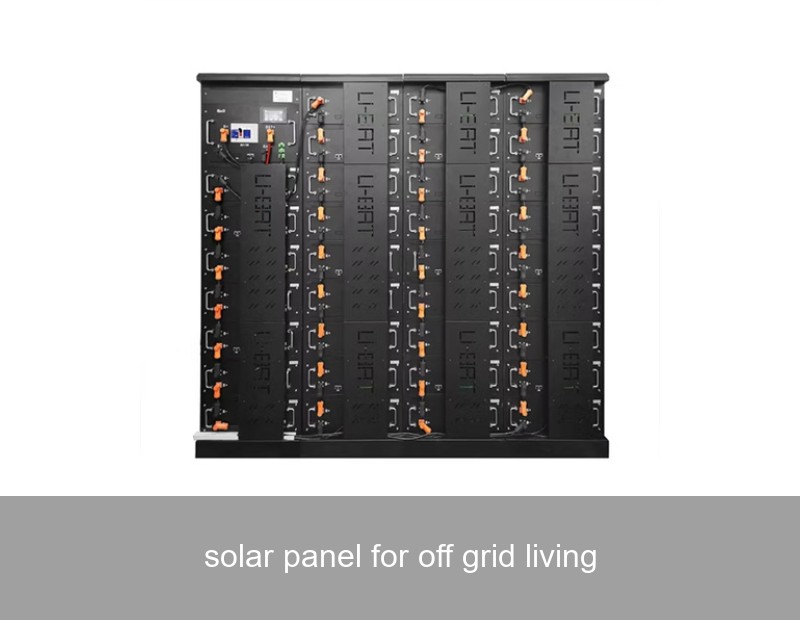
- Battery Energy Storage System (BESS): The heart of off-grid living. This is your energy pantry for nights and cloudy days. Not all batteries are created equal.
- Inverter: The translator. It converts the DC electricity stored in your batteries into the AC power that runs your household appliances. An off-grid inverter must be robust enough to handle surge loads (like starting a well pump).
The true sophistication lies not in the individual parts, but in their seamless integration and management.
Why the Battery Choice is a Make-or-Break Decision
Traditionally, off-grid systems relied on lead-acid batteries. They are a known technology, but they come with significant drawbacks: they require regular maintenance, venting, have a shorter lifespan (4-8 years), and you can only use about 50% of their rated capacity without damaging them. This meant you needed to buy a much larger, heavier bank to meet your needs.
The modern solution is Lithium Iron Phosphate (LiFePO4) chemistry. Here’s the data-driven advantage:
| Feature | Lead-Acid | LiFePO4 (e.g., Highjoule HyperCell) |
|---|---|---|
| Depth of Discharge (DoD) | ~50% | >90% |
| Cycle Life (to 80% capacity) | 1,200 - 1,500 | >6,000 |
| Round-Trip Efficiency | ~80% | >96% |
| Maintenance | High (watering, equalization) | Virtually None |
This means a LiFePO4 battery, like those in Highjoule's HyperCell series, provides more usable energy from a smaller physical footprint, lasts decades, and requires zero upkeep. For a remote home, this reliability is priceless.
Sizing Your Solar Power System: A Data-First Approach
The biggest mistake in planning a solar panel for off grid living system is undersizing. The process is methodical:
- Load Audit: List every appliance, its wattage, and hours of daily use. Don't guess—use a plug-in energy meter. A modern fridge might use 1.5 kWh/day, an LED light bulb 0.01 kWh/day, but a water heater can be a 4-6 kWh/day giant.
- Calculate Daily Consumption: Sum it all up. A typical efficient off-grid home might aim for 10-20 kWh per day.
- Account for "Autonomy Days": How many consecutive cloudy days will you prepare for? In the Pacific Northwest, you might plan for 3 days of autonomy. In sunnier climates, 1-2. This directly scales your battery bank size.
- Size the Solar Array: Your panels must replenish the used energy *and* overcome system losses and seasonal low sun. Tools like NREL's PVWatts Calculator are invaluable for location-specific solar yield data.

Image Source: Unsplash - A well-integrated off-grid home.
A Real-World Case Study: The Rocky Mountain Homestead
Let's move from theory to practice. In 2022, a family in Colorado, USA, built a year-round homestead at 9,000 feet elevation. Their challenges: harsh winters, heavy snow loads, and no grid connection for miles.
- Energy Profile: Their detailed load audit revealed a critical need for 18 kWh/day, with key loads being a radiant floor heat pump (in winter), a deep-well pump, and standard household appliances.
- The Solution: They partnered with a Highjoule-certified installer. The system deployed:
- A 12 kW solar array using snow-shedding bifacial panels.
- A Highjoule HyperStack 15 modular lithium battery system, providing 30 kWh of usable storage (scaled for 1.5 days of full winter autonomy).
- A Highjoule PowerHub 10 integrated inverter/charge controller with advanced cold-weather charging algorithms.
- The Data-Driven Outcome: After one full year, monitoring data showed:
- The system met 100% of their annual energy needs.
- During a historic 72-hour winter blizzard, battery state of charge never dropped below 35%.
- The system's round-trip efficiency (solar in to AC out) averaged 94%, meaning very little harvested energy was wasted as heat.
This case underscores that success isn't just about the panels; it's about the intelligent storage and management system that turns intermittent sunlight into dependable power.
Beyond the Basics: Intelligent Energy Management for Modern Off-Grid Living
Today's off-grid systems are smart. At Highjoule, we engineer our systems with an Energy Management System (EMS) at their core. Think of it as the brain of your power plant. It can:
- Prioritize loads, automatically shedding non-essential circuits if battery levels get low.
- Integrate a backup propane or diesel generator, auto-starting it only when strictly needed, thus slashing fuel use and maintenance.
- Provide real-time and historical energy data via a smartphone app—so you know exactly where your power is going.
This intelligence transforms a basic system from a manual chore into a self-optimizing utility.
Highjoule's Integrated Solutions for Off-Grid Resilience
Since 2005, Highjoule has specialized in moving beyond components to deliver complete, optimized power solutions. For the off-grid pioneer, this integrated approach eliminates compatibility guesswork and single-point-of-responsibility support.
Our Off-Grid PowerStation series is a prime example. It's a pre-engineered, cabinetized system that combines our high-efficiency MPPT solar charging, HyperCell LiFePO4 storage, and a pure sine wave inverter into a single, weather-resistant unit. The benefits are clear:
- Faster, Simpler Installation: Pre-wired and tested, reducing on-site labor by up to 60%.
- Unmatched Reliability: All components communicate on a single digital bus, allowing for predictive diagnostics and coordinated protection.
- Scalable Design: Start with a 10 kWh PowerStation and seamlessly add battery modules or solar capacity as your needs grow.
We don't just sell hardware; we provide the Highjoule EnergyOS platform, which gives you the clarity and control to manage your energy destiny with confidence. You can learn more about the science behind LiFePO4 safety and longevity from resources like The U.S. Department of Energy.

Image Source: Unsplash - A modern, integrated energy storage unit.
Your Path to Energy Independence
Embarking on solar panel for off grid living is one of the most empowering decisions you can make. It connects you directly to your energy source and fosters a profound understanding of consumption and sustainability. The technology has matured to a point where, with proper design, you do not need to compromise on modern comforts.
The key is to start with meticulous planning and partner with experts who view your project as an integrated system, not a box of parts. What is the one energy-dependent aspect of your off-grid vision—be it a deep-well pump, a home office, or medical equipment—that will define the resilience requirements of your system?
 Inquiry
 Online Chat