


Solar Panels Electricity Storage: The Key to Unlocking True Energy Independence
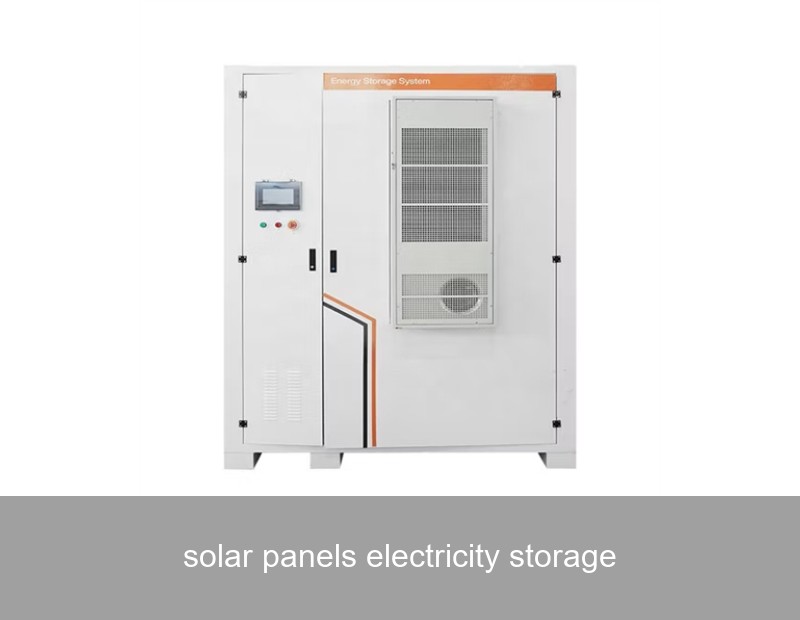
You've made the smart decision to install solar panels. You're generating clean energy, reducing your carbon footprint, and watching your meter spin backwards. But then the sun sets, or a cloudy day rolls in, and you're right back to drawing power from the grid. This common experience highlights the critical missing piece for modern solar owners: solar panels electricity storage. It's the technology that transforms your solar array from a daytime power source into a 24/7 personal energy asset. Let's explore why pairing solar with storage isn't just an upgrade—it's becoming the new standard for homes and businesses across Europe and the US.
Table of Contents
The Storage Imperative: Beyond Just Generating Sunshine
The fundamental challenge with solar power is its intermittency. Generation peaks at midday, but energy demand often peaks in the early morning and evening. This mismatch creates a "duck curve"—a graph of net demand that dips during the day and surges sharply at night—which poses challenges for grid stability. According to the National Renewable Energy Laboratory (NREL), deepening this curve with more solar can lead to curtailment (wasted energy) and requires flexible resources to balance the grid.
This is where solar panels electricity storage provides the elegant solution. By storing excess solar energy produced during the day, you can use it precisely when you need it most. This shift from "use it or lose it" to "generate, store, and optimize" is revolutionary. For businesses, it means avoiding peak demand charges from utilities. For homeowners, it means powering through outages and maximizing self-consumption. The result? Greater energy independence, resilience, and financial efficiency.
How Modern Solar Electricity Storage Works
Today's storage systems are intelligent energy managers. At the heart is the battery, typically lithium-ion due to its high efficiency, depth of discharge, and longevity. But the real magic lies in the software and power electronics.
- The Battery Bank: Stores DC (Direct Current) electricity from your solar panels.
- The Inverter/Charger: Often a hybrid or bidirectional inverter, it converts DC from the panels or batteries to AC (Alternating Current) for your home, and AC from the grid to DC to charge the batteries.
- The Energy Management System (EMS): The brain of the operation. It monitors energy production, consumption, grid conditions, and electricity rates to autonomously decide when to store, discharge, or import power.
Companies like Highjoule have perfected this integration. Highjoule's IntelliStore residential and GridMax commercial systems are not just battery cabinets; they are unified platforms that seamlessly connect solar, storage, grid, and loads. Their AI-driven software can learn your usage patterns, respond to real-time utility price signals, and even participate in virtual power plant programs, turning your stored energy into a potential revenue stream.
The Financial Case: More Than Just Backup Power
While backup power is a valuable benefit, the economic argument for storage is compelling. Utility rate structures are evolving, with many regions moving towards Time-of-Use (TOU) rates, where electricity is more expensive during peak evening hours.
| Scenario (with Solar) | Without Storage | With Highjoule IntelliStore |
|---|---|---|
| Evening Energy Use | Buy from grid at high peak rate | Use stored solar energy, avoid peak charges |
| Excess Daytime Solar | Sold to grid at low feed-in tariff | Stored for later self-use, increasing value 2-3x |
| Demand Charges (Commercial) | High monthly fees based on peak draw | Battery discharges to "shave" peak demand, reducing fees |
| Grid Outages | Productivity & comfort disrupted | Seamless backup power for critical loads |
The combination of federal incentives like the ITC in the US, various European subsidies, and rising energy prices has dramatically improved the return on investment for solar-plus-storage systems.
Real-World Impact: A Case Study from California
Let's look at a concrete example. A medium-sized winery in Napa Valley, California, faced three issues: high operational energy costs, significant demand charges, and the risk of outages during fire-prevention Public Safety Power Shutoffs (PSPS).
In 2022, they installed a 250 kW solar canopy paired with a 500 kWh Highjoule GridMax C&I battery storage system. The results over 18 months were striking:
- Energy Bill Reduction: Reduced their grid electricity purchases by 92%.
- Demand Charge Savings: Eliminated 95% of monthly demand charges by using the battery to cap grid power draw during operational peaks.
- Resilience: Provided up to 8 hours of critical backup power for refrigeration and processing during grid outages, protecting millions of dollars in inventory.
- ROI: The system achieved a projected payback period of under 6 years, factoring in CA state incentives and federal tax credits.
This case exemplifies the multi-faceted value proposition of integrated solar panels electricity storage. It's not a single-solution product but a strategic energy asset.

Image: Commercial solar installations, like those paired with storage for wineries, provide both economic and operational resilience. (Source: Unsplash)
Choosing the Right System for Your Needs
Selecting a storage solution requires careful consideration. Key factors include:
- Capacity & Power: Capacity (kWh) is how much energy is stored; Power (kW) is how much can be delivered at once. A home may need 10-20 kWh for backup, while a factory needs high power to shave demand spikes.
- Depth of Discharge (DoD): The usable portion of the battery's capacity. Highjoule systems are engineered for a high DoD, ensuring you get the most from your investment.
- Scalability: Can the system be expanded as your needs grow? Modular designs are a significant advantage.
- Integration & Smart Features: Look for systems with sophisticated EMS that can adapt to your goals, whether maximizing self-consumption, optimizing for tariffs, or providing grid services.
Highjoule's approach is to provide tailored solutions. Their residential IntelliStore series offers scalable capacities from 10 to 30 kWh with integrated inverter options, designed for easy installation and intuitive user control via a smartphone app. For commercial clients, the GridMax platform offers containerized or modular solutions that can scale into the megawatt-hour range, complete with remote monitoring and fleet management software.
The Future of Solar and Storage
The trajectory is clear: the future of energy is decentralized, digital, and resilient. As noted by the International Energy Agency (IEA), energy storage is set to be the linchpin of clean energy transitions worldwide. We're moving towards ecosystems where millions of solar-plus-storage systems form responsive networks, or virtual power plants, that support the grid during stress and accelerate the phase-out of fossil-fuel peaker plants.

Image: The modern energy-independent home integrates solar, storage, and electric vehicle charging. (Source: Unsplash)
Innovation continues. Battery chemistry is advancing towards alternatives like lithium iron phosphate (LFP) for enhanced safety and longevity. Software intelligence is becoming predictive, using weather forecasts and usage algorithms to optimize cycles further. The integration of electric vehicle charging as a controllable load adds another layer to this dynamic home energy system.
Your Energy, On Your Terms
The question is no longer if you should add storage to your solar panels, but when and how. The technology is proven, the economics are solid, and the benefits for resilience and independence are undeniable. It's about taking full control of the clean energy you produce.
Is your current solar system operating at its full potential, or is a significant portion of its value slipping back to the grid every day? What would true energy security look like for your home or business?
 Inquiry
 Online Chat