


Sistemas de Bombeo Solar Fotovoltaico: The Ultimate Guide to Water Independence
Imagine a water pump that runs silently under the sun, powered entirely by clean energy, with no fuel costs and minimal maintenance. This isn't a futuristic dream; it's the reality offered by sistemas de bombeo solar fotovoltaico (solar photovoltaic pumping systems). For farmers, ranchers, and remote communities, particularly in sun-rich regions, this technology is revolutionizing access to water, turning abundant sunlight into a reliable resource for irrigation, livestock, and potable water supply. As a product technology expert at Highjoule, I've seen firsthand how integrating smart energy storage elevates these systems from simple solutions to resilient, intelligent water management assets.
The Challenge: The Energy-Water Nexus
Traditional water pumping, especially in off-grid or agricultural settings, often relies on diesel generators or grid connections that are either expensive, unreliable, or carbon-intensive. The phenomenon is clear: water needs are highest when the sun is brightest, but what happens at night or on cloudy days? This mismatch between solar production and water demand has been a historical hurdle. The data speaks volumes: The Food and Agriculture Organization (FAO) consistently highlights that agriculture accounts for nearly 70% of global freshwater withdrawals. Powering these withdrawals sustainably is key to food security and environmental stewardship.
The Data Driving the Shift
Let's look at the numbers. The levelized cost of energy (LCOE) for solar has plummeted over 80% in the last decade. Pair this with volatile diesel prices and the high cost of extending grid lines (often $15,000-$50,000 per mile in rural areas), and the financial logic for solar pumping becomes compelling. A well-designed system can have a payback period of 2-6 years, after which the "fuel" is free for the 20+ year lifespan of the solar panels.

Image source: Unsplash. A typical solar PV array powering agricultural irrigation.
Components of a Modern Solar Pumping System
A sistema de bombeo solar fotovoltaico is elegantly simple in concept but sophisticated in its optimal execution. Its core components work in harmony:
- Solar Photovoltaic (PV) Array: The power plant. It converts sunlight into direct current (DC) electricity. Sizing is critical and depends on water demand, pump power, and solar irradiance at your location.
- Pump Controller / Inverter: The brain. This device, often a variable frequency drive (VFD) specifically for solar, matches the pump motor's power to the available solar input, allowing soft starts and efficient operation even under partial sunlight.
- Water Pump: The heart. Can be submersible (for wells and boreholes) or surface (for ponds, rivers). DC pumps connect directly, while AC pumps require an inverter.
- Water Storage Tank: The buffer. This is the traditional solution for energy mismatch—storing water when the sun shines for use at any time. It's simple and effective.
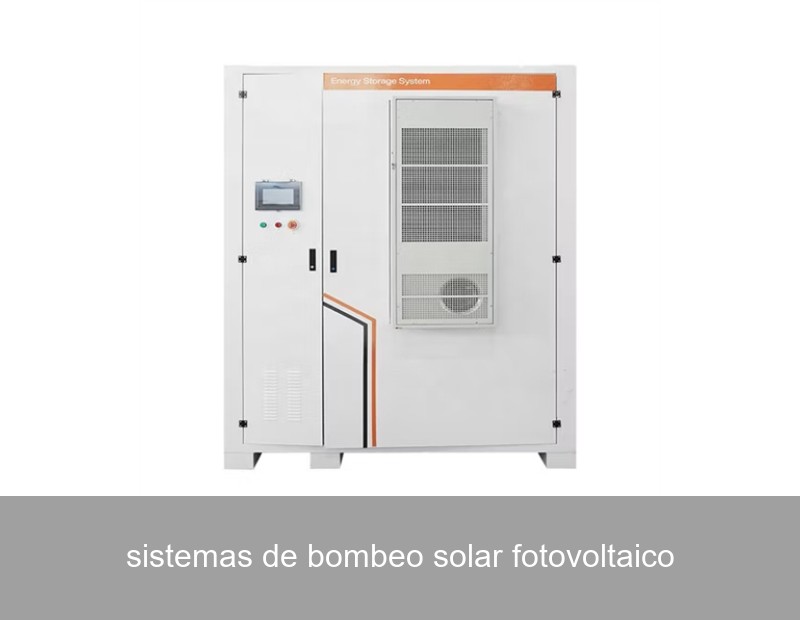
- The Modern Addition: Battery Energy Storage System (BESS): This is where the game changes. Instead of—or in addition to—storing water, you store the electricity itself. This allows for pump operation on demand, not just when the sun shines, and provides stability and protection for the pump motor.
Real-World Impact: A Case Study from Spain's Andalusia Region
Let's move from theory to practice. A large olive farm in Andalusia, Spain, faced rising diesel costs and wanted to reduce its carbon footprint for irrigating 50 hectares of orchard. Their challenge was the need for occasional nighttime irrigation to reduce evaporation losses.
| Parameter | Old Diesel System | New Solar PV Pumping System with BESS |
|---|---|---|
| Power Source | Diesel Generator (40 kVA) | 45 kWp Solar Array + Highjoule IonMaster 30 kWh BESS |
| Daily Water Output | ~200 m³ | ~220 m³ |
| Operating Cost (Annual) | €12,500 (fuel + maintenance) | ~€400 (minimal system checks) |
| CO2 Emissions | Approx. 32 tons/year | 0 tons/year (operational) |
| Key Feature | Noisy, required fuel logistics | Fully automated, remote monitoring via Highjoule Hub, could schedule nighttime pumping from stored solar energy. |
The result? A payback period of under 4 years, complete energy independence, and a future-proofed irrigation asset. The farm manager noted, "The system doesn't just save money; it gives me peace of mind. I can control irrigation from my phone, and I'm immune to fuel price spikes." This case exemplifies the advanced potential of modern sistemas de bombeo solar when paired with intelligent storage.
Why Smart Energy Storage is the Game-Changer
You might ask, "If water storage is effective, why add the complexity and cost of batteries?" Great question. The answer lies in control, efficiency, and system longevity. A battery energy storage system like those Highjoule designs transforms a solar pump from a sun-dependent device into a smart, resilient water asset.
- Demand-Based Pumping: Pump water exactly when needed, day or night, without oversizing the solar array.
- Pump Protection & Grid Support: In hybrid systems, the BESS provides a "soft grid" or backup, preventing pump damage from grid fluctuations or outages. It can also perform peak shaving if connected to a limited grid supply.
- Maximized Solar Utilization: Capture every possible photon. Excess solar energy not needed for immediate pumping is stored in the battery, not wasted.
- Reduced Infrastructure Cost: Potentially allows for a smaller water storage tank, as energy storage provides the temporal buffer.

Image source: Unsplash. A technician inspecting a commercial battery energy storage system.
Highjoule: Your Partner in Sustainable Pumping Solutions
At Highjoule, we don't just see a solar pump; we see a critical load that requires a reliable, intelligent power source. Since 2005, we've specialized in integrating advanced energy storage into demanding applications. For sistemas de bombeo solar fotovoltaico, our role is to provide the brain and muscle that make the system truly autonomous and efficient.
Our IonMaster Commercial BESS is ideally suited for pumping applications. Its high-cycle life, rugged design for harsh environments (like farms or remote sites), and seamless integration with solar inverters make it a perfect fit. Crucially, our proprietary Highjoule Hub energy management software allows for custom pumping schedules, remote monitoring of pump status and energy flows, and predictive maintenance alerts. You gain not just autonomy, but insight and control.
For larger microgrid applications, such as community water supply or industrial pumping, our containerized GridMaster systems can power entire pumping stations, integrating multiple energy sources for ultimate reliability. We work with you and your solar installer to design a cohesive system where every component—PV, pump, and storage—is optimized to work together for decades.
Choosing the Right System for Your Needs
Selecting a sistema de bombeo solar is not a one-size-fits-all process. Key considerations include:
- Water Requirement: Total daily volume and required flow/pressure (head).
- Water Source: Well depth, surface water quality.
- Solar Resource: Local irradiance data and land availability for panels.
- Reliability Needs: Is 24/7 pumping essential, or is daytime-only with water storage sufficient?
This last point is where the conversation about integrating storage becomes vital. As a rule of thumb, if your water demand schedule is inflexible or you require high reliability against weather variability, a BESS becomes a highly valuable investment.
The Future is Integrated
The evolution of sistemas de bombeo solar fotovoltaico mirrors the broader energy transition: from simple replacement to intelligent, integrated systems. The International Energy Agency (IEA) projects solar PV to become the dominant global electricity source by 2050. Off-grid applications like pumping are at the forefront of this shift. The next step is the full digitalization and smart management of these water-energy systems.
So, as you consider harnessing the sun to power your water needs, ask yourself this: Are you looking for a simple mechanical replacement, or are you building a resilient, intelligent, and cost-effective water infrastructure for the next 25 years? The difference often lies in the power behind the pump.
What's the one critical water pumping challenge on your site that keeps you up at night, and how could 24/7 solar power change that equation?
 Inquiry
 Online Chat