


The Rise of the Solar Power Station in China: A Global Energy Game Changer
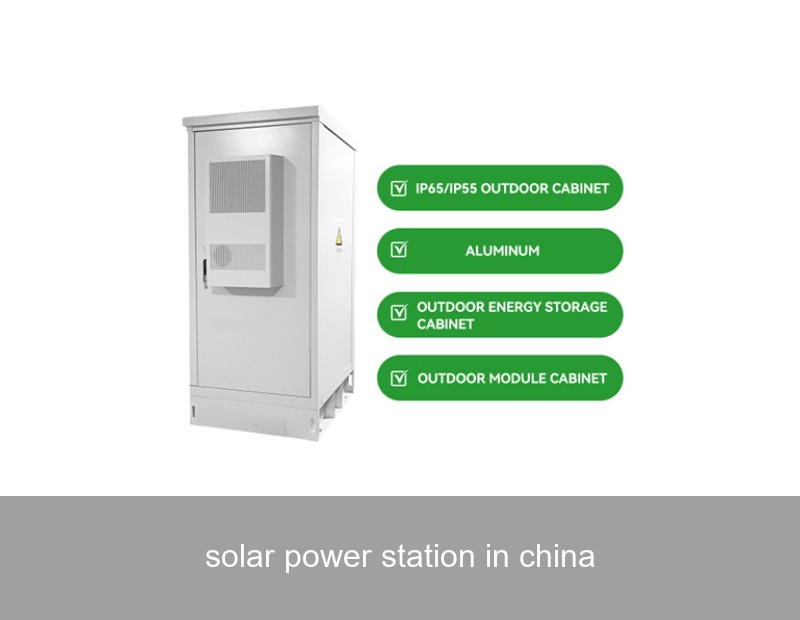
If you're following the global energy transition, you've undoubtedly heard about the staggering scale of solar power in China. It's more than just a national story; it's a phenomenon reshaping worldwide supply chains, technology costs, and our collective vision for a renewable future. From the vast deserts of the Qinghai province to distributed rooftops over bustling cities, the solar power station in China has evolved from an ambitious project to a dominant force. But what does this mean for businesses and communities in Europe and the US? Understanding this shift isn't just about observing a distant market—it's about recognizing the innovations, lessons, and partnerships that can accelerate our own sustainable energy goals.
Table of Contents
- The Unmatched Scale: China's Solar Dominance by the Numbers
- Key Drivers: Why China Leads in Solar Deployment
- A Case Study in Innovation: The Huanghe Hydropower Hainan Solar Park
- The Global Ripple Effect: Lessons for the US and Europe
- The Critical Next Step: Integrating Energy Storage
- How Highjoule's Smart Storage Solutions Complete the Picture
- Looking Ahead: What's the Future of Grid-Scale Solar?
The Unmatched Scale: China's Solar Dominance by the Numbers
Let's start with the data, because it's truly mind-boggling. In 2023 alone, China installed more solar photovoltaic (PV) capacity than the entire United States has cumulatively built to date. According to the International Energy Agency (IEA), China commissioned a record 216 gigawatts (GW) of solar PV in 2023, representing over half of the global additions. To put that in perspective, that's roughly the equivalent of installing more than 600,000 solar panels every single day of the year.

This isn't a sudden boom. It's the result of a sustained, strategic push. China now accounts for nearly 40% of the world's total installed renewable capacity. The "solar power station in China" model often refers to massive, gigawatt-scale projects—sometimes called "solar bases"—that are connected directly to the ultra-high-voltage transmission grid, sending clean power from the sun-rich west to the populous east.
Key Drivers: Why China Leads in Solar Deployment
Several interconnected factors have fueled this unprecedented growth:
- Government Policy & Long-Term Planning: Solar energy is a cornerstone of China's pledge to peak carbon emissions before 2030 and achieve carbon neutrality before 2060. This top-down support translates into clear targets, streamlined permitting, and consistent investment.
- Manufacturing Supremacy: China dominates over 80% of the global solar manufacturing supply chain, from polysilicon to finished modules. This vertical integration drastically reduces costs and secures supply.
- Technological Evolution: Continuous innovation in panel efficiency, particularly in PERC and now tunnel oxide passivated contact (TOPCon) cells, ensures more power generation per square meter.
- Grid Integration Challenges (and Solutions): The intermittent nature of solar creates grid instability. This very challenge is now driving the next frontier: pairing solar plants with massive energy storage systems.
A Case Study in Innovation: The Huanghe Hydropower Hainan Solar Park
To understand the sophistication of modern Chinese solar projects, look no further than the Huanghe Hydropower Hainan project in Qinghai. This isn't just a solar farm; it's an integrated renewable energy complex.
| Project Feature | Detail |
|---|---|
| Total Capacity | 2.2 GW AC |
| Key Innovation | Fully integrated with 202.8 MW/MWh of electrochemical storage |
| Transmission | Connected via an ultra-high-voltage (UHV) line to transmit power over 1500km |
| Land Use | Built on semi-desert land, with measures to improve ecology |
This project exemplifies the "solar-plus-storage" model that is becoming the global standard. The co-located battery storage system, one of the world's largest when built, smooths the solar output, stores excess daytime energy, and dispatches it during evening peaks. This turns a variable resource into a more predictable and dispatchable one—a critical lesson for grids everywhere dealing with high solar penetration.
The Global Ripple Effect: Lessons for the US and Europe
For energy stakeholders in the US and Europe, China's solar journey offers key insights. First, the dramatic cost reduction driven by Chinese manufacturing has been a global benefit, making solar the cheapest form of new electricity generation in history. Second, the scale of deployment has proven the technical and operational feasibility of integrating high levels of solar into a national grid.
However, the lesson isn't to simply import panels. It's about adapting the system-level thinking. The most successful future grids will combine:
- Cost-effective generation (like solar and wind).
- Robust, flexible transmission networks.
- And most crucially, intelligent energy storage at all levels.
This is where the experience of a global provider like Highjoule becomes invaluable. While the solar power station in China model focuses on utility-scale, the need for smart storage is universal—from stabilizing national grids to empowering individual businesses.
The Critical Next Step: Integrating Energy Storage
Solar energy's inherent variability is its main challenge. As the National Renewable Energy Laboratory (NREL) highlights, storage is the key enabler for higher renewable penetration. Without it, grids face curtailment (wasting excess solar) and reliability issues.

The industry has moved beyond asking "if" storage is needed to "what kind" and "how smart" it should be. Modern Battery Energy Storage Systems (BESS) must do more than just store and release energy. They need advanced energy management systems (EMS) to perform frequency regulation, peak shaving, and provide backup power—all while maximizing battery life and return on investment.
How Highjoule's Smart Storage Solutions Complete the Picture
Founded in 2005, Highjoule has been at the forefront of this intelligent storage revolution. We understand that a one-size-fits-all approach doesn't work. Our solutions are designed to integrate seamlessly with solar installations of all scales, extracting maximum value from every kilowatt-hour generated.
For commercial and industrial (C&I) sites with rooftop solar, our HI-Cube series modular BESS provides scalable, safe, and intelligent storage. It allows businesses to increase their self-consumption of solar power, reduce demand charges from the grid, and secure backup power—turning an energy cost center into a strategic asset.
For larger utility-scale and microgrid applications, like those seen in major solar power stations, our HI-Mega utility-grade containerized systems offer the robustness and grid-support functions required. With features like virtual inertia and black start capability, these systems help grid operators maintain stability, much like the storage systems in Qinghai, but tailored to the specific grid codes and market mechanisms of Europe and North America.
Our core philosophy is that hardware alone isn't enough. The Highjoule Energy Management Platform is the brain of the operation, using AI-driven forecasting and optimization to decide the most economical and efficient use of stored energy every second of the day.
Looking Ahead: What's the Future of Grid-Scale Solar?
The trajectory of the solar power station in China points toward an inevitable future: hybrid renewable parks combining solar, wind, and storage, all managed as a single, grid-friendly power plant. This model is rapidly gaining traction in the US Southwest and across Europe.
The next wave of innovation will focus on even smarter integration. How can we use artificial intelligence to better predict solar output and market prices? How can we design storage systems that not only last longer but also provide additional grid services? And how can we create truly resilient community microgrids that can operate independently if needed?
At Highjoule, we're actively working on these questions. Our research into next-generation battery chemistries and our software's continuous learning algorithms are part of our commitment to not just follow trends, but to shape the future of sustainable energy systems globally.
As you consider your organization's or community's path to energy independence and sustainability, what role will intelligent storage play in your solar strategy? We invite you to explore how a partnership with Highjoule can transform your renewable energy investment from a simple source of power into a pillar of resilience and financial savings.
 Inquiry
 Online Chat