


Solar System Battery Sizing: The Key to Unlocking True Energy Independence
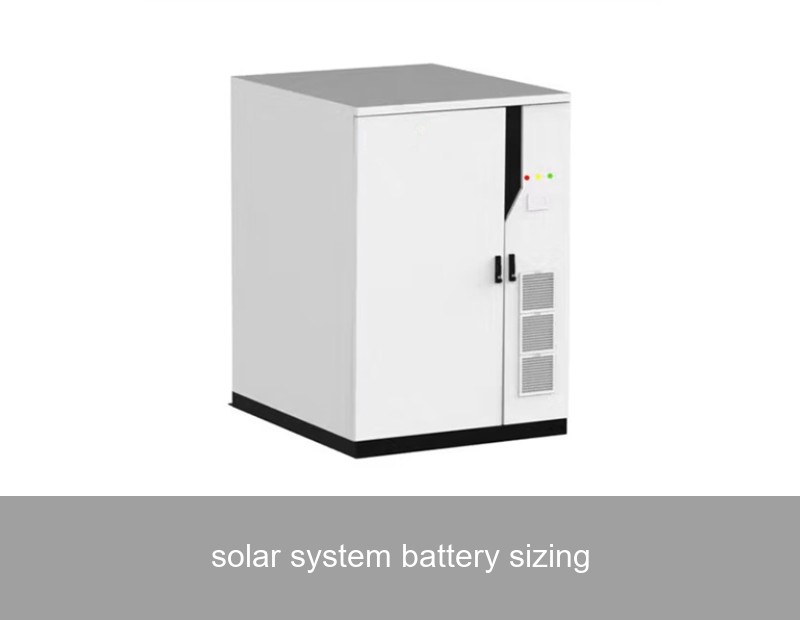
You've made the smart decision to invest in solar panels. The sun is shining, your panels are generating clean energy, and you're feeling good about reducing your carbon footprint. But then evening comes, energy demand peaks, and you find yourself pulling power from the grid again. This common experience highlights a critical, yet often overlooked, component of a resilient solar setup: solar system battery sizing. Getting the battery size right isn't just a technical detail; it's the difference between having a solar generator and achieving true, 24/7 energy autonomy. For homeowners and businesses across Europe and the U.S., understanding this concept is the final step in the renewable energy journey.
Table of Contents
The Phenomenon: Why Solar Alone Isn't Enough
Solar panel output and home energy consumption are like two dancers out of sync. Your panels produce the most during midday, often when you're at work or your household demand is low. Meanwhile, peak consumption typically occurs in the early morning and evening—times when solar generation is minimal or nonexistent. This mismatch forces you to export surplus energy to the grid (often at low rates) and import it back later (at high peak rates), a cycle known as the "duck curve" challenge for utilities.

Image Source: Unsplash - Visual representation of energy demand vs. solar production.
A properly sized battery storage system bridges this gap. It captures the midday solar surplus and stores it for use during peak hours, dramatically increasing your self-consumption rate—the percentage of your own solar energy you use directly. This is where the real savings and resilience begin.
The Data: How to Calculate Your Needs
Sizing your battery isn't about guessing; it's a data-driven process. Two primary metrics guide the calculation:
- Energy Capacity (kWh): This is the "size of your fuel tank." It determines how much energy your battery can store. To estimate it, analyze your electricity bill to see how many kilowatt-hours (kWh) you use during non-sunlight hours (e.g., 6 PM to 6 AM).
- Power Rating (kW): This is the "size of the hose." It determines how much power the battery can deliver at once. Can it start your air conditioner compressor (which has a high surge demand) while also powering your refrigerator and lights?
For a simplified example: If your household consistently uses 10 kWh between sunset and sunrise, a battery with at least 10 kWh of usable capacity would be a starting point to cover that period. However, this is a basic view. Real-world sizing must account for efficiency losses (typically around 5-10%), desired depth of discharge (DoD), and future needs.
Authoritative bodies like the U.S. Department of Energy provide excellent foundational resources for understanding these terms.
A Case Study: A German Bakery's Recipe for Resilience
Let's look at a real-world example from Bavaria, Germany. A family-run bakery with a 50 kW rooftop solar array faced a classic problem. Their ovens and dough mixers ran intensely from 3 AM to 10 AM, consuming over 200 kWh before their solar panels became productive. They were buying expensive grid power during peak morning rates.
Their goal was to shift 80% of their morning load to stored solar energy. After a detailed audit, the solution wasn't just one large battery. The high simultaneous power demand from industrial mixers required a system with a high power rating. The implemented solution involved a modular battery system with a total capacity of 120 kWh and a continuous power output of 50 kW.
The Results (12-month post-installation):
- Grid dependence during morning peak hours reduced by 85%.
- Overall energy costs decreased by 40%.
- Return on Investment (ROI) period: Estimated 6.5 years, enhanced by Germany's favorable storage incentives.
- Added benefit: The system now provides backup power, ensuring the bakery's refrigerators stay on during grid outages, preventing spoilage.
This case shows that for commercial applications, solar system battery sizing must balance both high energy capacity and high power delivery.
Key Factors Influencing Battery Size
Your perfect battery size is unique. Consider this checklist:
- Daily Energy Consumption: Your historical usage (from bills) is the best predictor.
- Solar PV System Size: How much excess energy will you typically produce?
- Load Profile: Do you have large, sporadic loads (EV charger, pool pump, welder) or steady, base loads?
- Backup Goals: Which circuits are critical during an outage (e.g., fridge, lights, medical equipment)? Sizing for whole-home backup requires a much larger system than just "essential loads."
- Financial Incentives: In regions like California (SGIP) or various EU member states, incentives can make larger, more impactful systems more affordable.
- Future Expansion: Are you planning to buy an electric vehicle or add a heat pump? Your storage should be sized with this in mind.
The Highjoule Approach: Intelligent Sizing for Real-World Needs
At Highjoule, with nearly two decades of experience powering homes and businesses worldwide, we've moved beyond simple calculations. Our Intelligent Storage Platform (ISP) is designed with flexible, modular architecture that makes solar system battery sizing a dynamic, not static, decision.
Our residential H-Series Home Battery systems, for example, start with a modular 5 kWh unit. Why? Because we believe your storage should grow with your needs. You can start with a system sized for your current essential loads and budget, and seamlessly add more capacity later as your family's needs evolve or as you add more solar panels. This eliminates the risk of over-sizing upfront or the frustration of under-sizing.
For our commercial and industrial clients, our C-Series Containerized Storage Solutions take a holistic view. Our energy management software doesn't just store energy; it learns your facility's patterns, weather forecasts, and utility rate schedules. It then makes intelligent decisions on when to charge, discharge, or hold, ensuring the physical battery size is used with maximum economic efficiency. This means a correctly sized Highjoule system often delivers more value per kilowatt-hour installed than a conventionally sized competitor's system.

Image Source: Unsplash - Example of a modular home battery installation.
Beyond the Basics: Future-Proofing Your Investment
The conversation around sizing is evolving. With the rise of time-of-use rates and dynamic tariffs (like the UK's Octopus Agile or similar models in the EU), the most economical battery operation isn't just about self-consumption. It's about arbitrage: buying cheap grid power when it's abundant and inexpensive (often at night), storing it, and using it or even selling it back during expensive peak periods.
This strategy requires a battery sized not just for your solar overproduction, but for additional grid charging capacity. It also requires sophisticated software—the kind integrated into Highjoule systems—that can automatically navigate these complex price signals. According to a 2023 NREL report, smart controls can increase the value of storage by 20-40% compared to simple, rule-based operation.
Furthermore, concepts like vehicle-to-grid (V2G) and virtual power plants (VPPs) are on the horizon. A VPP aggregates thousands of distributed batteries (like yours) to act as a single, grid-stabilizing power plant. Participating can provide additional revenue. When sizing your system today, considering its potential role in these future ecosystems is a mark of a forward-thinking investment.
Making the Complex Simple
We know this is a lot to consider. That's why Highjoule's process starts with a comprehensive consultation and energy analysis. We examine at least 12 months of your utility data, understand your lifestyle or business operations, and model different scenarios. We don't just sell you a box; we design a power resilience strategy.
So, as you contemplate your step towards full energy independence, ask yourself this: Is your goal simply to add a battery, or is it to design an intelligent energy ecosystem that adapts to your life and the grid's future? What would you power first if the grid went down tonight, and how would that priority shape the size of your solution?
 Inquiry
 Online Chat