


Solar System Without Batteries: A Smart Choice or a Missed Opportunity?
Imagine a sunny afternoon, your rooftop solar panels are humming along, generating more electricity than your home can use. Without a battery, where does that precious, clean power go? This is the daily reality for millions of homeowners and businesses with a solar system without batteries. While this setup has been the traditional entry point into solar, the evolving energy landscape is making us rethink its role. Let's explore the ins and outs of battery-less solar, its economic logic, its limitations, and how modern solutions from providers like Highjoule are reshaping what's possible for energy independence.
Table of Contents
- The Basic Premise: How Grid-Tied Solar Works
- The Economic Case: Lower Upfront Cost
- The Flip Side: Limitations and Vulnerabilities
- The Data Story: Curtailment and Grid Dynamics
- Case Study: A California Business's Revelation
- The Evolution: From Solar-Only to Smart Storage
- Highjoule's Role: Intelligent Energy Management
- Making Your Decision: Key Questions to Ask
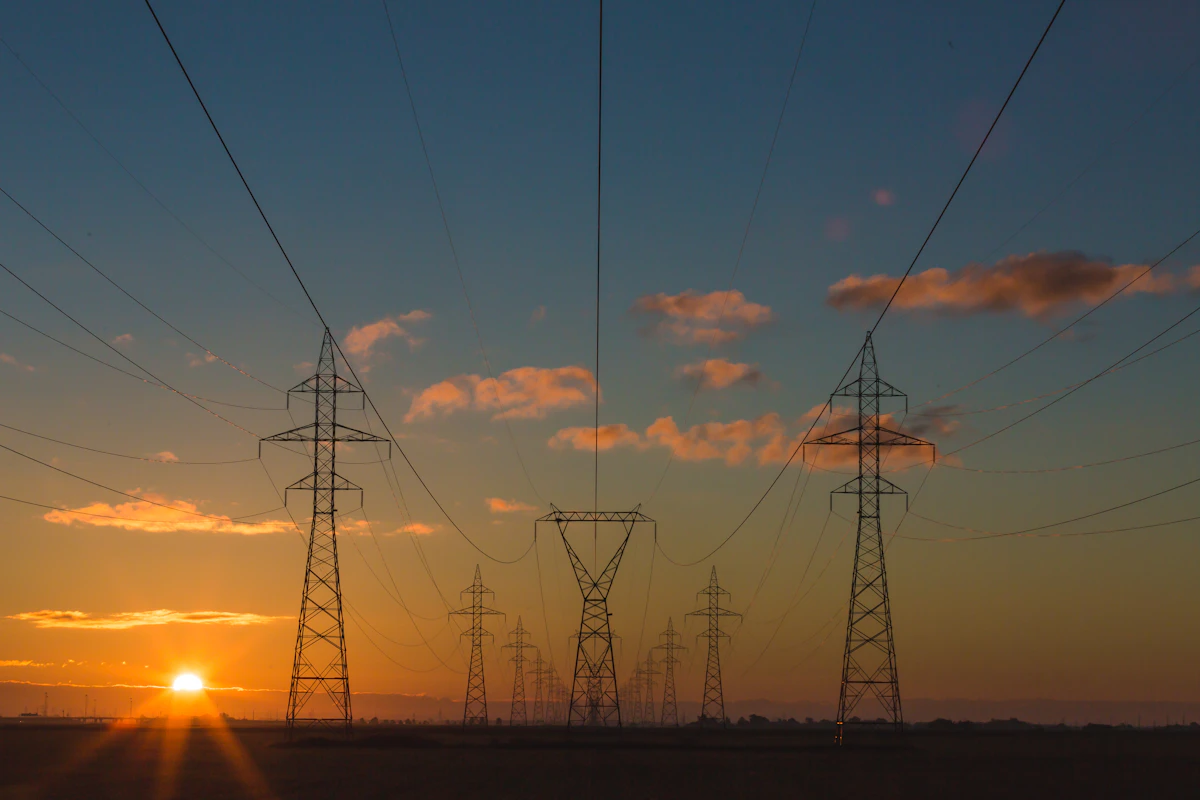
A typical grid-tied solar installation. The power flows both to the home and back to the grid.
The Basic Premise: How Grid-Tied Solar Works
A standard solar system without batteries, known as a grid-tied system, is elegantly simple. Solar panels convert sunlight into direct current (DC) electricity, an inverter changes it to alternating current (AC) for your home's use, and any surplus is fed back into the public utility grid. This process is often governed by net metering policies, where you receive credits for the power you export.
- Daytime Operation: Solar powers your home first. Excess energy flows to the grid, spinning your meter backward.
- Nighttime & Cloudy Days: Your home draws power from the grid as normal, using up your earned credits.
- The Grid as a "Virtual Battery": The utility grid effectively acts as a 100% efficient, infinite-capacity battery—but one you don't control.
The Economic Case: Why Going Battery-Less Made Sense
For years, the primary argument for a solar system without batteries was purely financial. Battery storage represented a significant additional upfront investment.
| Consideration | Solar-Only System | Solar + Storage System |
|---|---|---|
| Upfront Cost | Lower | Higher (can be 30-50% more) |
| Payback Period | Typically shorter (5-8 years) | Longer, but with added value streams |
| Complexity | Lower | Higher (requires advanced integration) |
With strong net metering policies, this math worked. Homeowners could maximize their return on investment by sending all excess solar to the grid at full retail value.
The Flip Side: Limitations and Vulnerabilities
However, this model has critical dependencies. Your solar system without batteries goes dormant the moment the grid fails—a safety feature to protect utility workers. This means no power during blackouts, even on the sunniest day. Furthermore, net metering policies are changing rapidly. As noted by the National Renewable Energy Laboratory (NREL), many states are transitioning to less favorable compensation rates for exported solar, altering the economics.
The Data Story: Curtailment and an Evolving Grid
The phenomenon of "curtailment" is becoming a real issue. In places like California and Hawaii, grid operators sometimes have to tell solar owners to shut off their panels because the grid is overloaded with midday solar production. In 2022, the California Independent System Operator (CAISO) reported over 2.4 million megawatt-hours of renewable energy curtailed—much of it from rooftop solar. That's clean, paid-for energy that went to waste because there was nowhere to put it. A solar system without batteries has no answer for this; it simply turns off.

Modern battery storage systems capture excess solar for use when it's most needed.
Case Study: A California Business's Revelation
Consider the case of a mid-sized winery in Napa Valley, California. In 2019, they installed a 250 kW solar system without batteries. Their goal was to offset high daytime cooling costs for their storage facilities. Initially, with net metering, they saved approximately $45,000 annually.
However, in 2023, their utility shifted to a time-of-use (TOU) rate structure with very low compensation for midday solar export. Suddenly, their excess solar was credited at just $0.03/kWh, while the power they bought from the grid in the evening peak cost $0.45/kWh. Their annual savings plummeted by over 40%. Their solar was producing the right amount of energy, but at the wrong time for the new rate structure. The system, lacking storage, could not adapt.
Their solution was integrating a Highjoule C&I (Commercial & Industrial) battery storage system. The 300 kWh battery now stores their midday excess and dispatches it during the 4-9 pm peak window. This simple shift not only restored their savings but increased them by 15% compared to the original model, while also providing backup power for critical refrigeration.
The Evolution: From Solar-Only to Smart Storage
The future isn't about choosing between solar or storage. It's about intelligent integration. The modern approach views solar as a generation asset and storage as a flexibility tool. Together, they create a resilient energy ecosystem.
- Energy Time-Shifting: Store cheap solar, use expensive grid power.
- Backup Power: Maintain critical loads during outages.
- Grid Services: In some markets, batteries can provide grid stability and earn additional revenue.
Where Highjoule Fits In: Intelligent Energy Management
This is precisely where Highjoule's expertise becomes crucial. Founded in 2005, we've moved beyond just providing storage hardware. Our solutions, like the Highjoule Hive Platform, are designed to optimize energy ecosystems. For a homeowner with an existing solar system without batteries, our Helios Residential Battery can be seamlessly retrofitted. Its AI-driven manager learns your consumption and production patterns, automatically deciding when to store solar energy, power your home, or export to the grid for maximum financial return.
For commercial clients like the winery in our case study, our Highjoule Matrix C&I Systems offer scalable, containerized storage. Paired with our predictive energy management software, these systems don't just store energy—they turn it into a strategic asset, managing demand charges, participating in utility programs, and ensuring operational continuity.
Making Your Decision: Key Questions to Ask
So, is a solar system without batteries right for you? Ask these questions:
- Grid Reliability: How frequent and long-lasting are power outages in my area?
- Net Metering Policy: What is the current compensation rate for my exported solar, and is it likely to change?
- Rate Structure: Does my utility use flat rates, or time-of-use rates with high evening peaks?
- Future-Proofing: Am I planning to add an electric vehicle or heat pump, which will increase my evening energy demand?
The U.S. Department of Energy provides excellent resources on hybrid systems for those considering this path.
Understanding your energy flow is the first step toward optimizing it with storage.
Your Energy, Your Control
The era of passive solar consumption is ending. The combination of changing policies, increasing grid volatility, and the falling cost of battery technology is making integrated storage the smarter long-term investment. A solar system without batteries is a great start, but adding storage transforms it from a cost-saving tool into a resilient, adaptive, and intelligent energy asset.
What would you power first if the grid went down tomorrow, and how would your current solar setup handle it?
 Inquiry
 Online Chat