


Electronic Component Storage: The Unsung Hero of Renewable Energy Reliability
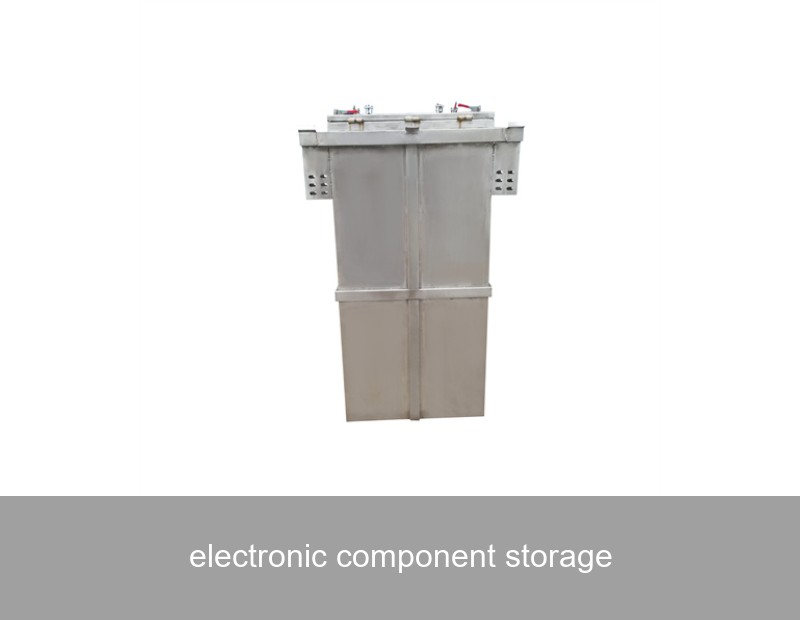
When we think about the renewable energy revolution—the soaring solar panels and towering wind turbines—our minds often jump to the big, visible components. But what about the critical, unseen elements that make it all work reliably? Let's talk about a fundamental yet frequently overlooked aspect: electronic component storage. Proper storage of sensitive power electronics, from inverters and controllers to battery management systems (BMS) chips, is not just a logistics issue; it's a cornerstone of system longevity, safety, and performance, especially in the demanding contexts of solar and battery storage. For installers, project developers, and asset managers across Europe and the U.S., mastering this is key to protecting investments and ensuring clean energy systems deliver for decades.
The Hidden Threat: Why Storage Conditions Matter
Electronic components for energy systems are precision instruments. They are designed to operate in specific conditions, but what happens before they are installed? They can spend weeks or months in warehouses, shipping containers, or on-site storage units. During this period, four main enemies lie in wait:
- Moisture (ESD & Corrosion): Humidity is a killer. It can lead to Electrostatic Discharge (ESD) damage during handling and, more insidiously, cause corrosion on connectors and circuit boards over time. This corrosion increases electrical resistance, leading to heat buildup and eventual failure.
- Temperature Extremes: Consistent high temperatures can degrade soldering joints and compromise the integrity of semiconductor materials. Freezing temperatures, on the other hand, can condense moisture inside components once they warm up.
- Contaminants: Dust, salt (in coastal areas), and industrial pollutants can settle on components, creating conductive paths or insulating layers where they shouldn't be.
- Physical Stress & Poor Handling: Inadequate packaging and stacking can lead to physical damage, bent pins, or cracked casings.

Ignoring these factors doesn't just risk a dead-on-arrival component; it can trigger latent failures that manifest months or years into operation, eroding your project's ROI and reputation.
Data Behind the Damage: The Cost of Poor Storage
The impact is quantifiable. Studies and industry data point to a clear correlation between storage practices and failure rates. For instance, the U.S. Environmental Protection Agency's Climate Leaders program has highlighted supply chain emissions and waste, part of which stems from premature electronics failure. More specifically, a report by DfR Solutions estimates that up to 30% of unexplained electronic failures can be traced back to ESD and moisture-related damage incurred during storage and handling. In financial terms, for a 10 MW commercial solar-plus-storage project, replacing a central inverter or a batch of faulty BMS boards post-commissioning can incur six-figure costs in equipment, labor, and lost production.
| Storage Risk Factor | Potential Failure Mode | Typical Onset |
|---|---|---|
| High Humidity (>60% RH) | Corrosion, Dendrite Growth, ESD | Latent (6-24 months) |
| Temperature Cycling | Solder Joint Fatigue, Material Delamination | Progressive |
| Dust & Contaminant Ingress | Insulation Failure, Overheating | Early Operational |
| Physical Shock | Component Fracture, Connector Damage | Immediate or DOA |
Case Study: A Solar Farm's Premature Aging
Consider a real-world scenario from Southern Europe. A 5 MWp solar farm, commissioned in 2019, began showing underperformance and communication faults in multiple string inverters by 2022—well before their 10-year warranty expiration. An investigation revealed a critical detail: the inverters had been delivered to the site 8 months before installation due to construction delays. They were stored in an uninsulated, semi-open site container through a humid coastal winter and a hot, dusty summer.
Internal inspection showed significant dust ingress on cooling fans and, more critically, signs of corrosion on communication board connectors—a classic symptom of moisture exposure during storage. The result? A 3% persistent underperformance, costly inverter-by-inverter cleaning and repair campaigns, and a shortened expected asset life. This case underscores that electronic component storage is an active part of the asset's lifecycle, not a passive pause.
Best Practices for Electronic Component Storage
So, what can be done? Proactive management turns storage from a risk into a reliability advantage. Here’s a practical guide:
- Control the Environment: Aim for a clean, dark, and cool storage space with stable temperature (ideally 15-25°C / 59-77°F) and controlled humidity (40-60% RH). Use dehumidifiers and climate control where necessary.
- Respect Original Packaging: Keep components in their moisture-barrier bags (MBBs) with desiccants until the moment of installation. Never store opened ESD-sensitive bags.
- Implement FIFO & Clear Labeling: Use a strict "First-In, First-Out" inventory system. Clearly label all components with received and storage condition dates.
- Train Personnel: Ensure all staff handling components are trained in ESD safety and proper material handling procedures.
- Plan Logistics Proactively: Coordinate delivery schedules to minimize storage time on-site. If long-term storage is unavoidable, factor in the cost of creating a proper storage environment from the start.
The Highjoule Approach: Engineering Resilience from the Warehouse Out
At Highjoule, we view reliability as a holistic chain that begins long before installation. Our philosophy is that a superior energy storage system (ESS) is built not just with robust components but with an unwavering commitment to their integrity at every stage. This directly influences how we design our products and support our partners.
For our commercial and industrial H-Stack and residential HomeCore battery systems, critical electronic sub-assemblies are stored in controlled environments at our facilities and those of our certified partners. We specify storage parameters for our distributors and provide guidelines for installers. Furthermore, our systems are designed with a degree of built-in tolerance. For example, our proprietary battery management system features conformal-coated circuit boards for added protection against humidity and contaminants—a safeguard that proves its worth during both storage and decades of operation.

Our services extend beyond the box. For our microgrid and large-scale BESS projects, Highjoule offers logistics and storage consultancy, helping clients establish protocols that protect their investment from port to project commissioning. We understand that the trust you place in us is for the entire lifecycle of the product.
Future-Proofing Your Energy Assets
As the renewable energy sector matures, the focus is shifting from pure capacity addition to long-term reliability and asset optimization. In this landscape, meticulous attention to fundamentals like electronic component storage becomes a key differentiator. It separates projects that merely function from those that thrive and deliver predictable returns for 20 years or more.
It prompts us to ask better questions of our suppliers and ourselves: What are your storage protocols? How do you ensure component integrity from factory to site? The answers to these questions are as important as the efficiency rating on a datasheet.
An Open Question to Consider
As you plan your next solar or storage project, have you audited your supply chain and on-site practices to identify where improvements in component handling and storage could de-risk your project and enhance its long-term value?
 Inquiry
 Online Chat