


Finding the Right Supplier of Big Solar: Your Guide to Utility-Scale Success
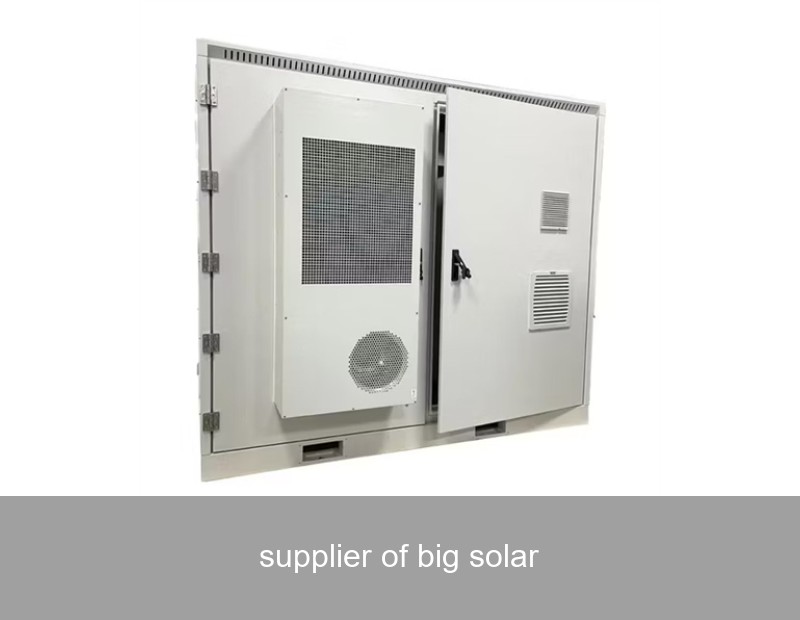
Imagine a future where vast fields of solar panels not only power cities but do so reliably, day and night. This isn't a distant dream; it's the reality being built today by the supplier of big solar projects—the masterminds behind utility-scale solar farms. But here's the critical shift: the conversation is no longer just about the panels. The true game-changer for any large-scale solar endeavor is intelligent, grid-forming energy storage. Let's explore why your choice of a supplier of big solar systems is fundamentally a choice about resilience, profitability, and long-term grid stability.
Table of Contents
The New Reality: Big Solar's Intermittency Challenge
You've seen the headlines: "Solar Farm Powers 50,000 Homes." It's an impressive feat, but industry insiders know the unspoken challenge. What happens when the sun sets, or a thick cloud bank rolls across the field? The power output dips—sometimes dramatically and quickly. This intermittency is the single biggest hurdle for integrating massive amounts of renewable energy into our grids. It creates instability, challenges grid operators, and can even lead to curtailment (wasting perfectly good solar energy because the grid can't handle it). A panel manufacturer sells you components. A true supplier of big solar solutions sells you predictable, dispatchable power.

Image: A utility-scale solar farm. The real question is: how does it perform when the sun isn't this high?
The Data: Why Storage is Non-Negotiable for Large Solar
Let's talk numbers. According to the U.S. Energy Information Administration (EIA), the levelized cost of solar PV has plummeted. However, the value of solar electricity is highest during peak demand periods, which often extend beyond sunset. Without storage, a significant portion of a solar farm's potential revenue is left on the table.
Consider this logical progression:
- Phenomenon: Solar generation and grid demand are misaligned.
- Problem: This causes price volatility, grid stress, and renewable energy waste.
- Solution: Coupling solar with large-scale Battery Energy Storage Systems (BESS).
- Outcome: Solar energy can be time-shifted, providing power during high-value evening peaks and ancillary services to stabilize the grid.
The modern supplier of big solar understands this equation intimately. Their proposal isn't complete without a sophisticated storage component designed to maximize ROI and grid utility.
Case Study: Grid Stability in Southern Europe
Let's look at a real-world example. A 150 MW solar farm in Southern Europe, a region with excellent solar resources but an increasingly isolated and stressed grid, faced frequent curtailment orders. During midday peaks, the local grid couldn't absorb all the generated power.
The Solution: The project developer partnered with a technology provider to integrate a 60 MW / 120 MWh grid-forming battery storage system directly into the plant's infrastructure. This wasn't an afterthought; it was co-engineered from the ground up.
The Results (Post-Integration):
| Metric | Before BESS | After BESS Integration |
|---|---|---|
| Curtailment Losses | ~15% of annual generation | Reduced to <2% |
| Revenue Streams | Wholesale electricity only | Wholesale + Frequency Regulation + Capacity Market |
| Grid Connection Stability | Challenged during ramps | Enhanced; plant now provides synthetic inertia |
This case underscores the transformation. The asset evolved from a variable generator to a predictable, grid-supportive power plant. This is the hallmark of a forward-thinking supplier of big solar and storage solutions.
Beyond the Battery: What a True Partner Provides
So, what should you look for beyond the hardware? The leading players differentiate themselves through integrated intelligence and service.
- Grid-Forming Inverter Technology (GFM): This isn't just jargon. GFM inverters allow storage systems to "create" a stable grid waveform, essential for weak grids or microgrids. They provide essential stability services traditionally from fossil-fuel plants.
- Advanced Energy Management System (EMS): The brain of the operation. A superior EMS uses AI and market forecasting to autonomously decide when to charge, discharge, or hold, maximizing revenue across multiple value streams.
- Lifecycle Performance Guarantees: A quality partner stands behind their system's degradation profile and performance over a 15-20 year lifespan, not just the initial warranty.
Highjoule: Engineering the Backbone of Big Solar
This is where Highjoule's expertise becomes critical. Since 2005, we have moved beyond being a component supplier to become a strategic partner for big solar success. We don't just provide batteries; we provide the intelligent core that transforms a solar farm into a resilient power asset.
For utility-scale solar developers, Highjoule delivers integrated HiveGrid Utility BESS solutions. These are containerized, plug-and-play systems built with our proprietary cell- and system-level technology, featuring:
- Grid-Forming Capability Ready: Engineered to provide voltage and frequency support, making solar plants grid-friendly.
- Predictive Analytics Platform: Our cloud-based platform monitors health and optimizes dispatch, ensuring every cycle delivers maximum value.
- Full EPC & Service Support: From initial design and grid compliance support to long-term operations and maintenance, Highjoule ensures a seamless partnership throughout your project's lifetime.
Our systems are designed with the ruggedness and reliability required for the most demanding environments, from the sun-drenched valleys of California to the challenging climates of Northern Europe. When you choose Highjoule, you're not just buying storage; you're investing in the predictability and bankability of your entire solar investment.

Image: The integration point—where solar power meets intelligent storage control.
Key Questions for Your Solar Supplier
As you evaluate partners for your next big solar project, move the conversation beyond $/Watt for panels. Ask your potential supplier of big solar solutions:
- "How does your solution specifically mitigate intermittency and reduce curtailment risk for my project?"
- "Can your storage system provide grid-forming services and participate in ancillary markets?"
- "What is your long-term performance guarantee, and how does your EMS ensure optimal financial returns over the plant's life?"
- "Can you provide a detailed case study showing increased ROI after storage integration?"
The energy landscape is shifting from capacity to reliability. Is your next solar project designed to be a part of the old grid, or is it engineered to define the new one?
 Inquiry
 Online Chat