


Finding the Right Supplier of DCS Battery Systems for Your Energy Needs
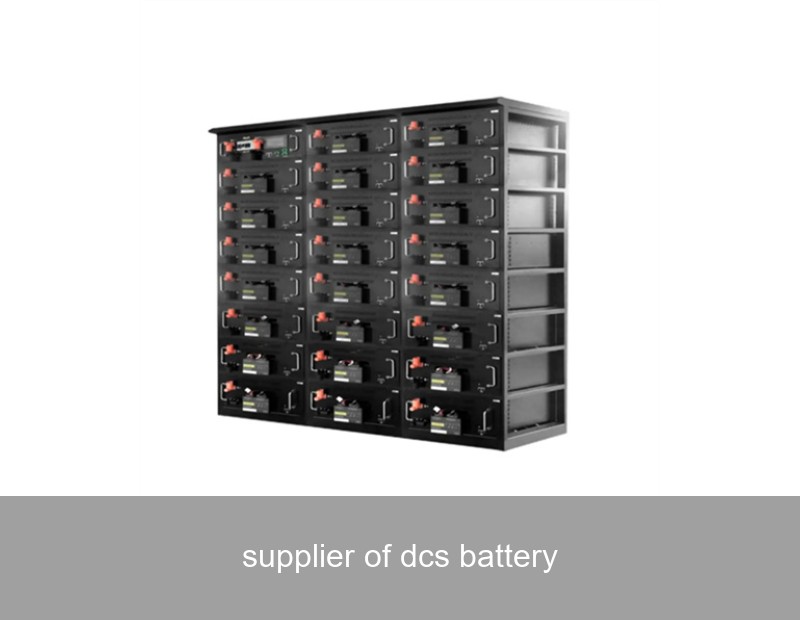
If you're managing a commercial facility, industrial plant, or a community microgrid, you've likely heard the term "DCS battery" more frequently. As renewable energy adoption accelerates and grid stability becomes a paramount concern, the demand for reliable, large-scale battery storage is surging. But navigating the landscape to find a trustworthy supplier of DCS battery (Distributed Control System battery) solutions can be complex. This article will guide you through the critical considerations, backed by data and real-world applications, to help you make an informed decision for your energy resilience and sustainability goals.
Table of Contents
What is a DCS Battery System?
Let's clarify the terminology. A DCS, or Distributed Control System, in the context of energy storage, refers to an architecture where control is distributed across the battery system rather than centralized. Think of it as a team of expert managers, each overseeing a specific section of a warehouse, communicating seamlessly to optimize overall operations. In a DCS battery system, individual battery racks or clusters have their own monitoring and control units. These units work in concert through a sophisticated software layer to manage performance, safety, and longevity. This is a significant step up from simpler, centrally controlled battery packs, especially for large-scale Commercial & Industrial (C&I) and utility applications.

Credit: Unsplash - Photon. Modern DCS battery solutions require sophisticated control interfaces for optimal performance.
The Challenge: Beyond Simple Battery Packs
The phenomenon is clear: businesses and grid operators are moving from passive energy consumers to active prosumers. They need storage to maximize solar self-consumption, provide backup power, and even generate revenue through grid services. However, the data reveals a common pitfall. A 2023 report by the Energy Storage News highlighted that system downtime and underperformance in large-scale installations are often traced back to inadequate control systems, not the battery cells themselves. A centrally controlled system might see a single fault cascade, shutting down the entire array. In contrast, a well-designed DCS architecture can isolate issues, maintain partial operation, and simplify troubleshooting—directly impacting your return on investment and operational resilience.
Key Criteria for Choosing Your DCS Battery Supplier
Selecting a supplier of DCS battery technology is a strategic decision. Here are the non-negotiable factors to evaluate:
- Proven System Architecture: Does the supplier have a track record of deploying truly distributed intelligence? Ask for schematics and explanations of how control is delegated and coordinated.
- Cybersecurity & Communication Protocols: With distributed nodes, secure communication (like using encrypted CAN bus or Ethernet) is critical to protect against cyber threats.
- Advanced Battery Management System (BMS): The heart of any good system. It must offer cell-level monitoring, state-of-charge (SOC) and state-of-health (SOH) accuracy, and thermal runaway prevention.
- Grid Service Capabilities: Can the system easily provide frequency regulation, peak shaving, or voltage support? This functionality is often software-defined.
- Local Support & Service Network: Especially for our European and North American readers, having local technical support for installation, commissioning, and maintenance is crucial.
| Feature | Centralized Control System | Distributed Control System (DCS) |
|---|---|---|
| Fault Tolerance | Low (Single point of failure) | High (Fault isolation) |
| Scalability | More complex, often requires redesign | Modular, easier to expand |
| Maintenance & Diagnostics | Can be time-consuming, system offline | Targeted, often allows partial operation |
| Initial Complexity/Cost | Typically Lower | Can be Higher |
| Long-Term Operational ROI | Potentially lower due to downtime | Typically higher due to resilience |
Case Study: A European Manufacturing Plant's Journey
Let's look at a concrete example. A major automotive parts manufacturer in Bavaria, Germany, faced two problems: volatile energy prices affecting production costs and a corporate mandate to reduce carbon footprint by 40% within five years. Their 5 MW rooftop solar array was underutilized, exporting excess power at low rates.
Their solution was a 2.5 MWh battery storage system. The critical requirement was a system that could handle multiple, simultaneous tasks without fail: peak shaving during high-tariff periods, solar self-consumption optimization, and providing frequency containment reserve (FCR) to the German grid for additional revenue.
They partnered with a supplier of DCS battery systems, Highjoule, to deploy the Highjoule HPS Series with its native distributed control architecture. The results after 18 months of operation, as verified by an independent audit, were compelling:
- Energy Cost Reduction: 32% reduction in monthly demand charges through precise peak shaving.
- Solar Self-Consumption: Increased from 55% to over 85%.
- Grid Revenue: Generated approximately €45,000 annually from FCR services.
- System Availability: Maintained 99.8% uptime, with two minor module faults isolated and resolved without system shutdown.
This case, documented in part by the Fraunhofer Institute for Solar Energy Systems, illustrates how the right DCS technology translates technical advantages into tangible financial and operational benefits.
The Highjoule Approach: Intelligent DCS Solutions
At Highjoule, with nearly two decades of experience since 2005, we've built our reputation as a global leader by designing intelligence into every layer of our storage systems. We understand that being a reliable supplier of DCS battery solutions means providing more than hardware; it's about delivering predictable performance.
Our flagship product lines, like the HPS (Hybrid Power Station) for C&I applications and the MGS (Microgrid System), are built on our proprietary JouleMind™ DCS platform. JouleMind™ distributes computational load across rack-level controllers, each making real-time decisions for its cluster while seamlessly reporting to a central supervisory system. This architecture offers unparalleled resilience and simplifies integration with complex site energy management systems (EMS) and building management systems (BMS).
For our clients in Europe and North America, this means our systems are not just storage devices but active grid partners. They can be configured to participate in virtual power plants (VPPs), comply with local grid codes like UL 9540 in the US or VDE-AR-E 2510-50 in Germany, and adapt to future market mechanisms through over-the-air software updates.

Credit: Unsplash - American Public Power Association. Integrated solar and storage solutions are key for modern C&I energy strategy.
Future Trends: Where is DCS Battery Technology Headed?
The evolution is towards even greater autonomy and interoperability. We are moving into the era of the "self-healing" grid-edge asset. Future DCS systems will leverage AI not just for analytics, but for predictive control—anticipating load changes, weather patterns, and grid events to preemptively adjust operation. Furthermore, standards like IEEE 2030.5 and OCPP (Open Charge Point Protocol) are becoming more prevalent, requiring storage systems to communicate in an open ecosystem. A forward-thinking supplier of DCS battery systems will design for this open, smart future from the outset, ensuring your investment remains viable and valuable for its entire 15-20 year lifespan.
Your Next Step
The choice of your energy storage partner will define your energy resilience and economic benefit for years to come. As you evaluate potential suppliers, ask them not just about the battery chemistry, but about the intelligence architecture. How does their system handle a fault? Can it truly perform multiple value-stacking applications concurrently? How will it communicate with your other assets and the grid of tomorrow?
What specific energy challenge—be it demand charge spikes, renewable integration, or backup power requirements—is most critical for your operation to solve in the next quarter, and how might a intelligently controlled storage system address it?
 Inquiry
 Online Chat