


Finding the Right Supplier of Giga Storage: Your Guide to Grid-Scale Energy Solutions
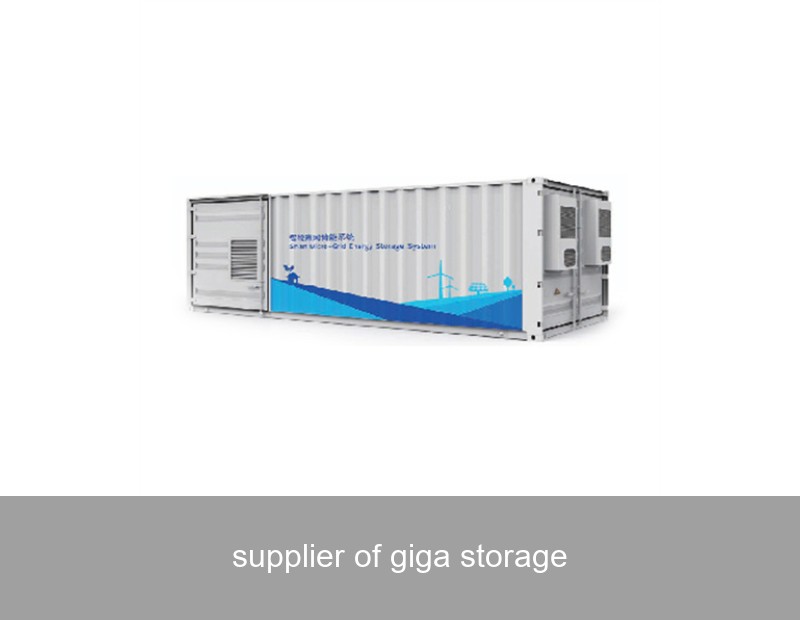
As the world accelerates its transition to renewable energy, a critical challenge emerges: how do we keep the lights on when the sun doesn't shine and the wind doesn't blow? The answer lies in massive, grid-scale battery systems—often called giga storage. Choosing the right supplier of giga storage is no longer a niche concern; it's a strategic decision for utilities, developers, and nations aiming for energy security and decarbonization. This article will guide you through the essentials of giga storage, what to look for in a partner, and how the right technology is unlocking a resilient, clean energy future.
Table of Contents
- What is Giga Storage? The Backbone of the Modern Grid
- Key Criteria for Choosing a Supplier of Giga Storage
- From Kilowatts to Gigawatts: The Evolution of Storage Scale
- Case Study: Grid Stability in Germany - A Real-World Test
- Highjoule's Role as an Integrated Supplier of Giga Storage
- Future Horizons: What's Next for Grid-Scale Storage?
What is Giga Storage? The Backbone of the Modern Grid
Let's demystify the term. "Giga storage" refers to battery energy storage systems (BESS) with a capacity in the gigawatt-hour (GWh) range. To visualize, one GWh can power approximately 1 million homes for one hour. These are not the powerwalls in your garage; these are vast, containerized or warehouse-scale installations strategically connected to the transmission grid.
Their primary functions are multifaceted:
- Renewables Integration: Soaking up excess solar and wind generation during peak production and releasing it during demand peaks.
- Grid Frequency Regulation: Acting as a ultra-responsive shock absorber, injecting or absorbing power in milliseconds to maintain the grid's stable 50Hz or 60Hz frequency.
- Deferring Grid Upgrades: Providing localized power during high demand, postponing the need for expensive new transmission lines or substations.
The shift to this scale is driven by hard data. The International Energy Agency (IEA) reports that global grid-scale battery storage capacity is set to multiply over 15-fold by 2030, with the majority of growth in North America, Europe, and China. This isn't just growth; it's a fundamental reshaping of our energy infrastructure.

Image: Utility-scale solar farm paired with battery storage units. Credit: Unsplash (Representative image).
Key Criteria for Choosing a Supplier of Giga Storage
Selecting a partner for a multi-million, even billion-dollar infrastructure asset requires deep due diligence. Here are the non-negotiable factors:
| Criterion | Why It Matters | Key Questions to Ask |
|---|---|---|
| Technology & Chemistry | Determines lifespan, safety profile, performance, and cost. Lithium-ion phosphate (LFP) is now the dominant, safer chemistry for grid-scale. | Do you use LFP? What is the warranted degradation curve over 10-15 years? |
| System Integration & Software | The hardware stores energy, but the intelligence (EMS) decides when to buy, sell, or hold. This is where value is optimized. | Is your energy management system (EMS) proprietary? Can it participate in multiple revenue streams (arbitrage, frequency response, capacity markets) simultaneously? |
| Safety & Compliance | Giga-scale systems contain immense energy. Comprehensive fire suppression, thermal management, and industry certifications (UL, IEC) are paramount. | What is your multi-layered safety protocol? Can you provide third-party certification reports? |
| Financial Strength & Project Delivery | You need a partner who will be there for the 20-year asset life, not just the sale. | Can you offer full EPC (Engineering, Procurement, Construction) and O&M (Operations & Maintenance) services? What is your track record for on-time, on-budget delivery? |
From Kilowatts to Gigawatts: The Evolution of Storage Scale
The journey to giga storage is a story of plummeting costs and soaring ambition. A decade ago, a 20 MW/40 MWh project was headline news. Today, projects ten times that size are in development. The U.S. Department of Energy's Sunshot 2030 targets aim to further slash the cost of long-duration storage by 90%. This economic tipping point makes giga storage not just technically feasible, but commercially irresistible.
This scale evolution demands a parallel evolution in supplier capabilities. It moves from selling battery racks to delivering a fully integrated, grid-forming power plant. The best suppliers of giga storage now act as strategic partners, offering financial modeling, grid interconnection support, and long-term performance guarantees.
Case Study: Grid Stability in Germany - A Real-World Test
Let's look at a concrete example from Europe. Germany, with its high penetration of wind and solar (Energiewende), faces significant grid balancing challenges. In 2023, a major grid stability project in Schleswig-Holstein, a wind-rich region, came online.
The Challenge: Prevent renewable curtailment and provide critical grid inertia (a property traditionally supplied by spinning coal or gas turbines) as conventional plants retire.
The Solution: A 190 MW/380 MWh battery storage system, one of Europe's largest, was deployed. This system acts as a "virtual synchronous machine," mimicking the grid-stabilizing properties of a large rotating generator.
- The system can respond to grid frequency deviations in under 100 milliseconds.
- It's estimated to prevent over 25,000 tons of CO2 emissions annually by enabling more renewable energy absorption.
- It provides black-start capability, meaning it can help reboot the grid after a major outage.
This project exemplifies the dual role of a modern supplier of giga storage: providing both bulk energy capacity and essential grid stability services. It's a blueprint being studied across Europe and the U.S.
Highjoule's Role as an Integrated Supplier of Giga Storage
At Highjoule, founded in 2005, we've grown alongside this industry evolution. Our approach as a leading supplier of giga storage is built on vertical integration and digital intelligence. We don't just source cells; we engineer the complete system—from our proprietary, UL9540-certified battery modules to our AI-driven JouleMind™ Energy Management Platform.
For a utility in Texas, USA, we delivered a 250 MW/500 MWh system designed specifically for energy arbitrage and frequency regulation in the ERCOT market. Our JouleMind™ platform continuously analyzes real-time market prices and grid signals, making autonomous decisions to maximize revenue. The system's advanced liquid cooling ensures consistent performance even during the state's extreme summer heat, a critical factor for longevity and safety.
Our services encompass the entire project lifecycle:
- Feasibility & Design: Site-specific modeling and financial ROI analysis.
- Turnkey Delivery: Full EPC services with guaranteed performance.
- Long-Term O&M: 24/7 remote monitoring, predictive maintenance, and performance warranty enforcement.
We believe the right partnership means assuming risk alongside our clients, ensuring the asset performs as promised for its entire operational life.

Image: Control room for a utility-scale battery storage system. Credit: Unsplash (Representative image).
Future Horizons: What's Next for Grid-Scale Storage?
The frontier of giga storage is already moving beyond lithium-ion. Technologies like flow batteries, compressed air, and advanced thermal storage are targeting the "long-duration" (10+ hours) segment, crucial for managing weekly or seasonal weather patterns. The U.S. Department of Energy is actively funding research in this area, as detailed in their Long Duration Storage Shot initiative.
Furthermore, the concept of "virtual power plants" (VPPs)—aggregating thousands of distributed home batteries, EV chargers, and industrial loads—will interact with centralized giga storage. The future grid will be a dynamic, interoperable network of storage assets of all sizes.
 Inquiry
 Online Chat