


Finding the Right Supplier of Solar Box: Your Guide to Smart Energy Storage
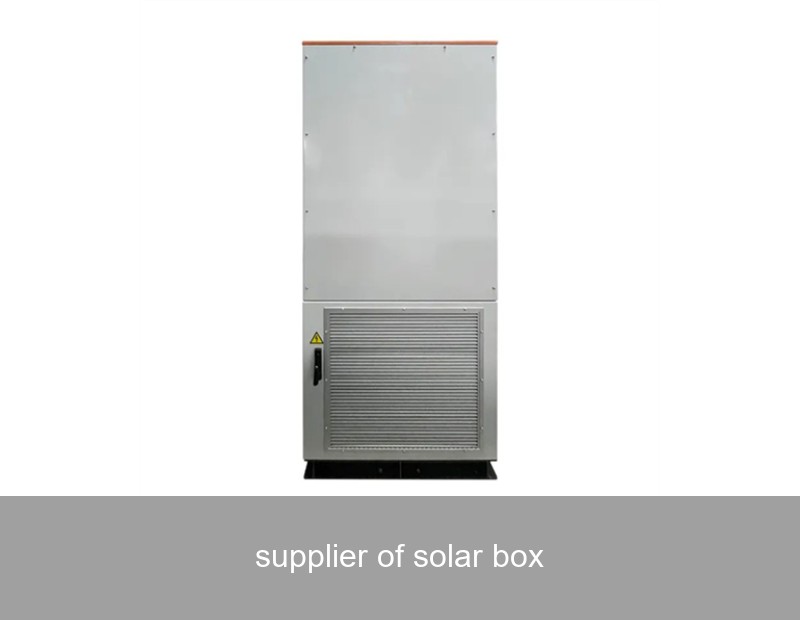
Have you ever watched your solar panels work hard on a bright afternoon, only to send excess power back to the grid for minimal return, while your energy bill still creeps up in the evening? This common frustration is the very reason the search for a reliable supplier of solar box—a term encompassing modern, all-in-one solar battery storage systems—is booming across Europe and the US. It's not just about storing sunshine; it's about taking true control of your energy, increasing independence, and maximizing your renewable investment. But with so many options, how do you choose a partner that delivers on safety, intelligence, and long-term value? Let's explore what makes a leading supplier in today's market.
Table of Contents
The Phenomenon: Why Solar-Only is No Longer Enough
The solar revolution is in a new phase. A decade ago, the goal was simply to generate clean power. Today, the smart energy user asks: "How can I use more of what I generate?" The mismatch between peak solar production (midday) and peak household or business consumption (morning and evening) creates a significant opportunity gap. This phenomenon, often called the "duck curve" by grid operators, highlights the growing need for storage to bridge that gap. A quality solar box acts as a personal energy reservoir, capturing that midday surplus for use when you truly need it—turning solar from a partial solution into a comprehensive one.

Image Source: Unsplash - A modern home solar installation with integrated battery storage.
The Data: Quantifying the Storage Advantage
The benefits of pairing solar with a battery aren't just theoretical. Let's look at the numbers. According to the U.S. Department of Energy, adding storage can increase the amount of self-consumed solar electricity for a typical home from 30-50% to over 80%. This directly translates to bill savings. In markets with time-of-use rates or demand charges—common for businesses—the savings are even more pronounced. A study in the UK found that commercial sites could reduce their grid electricity imports by up to 70% with suitably sized solar and storage. The financial case is clear: a solar box transforms your solar array from a contributor into a primary, controllable power source.
Key Performance Metrics to Consider:
- Round-Trip Efficiency: How much energy you get back vs. what you put in (look for >94%).
- Depth of Discharge (DoD): The usable percentage of the battery's capacity (quality systems allow 90-100%).
- Cycle Life: The number of charge/discharge cycles before significant degradation (10,000+ cycles for leading lithium iron phosphate, or LFP, batteries).
- Scalability: The ability to easily add more capacity as your needs grow.
A Real-World Case Study: The German Bakery
Let's make this concrete. Consider "Brot & Mehr," a mid-sized artisan bakery in Bavaria, Germany. Their challenge: high energy costs, especially for early morning oven pre-heating, and a desire to reduce their carbon footprint. They installed a 50 kWp solar array but were only using 40% of the generation directly.
In 2022, they partnered with a trusted supplier of solar box solutions to integrate a 60 kWh commercial battery storage system. The results after one year were compelling:
| Metric | Before Storage | After Storage | Change |
|---|---|---|---|
| Solar Self-Consumption | 40% | 88% | +120% |
| Grid Electricity Import (kWh/year) | 72,000 | 28,000 | -61% |
| Peak Demand Charge Reduction | 0% | 35% | Significant |
| Estimated Payback Period | N/A | 6.5 years | Strong ROI |
The bakery now uses stored solar power to cover its early morning ramp-up, smoothing its energy demand curve and creating substantial cost predictability. This case illustrates the transformative impact of a well-engineered storage solution for a small-to-medium enterprise.
Key Insights: What to Look for in a Solar Box Supplier
Choosing a supplier of solar box systems goes beyond comparing price per kWh. Based on industry expertise, here are the critical factors that separate market leaders from the rest:
1. Technology and Safety as a Foundation
The core of any solar box is the battery chemistry. While various types exist, Lithium Iron Phosphate (LFP) has become the benchmark for residential and commercial storage due to its exceptional safety (thermal and chemical stability), long cycle life, and high tolerance for full charge/discharge cycles. A reputable supplier will prioritize LFP or similarly advanced, safe chemistry and provide robust system monitoring and management to ensure optimal performance and safety for decades.
2. Intelligence and Grid Services
A modern solar box is a smart energy manager. Look for systems with sophisticated energy management software (EMS) that can learn your consumption patterns, integrate with time-of-use tariffs, and even participate in grid-balancing programs like virtual power plants (VPPs). This intelligence turns a passive battery into an active financial asset. For instance, in some US states and across Europe, programs exist where utilities compensate you for allowing them to draw from your collective battery storage during peak grid stress.

Image Source: Unsplash - A sleek, wall-mounted battery storage system in a home.
3. Integration and After-Sales Support
The best hardware is only as good as its installation and support. A leading supplier will offer seamless integration with major solar inverter brands, provide clear design and commissioning support to installers, and back their products with a strong, transparent warranty (often 10+ years). They act as a true partner throughout the system's lifetime.
The Highjoule Solution: Engineered for Performance and Simplicity
This is where Highjoule's mission comes into clear focus. Since 2005, we have been at the forefront of advanced energy storage, designing solutions that embody the very insights outlined above. We understand that a trusted supplier of solar box must deliver more than just a container for electrons.
Our flagship product line, the Highjoule H-Series, is built on three pillars:
- Uncompromising Safety & Durability: Utilizing premium LFP cells with an integrated, multi-layer Battery Management System (BMS), the H-Series is designed for safe, reliable operation over a 15+ year lifespan, backed by a comprehensive warranty.
- Adaptive Intelligence: The Highjoule Energy Hub is the brain of the system. Its AI-driven software optimizes self-consumption, manages tariff rates automatically, and is ready for VPP participation, helping you earn revenue from your stored energy.
- Plug-and-Play Scalability: Starting with a compact 5kWh unit, the modular design allows you to scale capacity seamlessly up to 30kWh+ for a home, and even larger for commercial applications. Installation is streamlined for certified partners, ensuring a smooth process.
For commercial and industrial clients, our Highjoule C&I Microgrid Platform takes this further, integrating large-scale storage with solar, generators, and load management to create resilient, cost-effective microgrids. Whether it's a bakery in Germany, a farm in California, or a manufacturing facility in the UK, our team provides end-to-end support from design to commissioning and long-term monitoring.
Your Energy Independence Awaits
The journey from being a passive consumer to an active energy manager starts with the right partnership. The data is compelling, the technology is proven, and the need for resilient, cost-effective power has never been greater. As you evaluate your options, ask potential suppliers not just about the box, but about the intelligence inside, the safety underneath, and the partnership they offer for the long run.
What specific energy challenge—be it unpredictable bills, demand charges, or a desire for backup power—is motivating you to look for a supplier of solar box solutions today?
 Inquiry
 Online Chat