


Top 10 Energy Storage Cabinet Batteries: Powering a Resilient and Sustainable Future
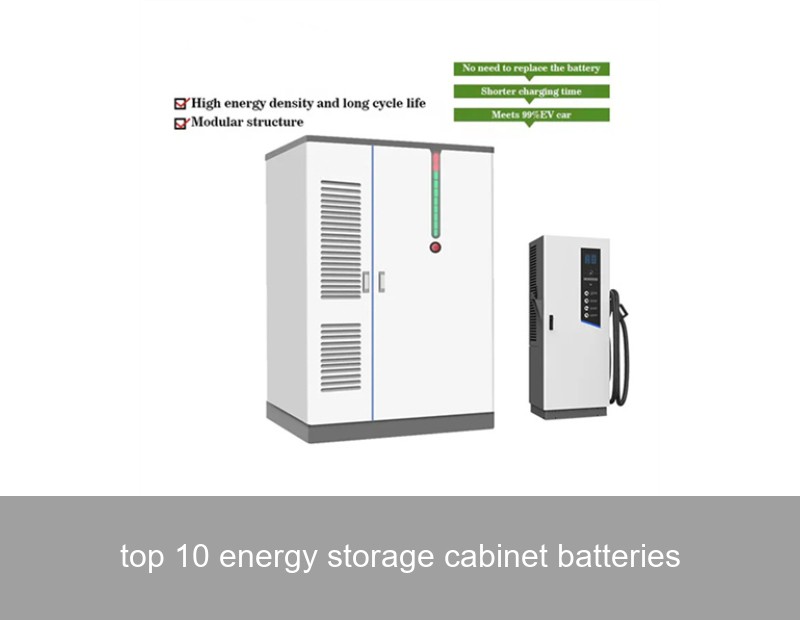
Have you ever wondered what keeps the lights on in a commercial building during a grid outage, or how a factory seamlessly integrates solar power after sunset? The answer increasingly lies in a sophisticated, box-shaped unit: the energy storage cabinet battery. These systems are the unsung heroes of the modern energy transition, moving beyond simple backup to become intelligent hubs for energy management. As electricity demands soar and renewable adoption accelerates, selecting from the top 10 energy storage cabinet batteries becomes a critical decision for businesses, utilities, and communities. This article will guide you through the key technologies, performance metrics, and real-world applications that define the leaders in this vital market.
Table of Contents
What Are Energy Storage Cabinet Batteries?
An energy storage cabinet battery is an integrated, containerized system that houses battery cells, a sophisticated Battery Management System (BMS), thermal management, power conversion systems (PCS), and safety mechanisms. Think of it as a "power plant in a box." Unlike scattered battery packs, these cabinets are engineered for scalability, safety, and ease of deployment. They are the building blocks for larger energy storage systems (ESS), commonly used in commercial & industrial (C&I) settings, microgrids, and as grid-support assets.
At Highjoule, with nearly two decades of expertise since 2005, we've seen the evolution of these cabinets from simple lead-acid enclosures to today's smart, lithium-ion-based power stations. Our H-Series Commercial Energy Storage Cabinets exemplify this evolution, designed not just to store energy but to optimize its flow, reduce demand charges, and provide critical backup, all managed through our cloud-based Highjoule EnergyOS™ platform.
Key Metrics for Evaluating Top Performers
When assessing the top 10 energy storage cabinet batteries, it's not just about the brand name. You need to dig into the specifications that dictate performance, longevity, and return on investment.
- Energy Density (Wh/L): How much energy is packed into the space? Higher density means a smaller footprint.
- Cycle Life & Depth of Discharge (DoD): How many charge/discharge cycles can it endure before significant degradation? A top-tier lithium iron phosphate (LFP) cabinet can offer 6,000+ cycles at 90% DoD.
- Round-Trip Efficiency (RTE): The percentage of energy put in that you can usefully get out. Leaders achieve over 95% RTE.
- Scalability & Modularity: Can you easily add more cabinets to increase capacity? Modular design is key for future growth.
- Thermal Management: Active liquid cooling vs. air cooling? Liquid systems, like those in Highjoule's H-Series, often provide superior temperature uniformity, enhancing safety and lifespan in demanding applications.
- Grid Services & Software Intelligence: Can the system provide frequency regulation or peak shaving? The "brain" (the software) is as important as the "brawn" (the battery).
Top 10 Technologies & Solutions in Energy Storage Cabinets
The market leaders are defined by their core chemistry, system integration, and smart capabilities. Here’s a breakdown of the dominant technologies that make up the top 10 energy storage cabinet batteries landscape.
| Technology Focus | Key Characteristics | Ideal Application | Industry Leaders & Notes |
|---|---|---|---|
| Lithium Iron Phosphate (LFP) | Excellent safety (thermal stability), long cycle life, cobalt-free. Slightly lower energy density than NMC. | C&I backup, daily cycling for solar, microgrids. | The dominant chemistry for stationary storage. Highjoule's core technology utilizes premium LFP cells for maximum safety and longevity. |
| Lithium Nickel Manganese Cobalt (NMC) | Higher energy density, good performance across metrics. Historically more common in EVs. | Applications where space is extremely limited. | Used by several major vendors. The industry is seeing a strong shift toward LFP for stationary storage due to safety and cost. |
| Integrated All-in-One Systems | Cabinet includes PCS, BMS, and cooling in a single, pre-assembled unit. Simplifies installation. | Fast-deployment projects, retrofits, distributed sites. | Highjoule's H-Series All-in-One Cabinet is engineered for plug-and-play deployment, reducing commissioning time by up to 40%. |
| Containerized Megawatt-Scale Solutions | Multiple cabinets integrated into a shipping container for utility-scale storage. | Grid-scale storage, large industrial plants, renewable energy farms. | Highjoule provides custom-configured containerized solutions based on our modular cabinet design. |
| Advanced Liquid Cooling | Precise temperature control for each cell cluster. Enables higher performance, compact design, and extended life. | High-cycling environments, areas with extreme ambient temperatures. | A key feature in cutting-edge cabinets. Highjoule employs a proprietary indirect liquid cooling system for optimal cell health. |
| Grid-Interactive & Software-Defined | Cabinets controlled by AI-driven software for revenue stacking (e.g., energy arbitrage, demand response). | Businesses with volatile energy costs, participation in grid service markets. | The Highjoule EnergyOS™ platform turns a storage cabinet into an intelligent asset, optimizing for cost savings and grid support automatically. |
| Second-Life EV Battery Cabinets | Repurposed electric vehicle batteries given a second life in stationary storage. Cost-effective, sustainable. | Lower-cycling applications, pilot sustainability projects. | An emerging niche promoting circular economy. Requires sophisticated BMS to manage varied cell conditions. |
| Flow Battery Cabinets (e.g., Vanadium) | Very long duration, decoupled power & energy, non-flammable electrolyte. Excellent for long-duration storage. | Long-duration storage (4+ hours), renewable firming. | Different technology path. Less common for C&I but important for specific grid-scale applications. Learn more from the U.S. Department of Energy. |
| Ultra-Safe Cell-to-Pack Designs | Minimizes wiring and structural components by integrating cells directly into the pack, improving density and safety. | All applications where safety is the paramount concern. | A leading design trend. Highjoule's cell stacking and module design prioritizes safety and serviceability. |
| Hybrid Inverter-Ready Cabinets | Seamlessly pairs with specific hybrid solar inverters, creating a unified solar-plus-storage solution. | New or existing solar PV installations looking to add storage. | Highjoule systems are compatible with a wide range of leading inverter brands, offering flexibility for system integrators. |

Image: Modern energy storage cabinets in an industrial installation. (Source: Unsplash, representative image)
Case Study: A Real-World Application
Let's move from theory to practice. A mid-sized dairy processing plant in Bavaria, Germany, faced two major challenges: high electricity costs due to time-of-use rates and occasional grid instability that risked spoiling perishable product.
Phenomenon: High energy costs and operational risk from grid outages.
Data: The plant had a peak demand of 1.2 MW and an average monthly demand charge of €25,000. They also had a 500 kW rooftop solar array that was largely underutilized for self-consumption.
Case: The plant deployed a turnkey solution featuring two Highjoule H-Series 500 kW/1 MWh All-in-One storage cabinets integrated with their existing solar. The system was controlled by Highjoule EnergyOS™.
Insights & Results: The software was programmed for peak shaving (capping grid draw during expensive peak hours) and solar self-consumption maximization (storing excess solar for use in the evening). Within the first year:
- Demand charges were reduced by 28%, saving approximately €84,000 annually.
- Solar self-consumption rate increased from 35% to over 80%.
- The system provided seamless backup power during two brief grid disturbances, preventing production line shutdowns.
The investment payback period was calculated at under 5 years. This case exemplifies how choosing a top-tier, intelligent storage cabinet solution directly impacts the bottom line and operational resilience. Fraunhofer ISE studies consistently show that for C&I applications in Europe, solar-plus-storage is now a key cost-control strategy.
Choosing the Right System for Your Needs
Selecting from the top 10 energy storage cabinet batteries isn't about picking the highest-ranked one; it's about finding the perfect fit. Ask yourself and your provider these questions:
- What is my primary use case? (Cost savings, backup power, renewable integration, grid services?)
- What is my total cost of ownership (TCO) analysis? Consider not just upfront cost, but efficiency losses, cycle life, and maintenance.
- How important is scalability? Will my energy needs grow in 5 years?
- What does the software platform offer? Can it adapt to changing tariff structures and maximize my ROI?
This is where a provider's depth of experience matters. Highjoule doesn't just sell cabinets; we provide a comprehensive energy resilience partnership. From initial site assessment and financial modeling to installation, commissioning, and 24/7 remote monitoring via EnergyOS™, we ensure the system delivers on its promises for decades.
The Future of Energy Storage Cabinets
The innovation race continues. We are moving towards even more intelligent cabinets with predictive analytics that can forecast cell health and schedule maintenance before issues arise. Standardization and interoperability (like the SunSpec Alliance standards) will further simplify integration. Furthermore, the integration of storage cabinets into virtual power plants (VPPs) is turning distributed batteries into aggregated grid assets, creating new revenue streams for owners.
Ready to Explore Your Options?
The world of energy storage cabinet batteries is complex but incredibly promising. Whether you're an engineer specifying a system, a facility manager tasked with cutting costs, or a sustainability officer driving decarbonization, the right storage solution is a transformative investment. What would a 25% reduction in your energy costs do for your operational budget this year?
 Inquiry
 Online Chat