


Harnessing the Breeze: How Wind Turbine for Power Generation is Shaping Our Energy Future
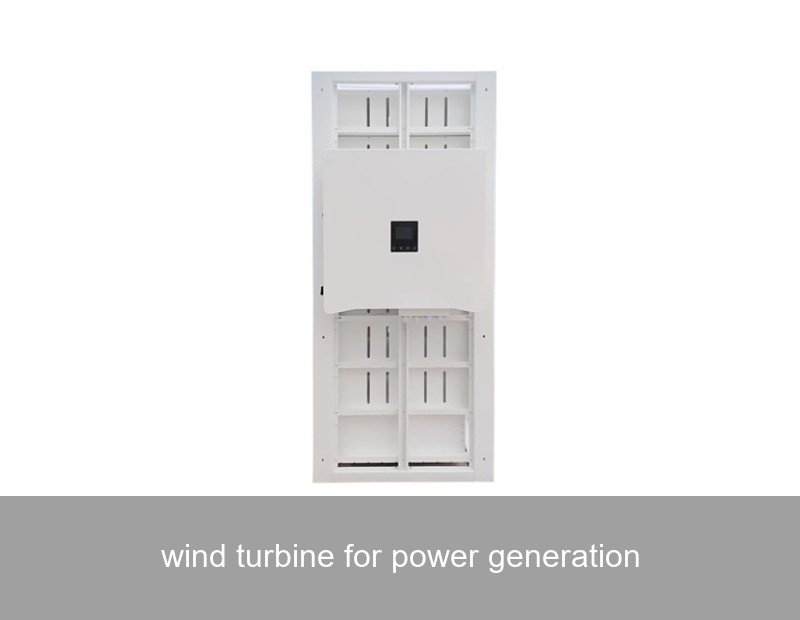
Look across landscapes from the plains of Texas to the coasts of Scotland, and you'll see them: elegant, towering wind turbines for power generation. They have become a dominant symbol of the global shift towards renewable energy. And for good reason. Wind power is clean, abundant, and increasingly cost-competitive. But as any grid operator or wind farm owner will tell you, there's a fundamental question that comes with this clean energy boom: what do we do when the wind isn't blowing? The answer, and the key to unlocking wind power's full potential, lies not just in the turbines themselves, but in what happens to the electricity after it's generated.
The Intermittency Challenge: Data Doesn't Lie
The phenomenon is clear. Wind turbine power generation is variable. One day, a farm might be operating at 95% capacity; the next, during a calm period, it could drop to 10%. This isn't a flaw—it's a inherent characteristic of the resource. This variability creates a significant challenge for grid stability. Utilities must constantly balance supply and demand, and a sudden drop in wind output can necessitate firing up fossil-fuel-powered "peaker" plants, undermining the environmental benefits and increasing costs.
Let's look at the data. According to the U.S. Department of Energy, wind energy provided over 10% of the nation's electricity in 2023. However, the capacity factor—the ratio of actual output to maximum possible output—for land-based wind hovers around 35-40%. That means nearly two-thirds of the time, a turbine isn't producing at its nameplate capacity. This gap between potential and consistent, dispatchable power is the central puzzle we need to solve.
BESS: The Perfect Partner for a Steady Clean Grid
This is where Battery Energy Storage Systems (BESS) enter the scene as the game-changing partner for wind turbine power generation. Think of BESS as a high-tech reservoir for electrons. When the wind is blowing strongly, often during off-peak nighttime hours, excess electricity can be stored in batteries instead of being curtailed or wasted. Later, when demand peaks or the wind dies down, that stored energy can be injected back into the grid seamlessly and instantaneously.
The benefits of pairing wind with storage are profound:
- Grid Stabilization: BESS provides fast frequency response, helping to maintain the grid's delicate 50/60 Hz balance far quicker than any traditional generator.
- Increased Revenue for Operators: Stored energy can be sold during high-price periods (arbitrage), and storage systems can provide valuable grid services.
- Enhanced Reliability: Communities and critical facilities powered by wind can have backup power during lulls.
- Reduced Curtailment: More clean energy is used, maximizing the return on investment for wind infrastructure.

This synergy transforms wind from an intermittent source into a firm, predictable, and dispatchable one. It's the logical next step in the evolution of renewable energy systems.
Real-World Case Study: Stabilizing the Grid in Northern Germany
Let's move from theory to practice with a compelling example from Europe. A 50 MW wind farm in the windy Schleswig-Holstein region of Germany was facing two major issues: frequent grid connection constraints due to local congestion and the financial penalty of output curtailment during high-wind, low-demand periods. The farm's operators needed a solution to capture lost energy and support the local grid.
They deployed a co-located 12 MWh battery storage system. Here’s what the data showed after one year of integrated operation:
| Metric | Result |
|---|---|
| Wind Curtailment Reduction | Over 85% |
| Additional Revenue from Energy Arbitrage | ~€180,000 annually |
| Frequency Regulation Services Provided | Consistently met grid operator requirements |
| Effective Capacity Factor Increase | Increased by ~8 percentage points |
This case, documented in a report by the Fraunhofer Institute for Solar Energy Systems, clearly illustrates the tangible value of integrating storage with wind turbine power generation. The system paid for itself through new revenue streams while making the entire regional grid more resilient and efficient.
Intelligent Energy Management: The Brain Behind the Brawn
Simply having batteries on-site isn't enough. The true magic happens with intelligent software that decides precisely when to charge, when to discharge, and for which service. This is a core strength of Highjoule's offering.
Highjoule's Intelligent Solutions for Wind Energy Storage
At Highjoule, we understand that maximizing the value of your wind asset requires more than just hardware—it requires an intelligent, integrated system. Our expertise, honed since 2005, lies in creating seamless partnerships between generation and storage.
For wind farm operators and developers, Highjoule provides end-to-end BESS solutions designed specifically for the demands of wind turbine power generation:
- Highjoule GridStackTM Commercial & Utility BESS: Our scalable, containerized solutions are engineered for durability and high cycle life, perfect for the daily charge/discharge cycles of wind energy shifting. They feature advanced liquid cooling for optimal performance and safety.
- AuroraTM Energy Management Platform: This is the intelligent brain. Aurora uses predictive algorithms, factoring in weather forecasts (wind speeds), real-time electricity prices, and grid signals to autonomously optimize battery operation. It ensures every stored kilowatt-hour delivers maximum financial and grid-support value.
- Hybrid Microgrid Controllers: For off-grid or weak-grid applications where wind is a primary source, our controllers seamlessly manage the interplay between wind turbines, solar PV, battery storage, and backup generators to provide 24/7 reliable power.
Our systems are designed to future-proof your investment, ensuring that as market rules evolve, your storage asset can adapt and continue to generate revenue. We don't just sell batteries; we deliver optimized energy assets.

The Future of Wind Energy is Stored
The journey of a kilowatt-hour no longer ends at the wind turbine's transformer. The future of wind turbine power generation is inextricably linked with advanced storage and digital intelligence. This combination is what will allow us to build grids that are not only cleaner but also more robust, decentralized, and intelligent than the centralized fossil-fuel systems of the past.
As policies like the European Green Deal and the U.S. Inflation Reduction Act accelerate the energy transition, the economic and operational case for wind-plus-storage projects becomes undeniable. The question is shifting from "Why should we add storage?" to "How can we implement it most effectively?"
What specific challenge is your wind project or community facing—is it curtailment, grid connection issues, or the need for backup power? How could an intelligent storage system transform your energy economics and reliability?
 Inquiry
 Online Chat