


Understanding the Accumulatore Fotovoltaico: Your Key to Energy Independence
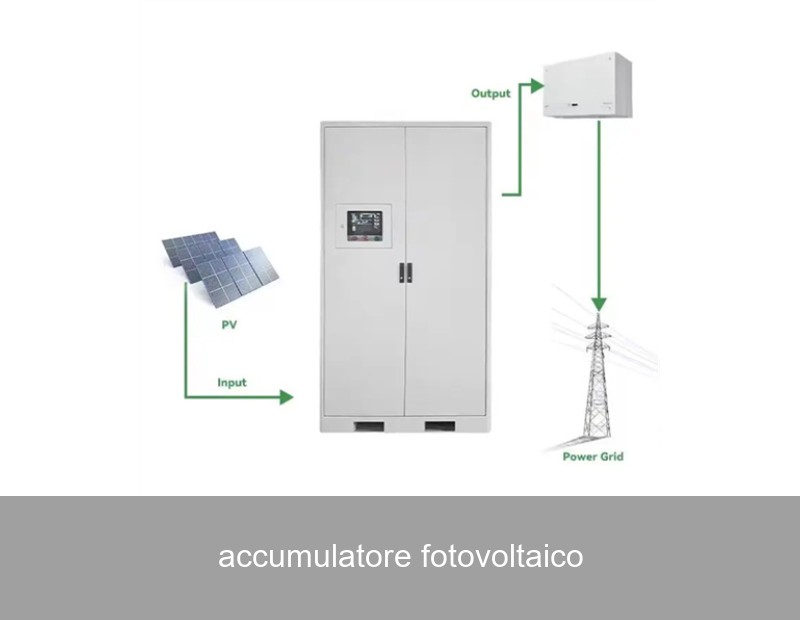
Have you ever watched your solar panels generate a surplus of clean energy on a sunny afternoon, only to see that power go to waste because you're not home to use it? Then, as evening falls, you find yourself buying electricity back from the grid. This common frustration highlights the missing piece in many renewable energy setups: storage. This is where the accumulatore fotovoltaico, or photovoltaic battery storage system, becomes not just an add-on, but the cornerstone of a truly efficient and resilient solar power system. By storing the excess energy your panels produce, you can use it precisely when you need it, day or night, dramatically increasing your self-consumption and slashing your energy bills. For over 18 years, Highjoule has been at the forefront of this revolution, designing intelligent battery storage solutions that empower homeowners and businesses across Europe and the US to take full control of their energy.
Table of Contents
- What Exactly is a Photovoltaic Battery (Accumulatore Fotovoltaico)?
- The Driving Forces: Why Solar Storage is Booming Now
- Key Components of a Modern Solar Battery System
- From Theory to Reality: A Case Study in Energy Resilience
- Choosing the Right System: Key Considerations
- The Future Horizon of Solar Storage
What Exactly is a Photovoltaic Battery (Accumulatore Fotovoltaico)?
At its core, an accumulatore fotovoltaico is a sophisticated device that stores the electrical energy generated by your photovoltaic (PV) panels. Think of it as a high-capacity, high-tech "energy bank." When your solar production exceeds your immediate consumption—like during peak daylight hours—the surplus energy is directed to charge the battery instead of being fed back into the grid. Later, when your panels aren't producing (at night or during cloudy periods), the stored energy is discharged to power your home or business.
Modern systems, like the Highjoule H-Series Home Energy Hub, go far beyond simple storage. They are integrated energy management systems. They consist of the battery modules themselves (using advanced Lithium Iron Phosphate - LFP chemistry for safety and longevity), a smart hybrid inverter that manages the flow of energy between PV panels, battery, grid, and home loads, and an intuitive energy management system (EMS). This EMS is the brain of the operation, learning your consumption patterns, optimizing for time-of-use electricity rates, and even allowing you to control your system remotely via a smartphone app.

Image Source: Unsplash - Representative image of a modern home battery installation.
The Driving Forces: Why Solar Storage is Booming Now
The surge in demand for solar batteries isn't accidental. It's a perfect storm of economic, technological, and environmental factors converging.
- Falling Feed-in Tariffs (FiTs): In many European countries, the generous subsidies for selling solar power back to the grid have significantly decreased. This makes consuming your own solar energy far more valuable than exporting it.
- Rising Electricity Prices: Volatile and increasing grid electricity costs, especially evident in markets like Germany, the UK, and parts of the US, make the payback period for a storage system more attractive than ever.
- Technological Advancements: Battery costs have plummeted by over 80% in the last decade, while energy density, safety, and cycle life have improved dramatically. LFP chemistry has become the industry standard for residential storage due to its stability and long life.
- Desire for Energy Resilience: Increasing grid instability due to extreme weather events or infrastructure strain has made backup power a critical consideration for many. A quality accumulatore fotovoltaico can keep essential circuits running during an outage.
According to the International Energy Agency (IEA), global energy storage capacity is set to multiply by a factor of six by 2030, with solar-plus-storage leading the charge in the residential sector.
Key Components of a Modern Solar Battery System
Understanding the key parts of a system helps you make an informed decision. A complete Highjoule solution typically includes:
| Component | Function | Highjoule's Approach |
|---|---|---|
| Battery Modules | The physical storage units that hold DC electrical energy. | Modular, scalable LFP batteries. Start with a base capacity (e.g., 10 kWh) and easily add more modules as your needs grow. |
| Hybrid Inverter | The "traffic controller" that converts DC from panels/battery to AC for home use, and manages all energy flows. | High-efficiency, multi-mode inverters with integrated grid-forming technology for seamless backup power. |
| Energy Management System (EMS) | The intelligent software that optimizes energy use based on weather forecasts, tariffs, and user habits. | Highjoule's SmartSync AI platform uses predictive algorithms to maximize self-consumption and savings automatically. |
| System Integration & Monitoring | Hardware and software that connects and allows you to monitor and control the system. | A user-friendly app providing real-time data on production, consumption, storage, and savings, with remote control features. |
From Theory to Reality: A Case Study in Energy Resilience
Let's move beyond theory and look at a real-world application in Northern Italy, a region with good solar irradiation but also prone to occasional grid disturbances. A medium-sized agritourism business with a 50 kWp rooftop solar array was facing two issues: high grid consumption during evening operational hours and vulnerability to short power outages that disrupted guest comfort and business operations.
They partnered with a Highjoule-certified installer to implement a tailored solution: a Highjoule C&I Stack battery storage system with 120 kWh of usable capacity, integrated with their existing solar PV. The system was configured for peak shaving (reducing draw from the grid during expensive peak hours) and providing full-facility backup for up to 6 hours.
- Grid Independence: Self-consumption of solar energy increased from 35% to over 80%.
- Financial Savings: Annual electricity costs were reduced by approximately €11,500.
- Reliability: The system seamlessly provided backup power during three grid outages, ensuring uninterrupted operation and positive guest reviews.
- ROI: The projected payback period for the storage system alone is under 7 years, enhanced by available regional incentives for storage.
This case demonstrates how the right accumulatore fotovoltaico transforms solar from a partial solution into a comprehensive energy strategy.

Image Source: Unsplash - Commercial solar installation on a farm building.
Choosing the Right System: Key Considerations
Selecting a solar battery system is a significant decision. Here are the critical questions to ask:
- Capacity & Power: Do you need enough storage for nightly use (daily cycling), or for extended backup during outages? Highjoule's modular design allows for precise sizing.
- Battery Chemistry: Insist on Lithium Iron Phosphate (LFP) for its superior safety profile, long cycle life (often over 6,000 cycles), and stability.
- Depth of Discharge (DoD): A higher usable DoD (like Highjoule's 100%) means you can use more of the battery's nominal capacity without harming it.
- Warranty & Lifespan: Look for a strong warranty (e.g., 10 years) that guarantees both a period of time and a remaining capacity (e.g., 70% at end of warranty).
- System Intelligence: Can it adapt to changing weather and tariffs? The smart capabilities of the EMS are what unlock maximum value.
- Integration: Does it work seamlessly with your existing or planned solar panels? Highjoule systems are designed for both new and retrofit installations.
For deeper technical insights, resources like the U.S. Department of Energy's solar integration portal provide valuable background.
The Future Horizon of Solar Storage
The evolution of the accumulatore fotovoltaico is moving towards even greater grid interaction and user value. We are rapidly approaching the era of virtual power plants (VPPs), where thousands of distributed home battery systems, like a network of Highjoule H-Series hubs, can be aggregated to provide grid stability services, support during peak demand, and generate revenue for their owners. Furthermore, bidirectional charging (V2H - Vehicle-to-Home) will integrate your electric vehicle as an additional mobile storage asset, creating a fully integrated, resilient, and cost-optimized home energy ecosystem.
At Highjoule, we are not just building batteries; we are building the infrastructure for a decentralized, democratic, and sustainable energy future. Our systems are engineered to be future-ready, with software-upgradable features that will allow our customers to participate in these emerging energy markets.
So, as you look at your solar panels, what will be your next step to unlock their full potential—will you continue to let valuable energy slip away, or will you harness it completely with your own accumulatore fotovoltaico?
 Inquiry
 Online Chat