


Unlocking Energy Independence: A Guide to Advanced Renewable Solutions
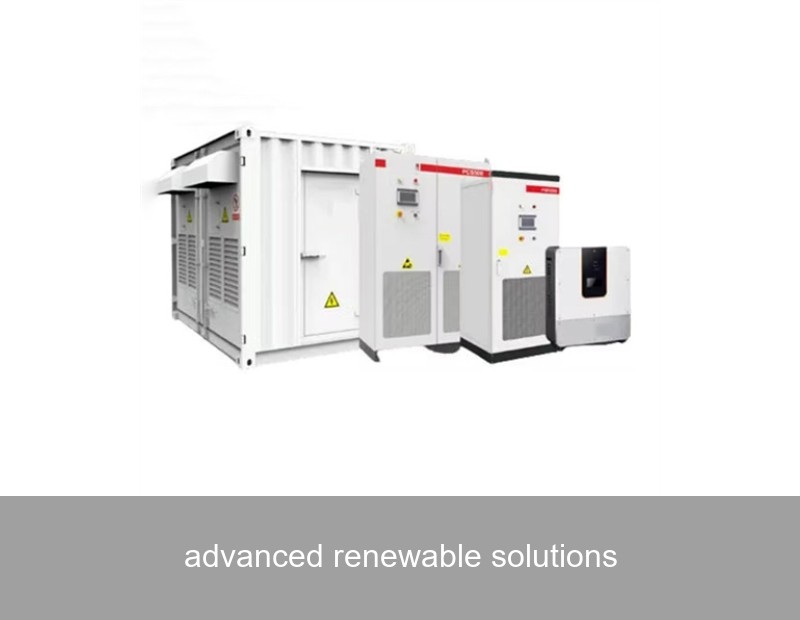
Have you ever looked at your electricity bill on a windy, sunny day and wondered, "Why isn't this cheaper?" Or perhaps, as a business owner, you're increasingly concerned about grid instability and volatile energy prices. You're not alone. Across Europe and the US, a quiet revolution is underway, moving us from passive consumers to proactive energy managers. The key? Advanced renewable solutions that go beyond simply installing solar panels. These are intelligent, integrated systems designed to maximize self-consumption, ensure resilience, and deliver true energy independence. This article will demystify these solutions, showcase their real-world impact, and explore how innovators like Highjoule are shaping a more sustainable and secure energy future.
The Phenomenon: From Simple Solar to Smart Energy Ecosystems
The initial wave of renewable adoption was straightforward: install photovoltaic (PV) panels, feed surplus energy into the grid, and rely on the grid when the sun isn't shining. This model, while pioneering, had limitations. It left users vulnerable to grid outages, often failed to optimize the use of self-generated power, and didn't address energy needs during peak evening hours. The new paradigm of advanced renewable solutions treats solar, wind, and other renewables as one part of a cohesive system. This system integrates generation with smart battery storage, sophisticated energy management software, and sometimes even backup generators, creating a microgrid that can operate independently if needed.

Image Source: Unsplash - Example of a modern, integrated residential renewable system.
The Data: Why Integration is the New Imperative
The economic and practical arguments for integrated systems are compelling. According to the International Renewable Energy Agency (IRENA), the global levelized cost of electricity from utility-scale solar PV fell by 89% between 2010 and 2022. However, the value of that energy is time-dependent. In California and parts of Europe, "peak shaving"—using stored solar energy during high-price evening periods—can dramatically improve payback times. A study by the U.S. National Renewable Energy Laboratory (NREL) found that combining solar with storage can increase the value of solar by up to 30% for homeowners, primarily by enabling time-of-use arbitrage and providing backup power. For commercial entities, the value extends to avoided demand charges, which can constitute up to 70% of a commercial electricity bill in some regions.
Case Study: A German Manufacturing Plant's Journey to Resilience
Let's examine a concrete example from Bavaria, Germany. A mid-sized automotive parts manufacturer faced two challenges: rising strompreise (electricity prices) and the need for ultra-reliable power for precision machinery. Their old rooftop PV system was undersized and sent most of its output to the grid at low feed-in tariffs.
In 2022, they deployed an advanced renewable solution that included:
- A significant expansion of their rooftop PV capacity.
- A containerized, high-cycle life battery energy storage system (BESS) with 500 kWh capacity and 250 kW power output.
- An advanced energy management system (EMS) that dynamically controls energy flow based on production schedules, weather forecasts, and real-time grid conditions.
| Metric | Before Upgrade | After Upgrade |
|---|---|---|
| On-site Renewable Consumption | 35% | 85% |
| Grid Energy Demand During Peak Hours | 100% | 15% |
| Annual Energy Cost Savings | Baseline | €68,000 |
| Backup Power for Critical Loads | 0 hours | Up to 8 hours |
This transformation turned a cost center into a strategic asset, insulating the business from price spikes and providing operational continuity—a critical factor in today's competitive manufacturing landscape.
Core Components of Advanced Renewable Solutions
So, what makes a solution "advanced"? It's the seamless interplay of these key components:
- Intelligent Inverters: The brain of the PV system, modern inverters do more than convert DC to AC. They provide grid-forming capabilities, reactive power support, and are the primary communication hub.
- High-Density Battery Storage: Lithium-ion batteries, particularly Lithium Iron Phosphate (LFP), are the standard for safety and longevity. The advancement lies in modular, scalable architectures that allow for easy capacity expansion.
- Predictive Energy Management Software: This is the true differentiator. A good EMS uses AI and machine learning to forecast generation and consumption, automatically deciding when to charge, discharge, or export to achieve financial or resilience goals.
- System Integration and Controls: The ability to seamlessly integrate with existing building management systems, backup generators, and even electric vehicle charging stations is crucial for a holistic approach.
Highjoule's Role: Engineering Intelligent Energy Flow
This is where Highjoule, with nearly two decades of experience since 2005, excels. We don't just supply components; we engineer integrated energy ecosystems. Our approach to advanced renewable solutions is built on three pillars:

Image Source: Unsplash - Representative image of professional energy system monitoring.
1. The Highjoule H-Series Commercial & Industrial BESS
Our flagship product line is designed for robustness and scalability. Built with LFP chemistry and featuring a modular design, these systems can be configured from 100 kWh to multi-megawatt-hour installations. They come with built-in climate control and safety systems, making them suitable for diverse environments from Austrian Alps to California deserts.
2. AegisAI Energy Management Platform
This proprietary software platform is the nerve center of a Highjoule installation. AegisAI continuously learns a site's energy patterns, integrates weather API data, and can be programmed for multiple objectives: maximize ROI, minimize carbon footprint, or ensure priority backup for critical loads. For our German case study, it was AegisAI that orchestrated the 85% self-consumption rate.
3. Full-Scope Services: From Audit to Ongoing Optimization
We provide end-to-end services, beginning with a detailed energy audit and financial modeling. Our teams handle system design, grid interconnection support, installation, and commissioning. But our relationship continues with remote monitoring, performance reporting, and software updates to ensure our clients' systems evolve and perform optimally for decades.
The Future of Energy is Adaptive and Localized
The trajectory is clear. The grid is evolving from a one-way street to a collaborative network of millions of prosumers—producers and consumers. Advanced renewable solutions are the enabling technology for this transition. They allow communities to create resilient microgrids, businesses to lock in energy costs, and homeowners to achieve genuine energy security. With policies like the EU's Green Deal and the U.S. Inflation Reduction Act incentivizing storage, the adoption curve is accelerating rapidly.
The question is no longer if to integrate storage with renewables, but how to do it most effectively. It requires a partner who understands both the complex technology and the nuanced economics of your local energy market.
What's the First Step on Your Energy Independence Journey?
Could your business withstand a 4-hour grid outage without disruption? How much of your daytime solar generation are you truly using versus sending back to the grid? We invite you to start with a simple audit. Contact Highjoule's team of experts for a complimentary preliminary assessment of your site's potential for an advanced renewable energy system. What would energy resilience look like for you?
 Inquiry
 Online Chat