


Finding the Right Angola Solar Supplier: Your Guide to Sustainable Power in a Growing Market
Imagine a country blessed with abundant sunshine, yet where reliable, affordable electricity remains a challenge for many. This is the reality and the opportunity in Angola. With one of the highest solar irradiance levels in the world, Angola is poised for a renewable energy revolution. But navigating this landscape to find a reliable Angola solar supplier requires more than just finding a vendor; it requires a partner with deep technological expertise, proven resilience, and a commitment to long-term performance. This article will guide you through the key considerations, from understanding Angola's unique energy needs to selecting a supplier that can deliver sustainable power for decades.
Table of Contents
- The Angolan Energy Phenomenon: Sun-Rich but Power-Challenged
- Beyond the Panels: What Truly Defines a Top-Tier Angola Solar Supplier
- Case Study: Powering Productivity for a Luanda Manufacturing Plant
- Highjoule's Role: Delivering Intelligent Storage for Angola's Solar Future
The Angolan Energy Phenomenon: Sun-Rich but Power-Challenged
Angola's potential is staggering. Studies by the World Bank Group highlight that the country receives an average solar irradiation of up to 2,100 kWh/m² per year, making it one of the most solar-favorable regions on the planet. Despite this, grid instability and a reliance on diesel generators in remote or industrial areas are common, leading to high operational costs and uncertainty. The government's National Development Plan explicitly targets increasing the share of renewables, creating a fertile ground for solar investment. This gap between immense natural resource and practical energy need defines the market. A true Angola solar supplier doesn't just sell hardware; they provide a solution to this fundamental economic and operational problem.
Beyond the Panels: What Truly Defines a Top-Tier Angola Solar Supplier
When evaluating an Angola solar supplier, it's crucial to look beyond the photovoltaic (PV) modules. The real value—and often the point of failure—lies in the system's brain and heart: the power conversion and energy storage systems.
- Technology Resilience: Can the inverters and battery systems withstand Angola's specific climate conditions, including high heat and humidity, without significant efficiency loss or frequent maintenance needs?
- System Intelligence: Does the solution offer smart energy management? The ability to automatically switch between solar, battery, and grid/generator power is essential for seamless operations.
- Total Cost of Ownership (TCO): A cheaper upfront price can be misleading. Consider lifespan, efficiency degradation, and maintenance costs over 10-20 years.
- Local Support & Training: Does the supplier have a local presence or certified partners for installation, commissioning, and after-sales service? Prompt technical support is non-negotiable.

Image Source: Unsplash - Representative image of high solar irradiance.
The Critical Role of Advanced Battery Storage
Solar panels generate power when the sun shines, but what about at night or during cloudy periods? This is where advanced Battery Energy Storage Systems (BESS) become the cornerstone of a reliable solar solution. For commercial and industrial users in Angola, a system without robust storage is only solving half the problem. The ideal BESS must offer high cycle life, safety (especially in high temperatures), and intelligent software that optimizes when to store energy and when to dispatch it, maximizing self-consumption and return on investment.
Case Study: Powering Productivity for a Luanda Manufacturing Plant
Let's look at a concrete example. A medium-sized food processing plant on the outskirts of Luanda faced crippling operational costs. It relied 70% on expensive diesel generators and 30% on an unreliable grid, suffering from 15-20 hours of power interruptions weekly. Their primary goal was to secure a stable power supply for cold storage and processing lines to reduce spoilage and maintain 24/7 operations.
They partnered with an international Angola solar supplier consortium that provided a turnkey solution:
- A 500 kWp rooftop and ground-mounted solar array.
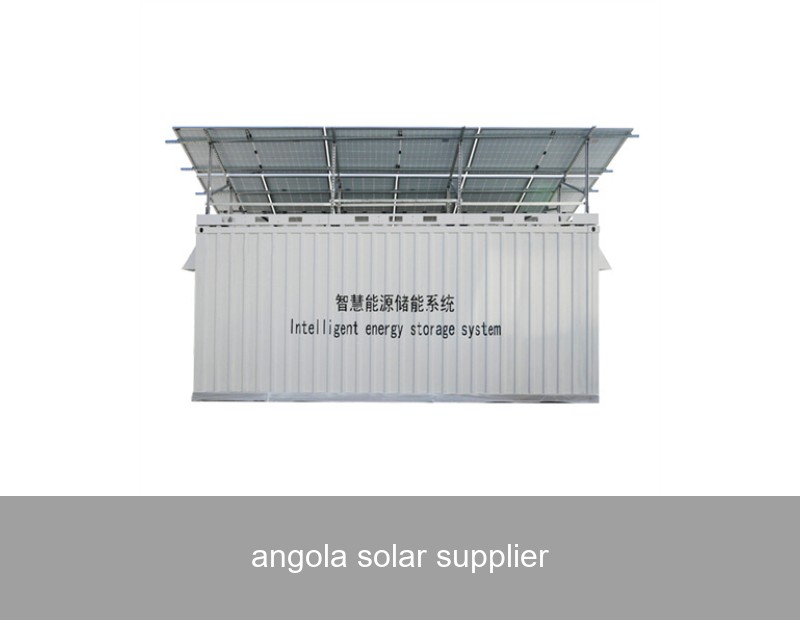
- A central, containerized 800 kWh lithium-ion battery storage system.
- A sophisticated energy management system (EMS) to orchestrate power flow.
| Metric | Before Installation | 12 Months After Installation |
|---|---|---|
| Energy from Diesel | 70% | 15% (used only as final backup) |
| Grid Dependency | 30% (unreliable) | 20% (stabilized) |
| Energy Cost per kWh | ~$0.38 | ~$0.12 |
| Production Downtime | 15-20 hrs/week | < 2 hrs/week |
The data speaks for itself. The project achieved a payback period of under 5 years and transformed the plant's operational resilience. The key to success was the integrated, intelligent storage system that ensured power was available precisely when needed.
Highjoule's Role: Delivering Intelligent Storage for Angola's Solar Future
As a global leader in advanced energy storage since 2005, Highjoule understands that projects in markets like Angola demand more than just off-the-shelf products. Our strength lies in providing the core intelligence and resilience for solar-plus-storage systems. While we partner with leading EPCs and solar developers who act as the primary Angola solar supplier, we empower them with cutting-edge technology.
For Angolan applications, Highjoule's IntelliBESS platform is particularly relevant. These modular, containerized storage solutions are pre-engineered for harsh environments and feature:
- Advanced Thermal Management: Ensures optimal battery performance and longevity even in Angola's high ambient temperatures.
- AI-Powered EMS: Our software doesn't just store and release energy; it learns consumption patterns and grid/generator availability to make predictive, cost-optimizing decisions every second.
- Seamless Hybrid Integration: The system is designed to integrate flawlessly with solar arrays, existing diesel generators, and the grid, creating a stable microgrid for any facility.

Image Source: Unsplash - Representative image of a modern battery energy storage system.
For residential and smaller commercial complexes, our Home & Business PowerWall solutions offer the same intelligence in a scalable format. By focusing on the most complex part of the system—the storage and brain—Highjoule enables our partner suppliers to deliver turnkey solutions that are reliable, efficient, and truly sustainable. You can explore our technology's application in diverse climates on our partner research portal.
Choosing Your Solar Partner: Critical Questions to Ask
So, how do you vet an Angola solar supplier? Move the conversation from price per watt to long-term value.
- "Can you provide a detailed simulation of my energy load coverage and projected savings over 15 years, using Angola-specific solar data?"
- "What is the degradation warranty on the batteries, and what is the expected cycle life under local temperature conditions?"
- "Can I see the energy management software interface? How does it allow me to control and monitor my system?"
- "What is your local service protocol? Do you have trained technicians in-region, and what are the typical response times for critical issues?"
- "Do you partner with specialized technology providers for core components like storage, and what are the credentials of those partners?"
The Future is Integrated and Intelligent
The next frontier for solar in Angola isn't just about more panels; it's about smarter, interconnected systems. Imagine microgrids where a hospital, a school, and a local business share solar and storage resources, or agricultural operations using solar-powered storage to run irrigation and cooling systems entirely off-grid. The Angola solar supplier that will lead this future is one that views energy as an integrated, digital asset.
As you consider harnessing Angola's magnificent sunshine for your home, business, or community project, ask yourself: Is your goal merely to install solar panels, or is it to achieve genuine energy independence and operational certainty? What would a 95% reduction in diesel dependency unlock for your future?
 Inquiry
 Online Chat