


Energy Storage Cabinet Grid Forming: The Cornerstone of the Modern, Resilient Grid
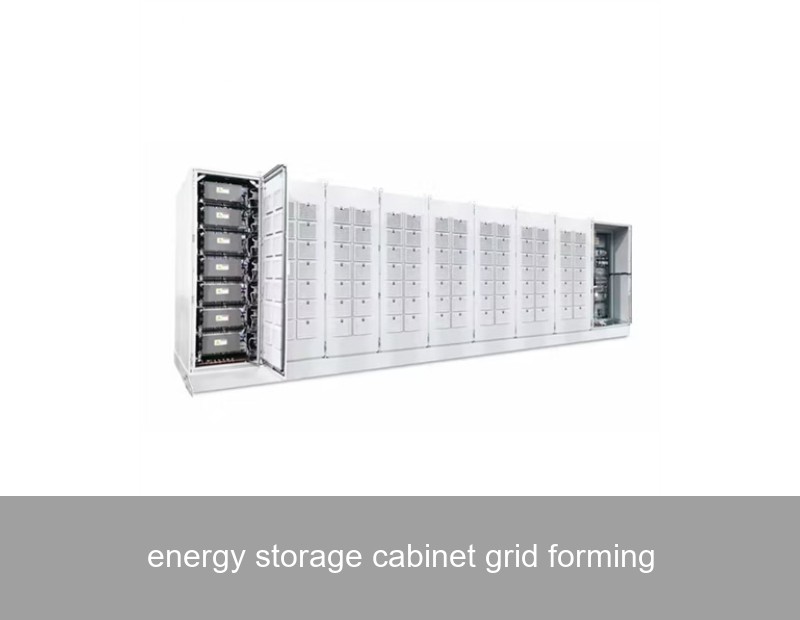
Imagine a symphony orchestra. For decades, the electrical grid has operated like one with a single, unwavering conductor—large, centralized fossil-fuel or nuclear power plants. These "synchronous generators" set the rhythm (frequency) and keep everyone in tune (voltage). Now, enter the renewable revolution: a brilliant but unpredictable ensemble of solar and wind musicians. They play beautifully, but only when the sun shines or the wind blows, and they traditionally haven't been able to lead the orchestra. This is where energy storage cabinet grid forming technology steps onto the podium. It transforms a silent battery cabinet into an intelligent maestro, capable of starting the grid from blackout (black start) and maintaining perfect harmony without any fossil-fuel backup. For grid operators, utilities, and businesses worldwide, mastering this shift isn't just technical—it's existential.
Table of Contents
- The Silent Shift: From Grid-Following to Grid-Forming
- Data Reveals the Need for Grid Stability
- Case Study: California's Grid on the Edge
- The Highjoule Nexus: Advanced Energy Storage Cabinets with Grid-Forming Intelligence
- Implementing Your Grid-Forming Future
The Silent Shift: From Grid-Following to Grid-Forming
Most solar inverters and traditional battery energy storage systems (BESS) are "grid-following." Think of them as talented musicians who must listen for the conductor's beat before they can play. They need a strong, stable grid signal to synchronize with. If the conductor stumbles (a grid fault) or disappears (an outage), they stop playing immediately to protect themselves. This passive role creates a fundamental problem for grids with high renewable penetration: as we retire more of those fossil-fuel "conductors," the grid becomes weaker and more unstable.
Grid-forming technology is a paradigm shift. An energy storage cabinet equipped with grid-forming inverters doesn't just follow; it establishes the grid's voltage and frequency. It acts as a voltage source, providing the foundational stability that all other resources can synchronize to. It can start up a grid section independently, seamlessly handle sudden load changes, and provide what's known as "inertia" and "short-circuit current" – services traditionally only from spinning turbines. This isn't a minor upgrade; it's the key to unlocking a 100% renewable future.
Data Reveals the Need for Grid Stability
The urgency is backed by hard numbers. The U.S. Energy Information Administration (EIA) projects that renewables will supply 44% of U.S. electricity by 2050, with solar leading the charge. In Europe, the European Union's "Fit for 55" package aims for 40% of energy from renewables by 2030. This rapid transition is reducing system inertia—the kinetic energy in spinning generators that stabilizes frequency—by 5-7% annually in some regions. A 2023 report by the National Renewable Energy Laboratory (NREL) concluded that grid-forming inverters are "essential" for maintaining reliability at 50-80% inverter-based resources (solar, wind, storage). The data is clear: without widespread deployment of grid-forming capabilities, the clean energy transition risks becoming a grid stability crisis.
Case Study: California's Grid on the Edge
Let's look at a real-world stress test. California, a global leader in solar adoption, frequently experiences the "duck curve"—a steep evening ramp in demand as solar generation plummets. On September 6, 2022, a historic heatwave pushed the state's grid to the brink. CAISO (California Independent System Operator) issued Flex Alerts and narrowly avoided rolling blackouts.
Analysis of the event highlighted a critical vulnerability: the grid's reliance on imports and fast-ramping gas plants during the evening transition when solar dropped off. This is a textbook scenario where grid-forming energy storage cabinets provide immense value. A cluster of such systems, strategically placed, could have provided not just stored energy, but also the crucial voltage and frequency stability to support the grid through that volatile ramp. They could have operated as "islands" of power for critical facilities during any potential outage and then seamlessly reconnected, strengthening the main grid. Projects like the Kearny Energy Storage project in California are pioneering this very approach, demonstrating how grid-forming BESS can act as a "shock absorber" for the grid.

Image Source: Unsplash - A modern battery energy storage installation, similar to systems providing grid-forming services.
The Highjoule Nexus: Advanced Energy Storage Cabinets with Grid-Forming Intelligence
At Highjoule, we've been engineering the future of stability for nearly two decades. Our Nexus Series Energy Storage Cabinet is not just a container for batteries; it's an integrated grid asset built with grid-forming as a core capability. We understand that true resilience requires hardware, software, and deep system expertise to work in concert.
What sets the Highjoule Nexus cabinet apart in the realm of grid-forming?
- True Grid-Forming Inverter Core: Our proprietary inverter control algorithms allow the Nexus cabinet to autonomously establish and maintain a stable grid, providing synthetic inertia and instantaneous voltage support.
- Seamless Mode Transition: It can switch between grid-forming, grid-following, and off-grid islanded modes without interruption, ensuring continuous power for critical operations.
- Advanced Thermal Management: Grid-forming operations can be demanding. Our cabinet's intelligent cooling system ensures optimal performance and longevity, even during extended periods of high-stress grid support.
- Grid Code Compliance Ready: Designed to meet and exceed evolving grid codes in North America (IEEE 1547) and Europe, facilitating rapid interconnection and approval.
Our services extend beyond the cabinet. Highjoule provides full lifecycle support—from feasibility studies and system design that models grid-forming benefits, to commissioning, and remote performance monitoring via our Highjoule Horizon platform. We partner with utilities, independent power producers, and large commercial & industrial clients to deploy these systems not just as backup power, but as active, revenue-generating pillars of the future grid.
| Grid Service | Traditional BESS (Grid-Following) | Highjoule Nexus (Grid-Forming) |
|---|---|---|
| Frequency Regulation | Yes (requires grid signal) | Yes (can set frequency) |
| Black Start Capability | No | Yes |
| Voltage Support During Faults | Limited | High (Voltage Source Behavior) |
| Operation in Weak Grids | Poor or Impossible | Excellent |
| Microgrid Formation | Requires additional controller | Native Capability |
Image Source: Unsplash - Grid control room monitoring modern energy assets.
Implementing Your Grid-Forming Future
The journey to integrating a grid-forming energy storage cabinet begins with a strategic conversation. For a utility, it might be about identifying the weakest node on a distribution feeder and placing a Nexus system to fortify it, enabling more solar connections. For a hospital or data center, it's about achieving ultimate resilience: the ability to island from the grid during an outage and restart independently if needed. For a renewable developer, it's the key to getting a new wind or solar farm connected in a remote, grid-constrained area.
Key Considerations for Deployment:
- Site Assessment: Analyze grid connection point strength, existing generation mix, and critical load profiles.
- Value Stacking: Model how the system can generate revenue through energy arbitrage, frequency regulation, and capacity markets, while also providing resilience.
- Interconnection Planning: Engage early with the network operator. Grid-forming capabilities can simplify interconnection studies by solving stability issues.
- Future-Proofing: Ensure your storage investment is software-upgradable to adapt to new grid codes and market opportunities.
So, as you look at your own energy resilience strategy or grid modernization plans, ask yourself this: Is your storage solution just waiting for a signal, or is it ready to give one? The future grid isn't just powered by renewables; it's defined and stabilized by intelligent, grid-forming storage. What role will your organization play in building that foundation?
 Inquiry
 Online Chat