


Grid Level Energy Storage Systems: The Unsung Hero of a Clean Energy Future
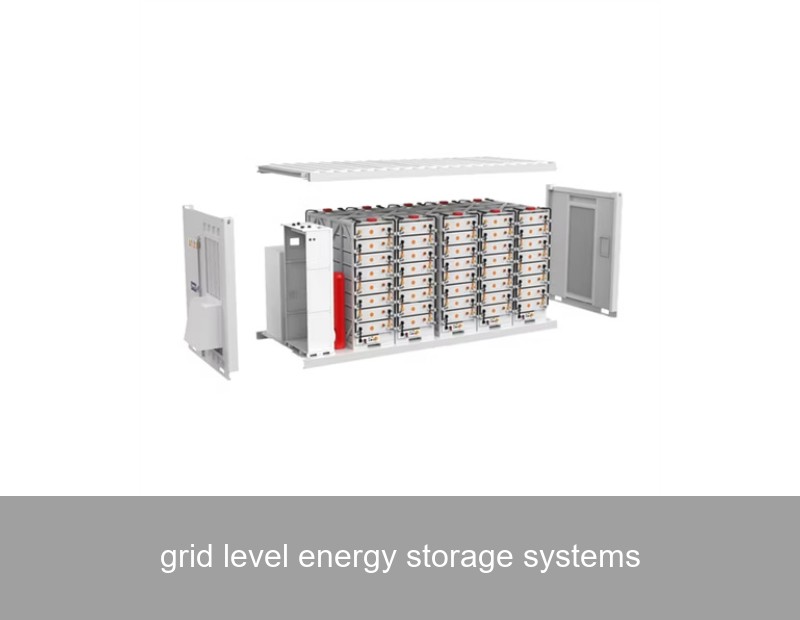
it's a calm, sunny afternoon, and solar panels across the region are humming, producing more clean electricity than the grid can immediately use. Fast forward a few hours to a windless evening peak demand period, and that abundant power is just a memory. This mismatch—between when renewable energy is generated and when we need it—is the central challenge of our energy transition. The solution? Grid level energy storage systems (GLESS). These are not the small batteries in your home but massive, orchestrated systems that act as a shock absorber and a powerhouse for the entire electrical grid. They are the critical enabler that makes a reliable, resilient, and renewable-powered grid not just a vision, but a practical reality.
The Grid at a Crossroads: Phenomenon and Pressure
Our century-old electrical grid was built on a simple principle: generate power to match demand in real-time, primarily using predictable fossil fuel and nuclear plants. The explosive growth of variable renewables like solar and wind has turned this model on its head. The grid now experiences sharper peaks and deeper valleys in net demand, a phenomenon often called the "duck curve." This volatility strains infrastructure, can lead to curtailment (wasting) of excess renewable energy, and threatens grid stability.
The data underscores the urgency. According to the International Energy Agency (IEA), the world needs to add nearly 600 GW of grid-scale battery storage capacity by 2030 to stay on track for net-zero emissions. In the U.S. alone, the Energy Information Administration (EIA) reported a staggering 300% year-over-year increase in large-scale battery storage capacity additions in recent years. This isn't just growth; it's a fundamental reshaping of our energy infrastructure.

Image: Utility-scale solar farms increasingly integrate battery storage to smooth output. Credit: Unsplash
What Are Grid-Level Energy Storage Systems?
At its core, a grid level energy storage system is a centralized or distributed asset directly connected to the transmission or distribution network. Think of it as a massive "energy bank" for the grid. Its primary functions are multifaceted:
- Renewable Integration & Firming: Stores excess solar/wind energy and discharges it when generation is low, making renewables a reliable, "dispatchable" resource.
- Frequency Regulation: Provides near-instantaneous injections or absorption of power to keep the grid's frequency stable—a service crucial for preventing blackouts.
- Peak Shaving & Capacity Deferral: Reduces demand on the grid during expensive peak hours, delaying the need for costly new power plants or grid upgrades.
- Black Start Capability: Helps restart power stations and restore the grid after a complete outage, enhancing resilience.
Key Technologies Beyond the Battery Cell
While lithium-ion batteries dominate headlines due to their rapid response and declining costs, a robust grid relies on a portfolio of storage technologies, each with its own strengths:
| Technology | Duration | Primary Grid Service | Best For |
|---|---|---|---|
| Lithium-Ion Battery | 1-4 hours | Frequency regulation, peak shaving, renewable smoothing | Short-duration, high-power applications |
| Flow Battery (e.g., Vanadium) | 4-10+ hours | Energy arbitrage, long-duration renewable shifting | Longer-duration storage with minimal degradation |
| Pumped Hydro Storage | 6-20+ hours | Bulk energy storage, seasonal balancing | Large-scale, long-duration; geographically limited |
| Compressed Air Energy Storage (CAES) | 10+ hours | Bulk energy management, capacity resource | Large-scale, long-duration storage |
A Real-World Case Study: Texas ERCOT and the 2021 Winter Storm
The critical role of grid level energy storage systems was starkly illustrated during and after Winter Storm Uri in Texas in February 2021. The catastrophic grid failure highlighted vulnerabilities. In response, the Electric Reliability Council of Texas (ERCOT) market saw an unprecedented acceleration of battery storage deployments. A landmark project, the 300 MW / 600 MWh "Battery Energy Storage System (BESS) at a major solar facility", came online to provide crucial grid stability.
Data from the project's first year of operation is telling. During the intense summer peak of 2022, this system successfully provided over 200 hours of continuous peak shaving, reducing strain on local transmission lines. More importantly, it responded to frequency events within milliseconds, acting as a first line of defense for grid reliability. This case shows storage is no longer just an experiment; it's frontline infrastructure for grid resilience, especially in markets with high renewable penetration and extreme weather events.

Image: Modern grid control rooms integrate real-time data from storage assets. Credit: Unsplash
The Highjoule Approach: Intelligence at Scale
Deploying batteries is one thing; optimizing their value over a 15-20 year lifespan in a complex, evolving grid is another. This is where deep system expertise matters. At Highjoule, with nearly two decades of experience since 2005, we understand that a grid level energy storage system is far more than a container of battery racks. It's an integrated cyber-physical system.
Our HPS (Highjoule PowerStack) Grid Series is engineered for utility and large commercial applications. It combines our proprietary, UL9540-certified battery modules with a truly intelligent Energy Management System (EMS). The Highjoule EMS doesn't just react; it forecasts weather, market prices, and load patterns using AI to execute optimal, multi-service strategies—maximizing revenue or savings while ensuring system health.
For instance, a single Highjoule system can be configured to perform frequency regulation in the morning, shift solar energy to cover the evening peak, and provide voltage support to the local distribution feeder—all autonomously. Our services extend from initial feasibility studies and financial modeling to turnkey EPC (Engineering, Procurement, and Construction) and 24/7 asset monitoring via our Highjoule Horizon NOC (Network Operations Center). We ensure our clients' storage assets are not just installed, but are strategic, high-performing investments.
Future Horizons for Grid Storage
The evolution is towards longer duration (8-100+ hours) storage to truly decarbonize the "last mile" of the grid and green industrial processes. Technologies like green hydrogen, advanced compressed air, and next-generation flow batteries are in active development. Furthermore, the concept of Virtual Power Plants (VPPs)—aggregating thousands of distributed assets, including home batteries, EV chargers, and industrial storage—will create a flexible, decentralized grid layer. Highjoule's platform architecture is already designed to facilitate this future, allowing our large-scale systems to communicate and coordinate with distributed resources.
The National Renewable Energy Laboratory (NREL) is actively researching the techno-economics of these long-duration solutions, which will be pivotal for seasonal storage and deep decarbonization.
As grid operators and energy managers, you're faced with an array of complex choices. How will you evaluate the specific role—be it resilience, revenue, or renewable integration—that a grid level energy storage system should play in your unique network? What's the first constraint in your grid you would task a storage system to solve?
 Inquiry
 Online Chat