


How Much Backup Power Do You Really Need? A Tech-Fine Guide to Sizing Your System
a sudden storm knocks out the grid in your neighborhood. The lights flicker and die. For a moment, it's just an inconvenience. But then you remember the home office running critical work, the basement sump pump, the medical device for a family member, or the freezers full of food. In that moment, one question becomes paramount: how much backup power do I have, and is it enough? The answer isn't a one-size-fits-all number; it's a "tech-fine" calculation—a blend of technical precision and fine-tuning to your unique life. This guide will help you move from anxiety to clarity, understanding exactly how to size a backup power system for your home or business.
Table of Contents
- The Power Outage Phenomenon: More Than an Inconvenience
- The Backup Power Math: Watts, Watt-Hours, and Your Load
- Sizing Your System: A Step-by-Step Framework
- Case Study: A German Homeowner's Tech-Fine Solution
- Beyond the Basics: The Highjoule Approach to Intelligent Backup
- Your Next Step: From Calculation to Conversation
The Power Outage Phenomenon: More Than an Inconvenience
Grid instability is no longer a rare event. In the US, the average customer experienced just over 5 hours of outages in 2021, with major events causing much longer disruptions. In Europe, extreme weather and grid modernization challenges are prompting similar concerns. The cost isn't just measured in spoiled food; it's lost productivity, compromised safety, and significant financial impact for businesses. The old paradigm of a small gasoline generator for a few lights is fading, replaced by a demand for seamless, clean, and automated backup that can power modern, digital lives.
The Backup Power Math: Watts, Watt-Hours, and Your Load
To answer "how much," we need two key units: Power (kW) and Energy (kWh).
- Power (kilowatts, kW): This is the "rate" of electricity use. Think of it as how hard your appliances are working at any instant. Starting a refrigerator compressor or a well pump requires a high power surge (starting watts), while running it requires less (running watts).
- Energy (kilowatt-hours, kWh): This is the total "amount" of electricity used over time. It's Power multiplied by Time. If a 1 kW heater runs for 3 hours, it uses 3 kWh of energy.
Your backup system must have enough power (kW) capacity to handle the simultaneous startup and run of your chosen appliances. It must also have enough energy (kWh) capacity in its battery to keep them running for your desired duration.
| Appliance | Running Watts (approx.) | Starting Surge (approx.) | Energy for 4 hrs (kWh) |
|---|---|---|---|
| Refrigerator | 150-200 W | 500-600 W | 0.6 - 0.8 kWh |
| Sump Pump | 800-1,000 W | 1,300-2,200 W | 3.2 - 4.0 kWh |
| LED Lighting (10 bulbs) | 100 W | 100 W | 0.4 kWh |
| Fibre Modem & Router | 20 W | 20 W | 0.08 kWh |
| Residential Well Pump | 1,000 W | 2,000-3,000 W | 4.0 kWh |
Sizing Your System: A Step-by-Step Framework
Follow this PAS (Problem-Agitate-Solution) inspired framework to find your tech-fine number.
Step 1: Define Your "Backup Essentials" List
What can you absolutely not live without during an outage? Categorize them:

- Safety & Security: Sump pump, security system, emergency lighting, medical equipment.
- Health & Sustenance: Refrigerator, freezer, well pump, a small cooking appliance.
- Connectivity & Productivity: Internet modem, router, computer, phone charger.
- Comfort (Optional): HVAC fan, select room heaters (these are major energy consumers).
Step 2: Calculate Your Peak Power Demand (kW)
Add up the running watts of all appliances you might use at once. Then, identify the single largest starting surge and add it to the total. This is your peak power demand. A system's inverter must be rated to handle this peak load.
Step 3: Calculate Your Daily Energy Needs (kWh)
For each essential appliance, estimate how many hours it will run during a 24-hour outage. Multiply its running watts by those hours to get watt-hours, then convert to kWh (divide by 1000). Sum these totals. This number dictates your required battery capacity.
Step 4: Determine Your Desired Backup Duration
Is your goal to bridge short 2-4 hour outages, or to have resilience for a full day or more? Multiply your daily energy need (Step 3) by the number of days of autonomy you desire. This is your total usable battery capacity needed.
Case Study: A German Homeowner's Tech-Fine Solution
Let's look at real data. The Müller family near Frankfurt, Germany, experienced increasing grid fluctuations. Their primary concerns were food spoilage (two freezers), sump pump failure, and working from home. They worked with a Highjoule-certified installer to analyze their needs.
- Essential Loads: Refrigerator (200W), Two Freezers (400W total), Sump Pump (800W), Home Office (300W), Lighting & Networking (150W).
- Peak Power: Running total: ~1,850W. Largest surge (sump pump): 2,200W. Total Peak: ~4.05 kW.
- Daily Energy: Calculated at ~8 kWh for a conservative 12-hour backup period.
The solution was a Highjoule HES-5 hybrid energy storage system with a 5kW continuous/9kW peak power inverter and 10.2kWh of usable lithium iron phosphate (LFP) battery capacity. This system not only covered their worst-case surge but provided over 24 hours of backup for their essentials. In the first year, it seamlessly handled 14 grid outages, the longest being 9 hours, with zero interruption to the family's routine. The system also integrates with their existing solar panels, storing excess solar energy to further increase independence and reduce grid consumption by an estimated 70%.
Beyond the Basics: The Highjoule Approach to Intelligent Backup
Sizing is the foundation, but modern backup is about intelligence. As a global leader since 2005, Highjoule builds systems that don't just react—they anticipate and optimize.
Dynamic Load Management
What if you could back up your entire home without a massive, expensive system? Highjoule's Smart Load Manager makes this possible. It continuously monitors power demand and can intelligently shed non-critical loads (like an electric vehicle charger) if total demand approaches the system's limit, ensuring your essentials always stay on. This allows for a right-sized, cost-effective solution.
Solar-Ready & Grid-Services Ready
A Highjoule system is an investment in the future. It's inherently designed to integrate with solar PV, turning a backup battery into a 24/7 energy management hub. You can store solar energy for use at night or during outages. Furthermore, our advanced systems in certain markets can participate in grid-balancing services, potentially creating revenue streams. 
Uncompromising Safety & Durability
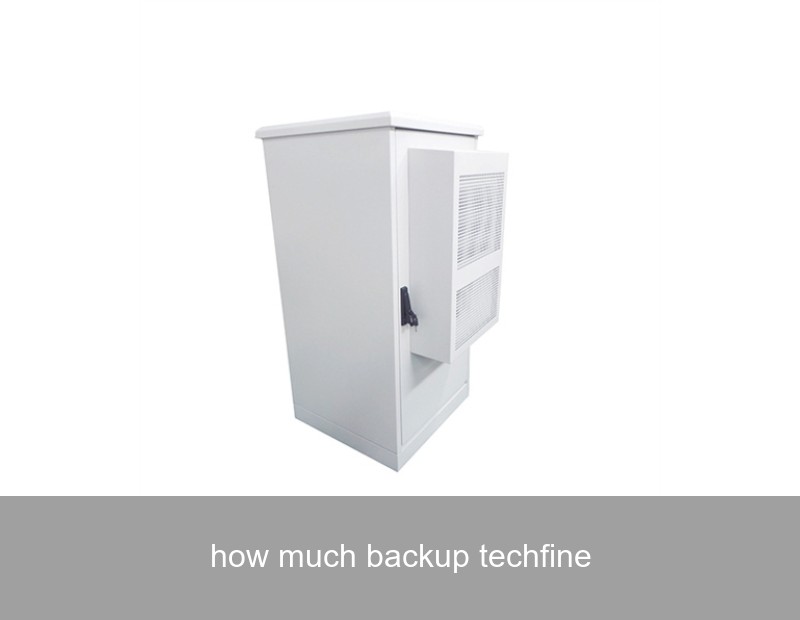
Our core technology uses thermally stable LFP battery chemistry, renowned for its long cycle life and superior safety profile compared to other lithium-ion types. Coupled with our proprietary battery management system (BMS) and rugged, weather-resistant enclosures (for outdoor models), Highjoule systems are built to deliver reliable performance for decades, not just years.
Your Next Step: From Calculation to Conversation
You've now got the framework to start answering "how much backup power" for your own situation. The journey from a rough estimate to a perfectly tech-fined system is best done with an expert. A qualified installer can perform a detailed load audit, model different outage scenarios, and factor in your future goals like adding solar or an electric vehicle.
So, what's the one appliance in your home that, if it lost power, would cause the most disruption to your life or business? Start there. Share that priority with a Highjoule partner, and let's build a resilient energy future, one essential load at a time.
 Inquiry
 Online Chat