


How Much Panneaux Solair Do You Really Need? A Data-Driven Guide
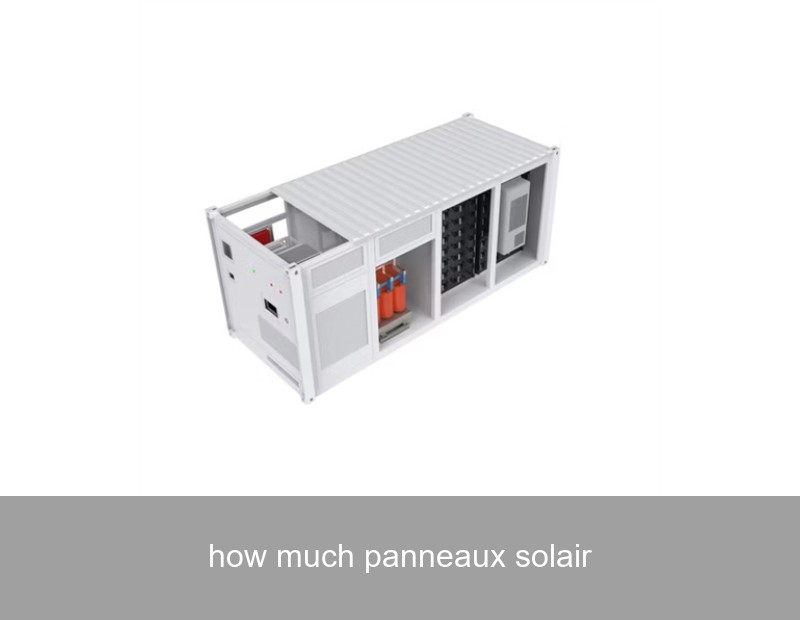
So, you're thinking about going solar. It's a fantastic decision for your wallet and the planet. But almost immediately, one question takes center stage: how much panneaux solair (solar panels) will I need to power my home or business? It's the right question to ask, but the answer is rarely a simple number. You see, focusing solely on the panel count is like asking "how many gallons of gas do I need?" without knowing the distance, your car's efficiency, or the terrain. The true answer lies in understanding your unique energy profile and goals. Let's demystify this together and explore what it really takes to build an effective solar power system.
Beyond the Panel Count: What Really Determines Your Solar Needs?
Four key factors interact to determine the optimal size of your solar array. Think of them as the pillars of your solar project.
1. Your Energy Consumption (The Starting Point)
This is your energy "diet." How much electricity do you consume annually, measured in kilowatt-hours (kWh)? You can find this on your utility bills. A household in Germany might use 3,500 kWh/year, while a similar-sized home in Texas could use 15,000 kWh due to air conditioning. This number is your target. A professional assessment will also look at your load profile—when you use power. Do you consume most in the evening? That significantly impacts system design.
2. Solar Irradiance & Location
Not all sunshine is created equal. A panel in sun-drenched Arizona will produce significantly more power than the same panel in cloudy Brussels. This potential is measured in "peak sun hours." For instance, Southern California enjoys about 5.5 peak sun hours per day, while Munich gets closer to 3. The Global Solar Atlas is an excellent resource to check your local potential.
3. Panel Efficiency & Type
Not all panels are created equal. Modern monocrystalline panels commonly offer 19-22% efficiency, meaning they convert more sunlight per square meter into electricity than older, less efficient models. Higher efficiency means you might need fewer panels to meet your energy goal, which is crucial if your roof space is limited.
4. System Losses & Practical Factors
Real-world systems aren't 100% perfect. Energy is lost due to heat, wiring, inverter efficiency (typically 96-98%), dust, and shading. A well-designed system accounts for a 10-15% loss factor. Furthermore, your roof's orientation (south-facing is ideal in the Northern Hemisphere), tilt angle, and any shading from trees or chimneys play a massive role.
The Calculator: A Practical Example for a European Home
Let's put this into practice. Imagine a family home near Lyon, France, with an annual consumption of 4,800 kWh.
- Step 1: Daily Energy Need: 4,800 kWh / 365 days = ~13.15 kWh per day.
- Step 2: Local Sun Hours: Lyon averages about 3.8 peak sun hours daily.
- Step 3: Required System Size: Daily need (13.15 kWh) / Sun hours (3.8) = ~3.46 kW. Accounting for ~14% system losses, we get a ~4.0 kW system.
- Step 4: Panel Count: Using 400-watt (0.4 kW) high-efficiency panels: 4.0 kW / 0.4 kW per panel = 10 panels.
So, for this home, the answer to "how much panneaux solair" is about ten 400W panels. But this system only addresses daytime, fair-weather production. What happens at night or during a week of rain?

Image Source: Unsplash - A properly sized residential solar array.
The Missing Piece in the "How Many Panels" Puzzle: Energy Storage
This is the critical evolution in solar thinking. A system designed only to offset grid purchases during the day misses a huge opportunity: energy independence and resilience. By adding a battery storage system, you can store excess solar energy produced at noon and use it at 8 PM when the grid is expensive and carbon-intensive. Suddenly, the question shifts from "how much panneaux solair to offset my bill?" to "how much panneaux solair plus storage do I need to power my home, day and night?"
This changes the entire calculation. You may even choose to install a slightly larger solar array to ensure your batteries are fully charged to cover evening loads and cloudy days, maximizing your self-consumption and independence from utility price fluctuations.
Case Study: From Theory to Reality in California
Let's look at real data. A medium-sized winery in Sonoma County, California, faced rising energy costs and grid instability during fire-prevention shutoffs. Their goal was not just savings, but operational continuity.
- Challenge: Annual load: 85,000 kWh. Critical need for refrigeration and processing during grid outages.
- Solution: A custom-designed system featuring a 65 kW solar canopy and a Highjoule H2 Commercial Battery System with 120 kWh of storage capacity.
- Result: The system now provides over 75% of the winery's annual electricity. During a planned Public Safety Power Shutoff (PSPS) event in 2023, the Highjoule system seamlessly transitioned to island mode, powering critical operations for 14 hours without interruption. The project is on track for a return on investment in under 7 years, factoring in state incentives and avoided losses from downtime.
This case shows that the right solution blends solar generation with intelligent storage, transforming a cost center into a pillar of resilience.
The Highjoule Solution: Intelligent Systems, Not Just Panels
At Highjoule, we understand that your journey isn't about buying a commodity; it's about investing in a tailored energy solution. Since 2005, we've moved beyond simply supplying components to delivering integrated, smart energy ecosystems.
Our approach starts with your Energy DNA—a deep analysis of your consumption, goals, and physical site. We then design a system where every part communicates intelligently:
- High-Performance Solar Arrays: We partner with top-tier manufacturers to source the most efficient and durable panels for your climate.
- Highjoule Harmony ESS: Our flagship Energy Storage System is the brain of the operation. For residential clients, our H1 Series integrates seamlessly with new or existing solar, learning your habits to optimize self-consumption. For commercial and industrial clients, our scalable H2 Series ensures critical load protection and significant demand charge reduction.
- Advanced Energy Management Software: This is where the magic happens. Our platform allows you to monitor, control, and automate your energy use. It can be programmed to store solar energy when grid prices are low and discharge when they peak, maximizing financial returns automatically.
For microgrid applications, this intelligence is paramount. Highjoule systems can orchestrate solar, storage, and sometimes backup generators to keep communities or facilities powered independently, a solution gaining rapid traction in both rural Europe and wildfire-prone areas of the US.
Image Source: Unsplash - A commercial-scale battery storage unit.
Your Solar Journey Starts with the Right Questions
Asking "how much panneaux solair" is the first step on a rewarding path. The more complete set of questions to guide your next steps are:
- What is my true goal? (Lower bills, backup power, sustainability, all three?)
- How does my energy use pattern look throughout the day and year?
- Is my roof or property suitable in terms of space, orientation, and condition?
- What local incentives, net metering policies, or utility rate structures apply to me? (These vary dramatically between, say, the EU and different US states).
- Have I considered storage as a core component, not just an add-on?
We invite you to share your primary energy goal with us. Is it achieving total energy independence, securing your business against the next grid outage, or simply taking control of your family's power costs in an unpredictable market?
 Inquiry
 Online Chat