


The Rise of Interstate Power Systems: A New Era for Energy Resilience
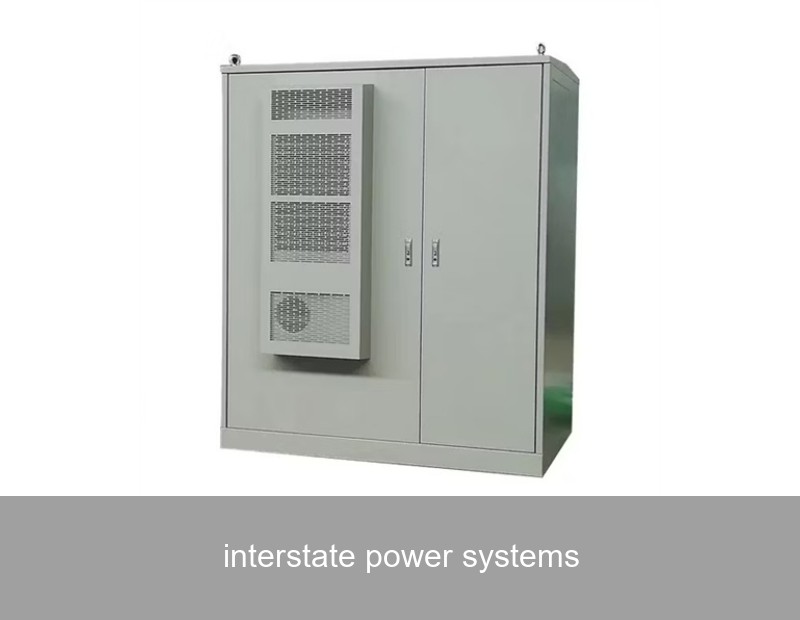
a major storm knocks out power in one state, while a neighboring region enjoys sunshine and surplus wind energy. Traditionally, that surplus would be wasted, and the blackout would persist. Today, a transformative solution is redefining this landscape: interstate power systems. These are not just upgraded power lines; they are intelligent, interconnected networks that leverage advanced technologies to move electricity seamlessly across state borders, balancing supply and demand on a massive scale. For businesses, communities, and grid operators, understanding this shift is key to unlocking a future of reliable, affordable, and clean energy. As a leader in this space, Highjoule is at the forefront, providing the critical energy storage solutions that make these robust interstate networks not just possible, but highly efficient and sustainable.
Table of Contents
The Phenomenon: Why Our Old Grids Are Reaching a Breaking Point
Our existing electrical grids were largely designed for a different era—one of centralized fossil fuel plants sending power in one direction to passive consumers. The modern energy landscape is radically different. We have a surge in variable renewable energy (like solar and wind), increasing frequency of extreme weather events, and rising electricity demand from electrification of transport and heating. This creates a triple challenge: volatility, locality, and fragility.
Renewable generation is fantastic, but it's often located far from population centers (think vast solar farms in deserts or offshore wind) and its output fluctuates. An interstate power system acts as a "superhighway" for electrons, mitigating these issues by allowing regions to share resources. When the wind is blowing strong in Kansas, it can power homes in Illinois; when the sun sets in California, hydropower from the Pacific Northwest can help fill the gap. This isn't just about convenience; it's becoming a matter of economic stability and national security.
The Data: The Compelling Case for Stronger Connections
The theoretical benefits are clear, but the numbers make an undeniable case. Studies consistently show that enhancing transmission and creating robust interstate systems yields massive returns.
- Cost Savings: A U.S. Department of Energy study (2023) found that interregional transmission can provide billions in savings by accessing cheaper, cleaner energy sources and reducing the need for costly local "peaker" plants.
- Reliability Boost: The National Renewable Energy Laboratory (NREL) notes that increased transmission can significantly reduce the risk and duration of blackouts during extreme events, as it provides more pathways for power to flow.
- Renewable Integration: To achieve high renewable penetration targets (like 80-100% clean energy), modeling shows we may need to expand the transmission system by 60% or more by 2035. Interstate corridors are the backbone of this expansion.
Simply put, without significant investment in interstate power networks, the energy transition will be slower, more expensive, and less reliable.
The Core Technology: The Brains and Brawn Behind Modern Interstate Systems
Building new power lines is one thing. Making them smart, stable, and synergistic is another. Modern interstate power systems rely on a sophisticated technology stack:
- High-Voltage Direct Current (HVDC) Transmission: For long-distance power transfer (hundreds of miles), HVDC lines have lower energy losses compared to traditional AC lines. They are the preferred "trunk lines" for interstate connections.
- Advanced Grid Management (Phasor Measurement Units - PMUs): These devices take ultra-precise, time-synchronized measurements of grid conditions across vast distances, giving operators a real-time,高清 picture of the entire interconnected system.
- Flexible AC Transmission Systems (FACTS): These devices are like precision controls on the power lines, allowing operators to manage voltage, power flow, and stability dynamically.
However, the true game-changer, the technology that unlocks the full potential of all the above, is grid-scale battery energy storage systems (BESS). Storage acts as a shock absorber and a reservoir, solving the critical time mismatch between generation and consumption that interstate lines alone cannot fully address.

Image Source: Unsplash - Representative image of a grid-scale BESS installation.
Why Storage is the Indispensable Partner to Transmission
Think of transmission as a wider pipe. It can move more water from a full reservoir (a windy region) to an empty one (a region in demand). But what if the wind stops blowing everywhere at the same time? Or what if the demand spike is instantaneous? Storage provides the local "water tank." It can:
- Defer Transmission Upgrades: By providing local peak shaving, storage can alleviate congestion on existing interstate lines, delaying the need for costly new construction.
- Provide Grid Services: Storage responds in milliseconds to stabilize frequency and voltage, which is crucial for maintaining the integrity of long-distance AC lines.
- Firm Renewable Delivery: It can store excess wind power generated at night and release it during the daytime peak, making the power flowing over interstate lines more consistent and valuable.
Case Study: The Texas-New Mexico Intertie & the Storage Solution
Let's look at a real-world scenario developing in the American Southwest. Texas (ERCOT grid) and the Western U.S. (part of the Western Interconnection) are largely separate grids. Proposals for an HVDC intertie between Texas and New Mexico have gained traction to share wind and solar resources.
The Challenge: While the new transmission line would enable energy exchange, both regions experience variable renewable generation. A sudden drop in West Texas wind could still cause instability, even with the intertie.
The Integrated Solution: A forward-thinking project plan includes not just the HVDC line, but also strategically placed battery storage systems at both ends of the intertie and at key substations along the route. For instance, a 200 MW / 800 MWh battery system (like Highjoule's H-Series Utility solution) on the New Mexico side could serve multiple critical functions:
| Function | Benefit | Impact on Interstate System |
|---|---|---|
| Ramp Management | Absorbs sudden solar surges during midday, smoothing power sent to Texas. | Prevents line congestion and voltage swings. |
| Black Start Capability | Can help re-energize the HVDC station after an outage. | Dramatically improves overall network resilience. |
| Frequency Regulation | Provides instantaneous response to grid frequency deviations on either side. | Maintains stability of the delicate interconnection point. |
This "transmission + storage" model, exemplified by this potential project, is becoming the gold standard for new interstate power systems. The data shows that adding storage increases the utilization and value of the transmission asset by over 30% in many scenarios.
Highjoule's Role: Engineering the Intelligent Layer for Interstate Networks
At Highjoule, we don't just see batteries; we see the essential intelligence layer for the modern grid. Our products and services are specifically engineered to meet the rigorous demands of interstate power systems and the utilities, developers, and communities that build them.
Our flagship H-Series Utility battery energy storage system is designed for grid-scale applications. With its modular architecture, industry-leading cycle life, and advanced thermal management, it delivers the durability and performance required for 24/7 grid support. More importantly, it's controlled by our Aurora GridOS™ software platform.

Image Source: Unsplash - Representative image of advanced grid control software.
Aurora GridOS™ is what makes a Highjoule installation a true grid citizen. For an interstate system, it can:
- Optimize charge/dispatch cycles based on real-time flow on the interconnection lines, not just local prices.
- Coordinate multiple storage assets across different states as a virtual power plant (VPP), providing a single, large resource to grid operators.
- Seamlessly integrate with grid operators' SCADA and EMS systems, providing the visibility and control needed for critical infrastructure.
From initial feasibility studies and system design to long-term performance monitoring and optimization, Highjoule provides end-to-end services to ensure your storage investment maximizes the value and resilience of your interconnected power projects.
The Future Landscape: What's Next for Interstate Power Systems?
The trajectory is clear. We are moving from a patchwork of regional grids to a more integrated, flexible, and intelligent national network—in both the U.S. and Europe (where projects like the North Sea Wind Power Hub envision connecting multiple countries' grids via artificial energy islands). The key catalysts will be:
- Policy & Funding: Initiatives like the U.S. Inflation Reduction Act and the EU's Green Deal are accelerating investment.
- Technology Convergence: The continued drop in storage costs, coupled with advances in HVDC and AI-driven grid management, will make integrated systems the default economic choice.
- Climate Imperative: As decarbonization deadlines loom, the ability to move massive amounts of renewable energy from where it's generated to where it's needed becomes non-negotiable.
In this future, the question for a utility CEO, a city planner, or an energy developer is not if they will engage with interstate power systems, but how. Will they be a passive user of the network, or an active participant shaping its stability and sharing in its benefits?
How is your organization preparing to leverage or contribute to the interstate power systems of tomorrow? What specific grid challenge in your region could be solved by a combination of enhanced transmission and intelligent, Highjoule-grade energy storage?
 Inquiry
 Online Chat