


Understanding Lithium Solar Battery Prices: A Smart Buyer's Guide for 2024
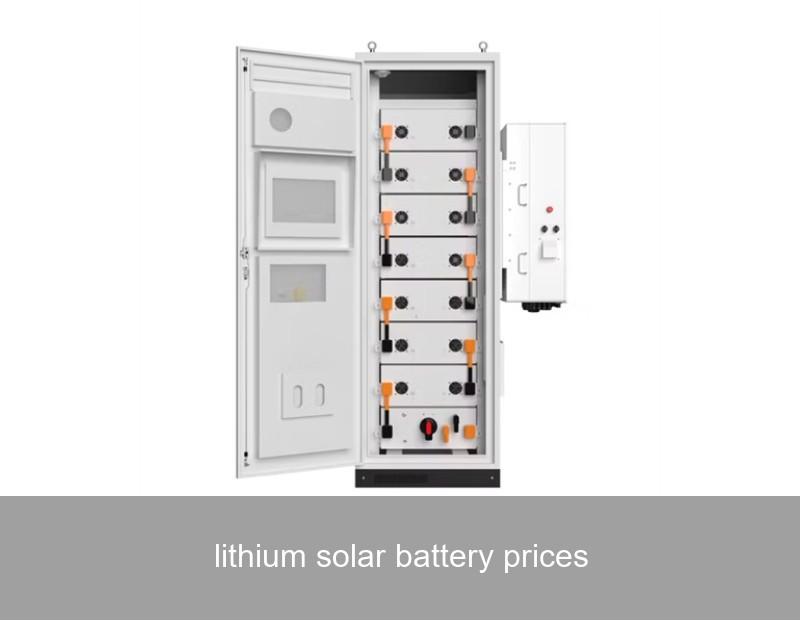
If you're considering solar panels for your home or business, you've likely encountered a crucial follow-up question: what about storage? This is where lithium solar battery prices enter the conversation. While the initial cost is a significant factor, the real story is about value, longevity, and energy independence. In this guide, we'll demystify the pricing landscape, explore what drives costs, and highlight how investing in the right technology, like solutions from industry leader Highjoule, can transform your energy bill and your carbon footprint.
Table of Contents
- The Lithium Solar Battery Price Puzzle: More Than Just a Sticker Shock
- Key Factors Driving Lithium Solar Battery Prices
- Beyond Price: Calculating the True Value Proposition
- A Real-World Case: Navigating Prices in the German Market
- The Future of Lithium Solar Battery Prices and Technology
- Making the Right Choice for Your Energy Needs
The Lithium Solar Battery Price Puzzle: More Than Just a Sticker Shock
You see a price tag on a battery system—let's say $8,000. It's easy to focus on that figure alone. But think of it like buying a car. The upfront cost is one thing; the fuel efficiency, maintenance, and how long it will reliably run are what truly determine its worth. The same applies to lithium solar battery prices. They are influenced by a complex mix of raw materials (like lithium, cobalt, and nickel), advanced manufacturing processes, research and development for safety and efficiency, and global supply chain dynamics. Furthermore, government incentives, which vary widely across the U.S. and Europe, can dramatically alter the net cost for the end-user.

Understanding the components and installation helps contextualize the investment behind lithium solar battery prices.
Key Factors Driving Lithium Solar Battery Prices
Let's break down the main components that shape what you pay.
1. Battery Chemistry and Performance
Not all lithium batteries are created equal. Lithium Iron Phosphate (LFP) and Nickel Manganese Cobalt (NMC) are the two dominant types. LFP batteries, known for exceptional safety and long cycle life, might have a slightly higher upfront cost but often provide better long-term value. NMC batteries typically offer higher energy density (more storage in a smaller space). The choice of chemistry is a fundamental price driver.
2. Capacity and Power Rating
This is the most straightforward factor. Capacity (measured in kilowatt-hours, kWh) is how much energy the battery can store. Power rating (measured in kilowatts, kW) is how much energy it can deliver at once. A system that can both back up your entire home and store ample solar energy will cost more than a smaller system designed for partial backup or basic load shifting.
3. System Integration and Intelligence
A battery is more than just cells in a box. The cost includes the Battery Management System (BMS), which is the brain ensuring safety and longevity, and the inverter/charger. Advanced systems, like those developed by Highjoule, feature integrated energy management software that learns your usage patterns, optimizes for time-of-use rates, and seamlessly integrates with the grid. This intelligence adds value but also influences the price.
Typical Price Range Breakdown (Pre-Incentive)
| System Size | Typical Capacity | Estimated Price Range (USD) | Primary Use Case |
|---|---|---|---|
| Small Residential | 5 - 10 kWh | $4,000 - $8,000 | Critical load backup, basic self-consumption |
| Standard Residential | 10 - 15 kWh | $8,000 - $15,000 | Whole-home backup, significant solar offset |
| Large Home / Small Commercial | 15 - 30 kWh | $15,000 - $25,000+ | Full energy independence, commercial load management |
Beyond Price: Calculating the True Value Proposition
This is where the conversation gets exciting. When evaluating lithium solar battery prices, savvy buyers look at the total cost of ownership and the return on investment (ROI).
- Energy Bill Savings: By storing excess solar energy and using it at night or during peak grid rates, you can slash your electricity bill. In regions like California or Germany with high electricity costs, the savings can be substantial.
- Backup Power & Resilience: What's the value of keeping your lights on, refrigerator running, and home office operational during an outage? For many, this reliability is a primary motivator that transcends simple payback periods.
- Durability and Warranty: A cheaper battery with a 5-year warranty is almost always a worse deal than a premium battery with a 10-year or even 15-year warranty. Highjoule's products, for instance, are engineered for durability and backed by robust warranties, ensuring your investment is protected for the long haul.
Highjoule's approach focuses on this total lifecycle value. Our H-Joule HomePower series isn't just about storage; it's an intelligent ecosystem. Its adaptive software maximizes self-consumption of solar power, can participate in grid services (where available), and provides homeowners with unparalleled control and insight into their energy flows.
A Real-World Case: Navigating Prices in the German Market
Let's ground this in reality with a look at Germany, a European leader in renewable adoption. The country has seen a massive surge in demand for home storage, driven by high electricity prices (over €0.40/kWh for households in 2023) and a desire for Energieautarkie (energy autonomy).
The Scenario: A family in Bavaria installs a 10 kW solar PV system. They are considering a 10 kWh battery to increase their self-consumption from ~30% to over 70%.
The Price & Incentive Dynamic: The gross price for a quality 10 kWh lithium (LFP) system might be around €9,000. However, Germany offers attractive incentives. The KfW development bank provides low-interest loans for storage, and some federal states have additional grants. Furthermore, the elimination of VAT on new solar and storage installations in 2024 significantly reduces the net cost. After incentives, the family's net investment could drop to around €6,500.
The ROI: By avoiding the purchase of grid electricity at €0.40/kWh and using their stored solar instead, the system saves them approximately €1,200 annually. This translates to a payback period on the net investment of just over 5 years. For a battery with a 10-year warranty and an expected lifespan of 15+ years, the long-term financial and energy-security benefits are clear. This case illustrates why focusing solely on the upfront lithium solar battery price can be misleading.

Visualizing energy flow is key to understanding a battery's financial and practical impact.
The Future of Lithium Solar Battery Prices and Technology
Where are lithium solar battery prices headed? Industry analysts, like those at BloombergNEF, project a continued but gradual decline in per-kWh costs as manufacturing scales and technology improves. However, the focus is shifting from just cheaper cells to smarter, more integrated systems.
Innovations are enhancing value. We're seeing developments in cell-to-pack architecture, which improves energy density and reduces manufacturing steps. Software is becoming the true differentiator, enabling virtual power plants (VPPs) where thousands of home batteries can act as a unified grid resource. Highjoule is at the forefront of this trend with our GridSync platform for commercial and microgrid applications, allowing businesses to not only save on demand charges but also generate revenue by providing grid stability services.
For the residential market, the next leap is in seamless integration of EVs, heat pumps, and batteries into a single, home-level energy management system. This holistic approach, which Highjoule is actively developing, will redefine how we perceive the "price" of an energy system—it becomes an investment in a fully optimized, resilient, and low-carbon home infrastructure.
Making the Right Choice for Your Energy Needs
So, how should you approach the decision? Start by looking beyond the headline lithium solar battery price. Ask potential providers detailed questions: What is the battery's chemistry and expected cycle life? What is the warranty's terms and degradation guarantee? How intelligent is the system's software? Can it be updated to participate in future grid programs?
As a global provider with nearly two decades of experience, Highjoule understands that every energy profile is unique. Our experts don't just sell a box; we analyze your historical consumption (or projected usage for new builds), your local utility rates and net metering policies, and your resilience goals. We then design a solution—whether it's our modular HomePower for residences or our scalable IndustrialPower series for businesses—that delivers optimal financial and operational returns over its entire lifespan.
Ready to move from being puzzled by prices to empowered by data? What specific energy goal—complete blackout protection, maximizing solar ROI, or preparing for an electric future—is most important for you to achieve with your next step?
 Inquiry
 Online Chat