


Melhores Marcas de Placas Solares: Your Guide to Choosing Top-Tier Solar Panels
So, you've decided to harness the sun's power. Excellent choice! But as you start your research, you're quickly met with a dizzying array of options. The question "Quais são as melhores marcas de placas solares?" is more than just about a name. It's about long-term performance, reliability, and ultimately, the return on your investment in clean energy. In this guide, we'll cut through the noise. We'll explore what truly makes a solar panel brand stand out, look at real-world performance, and discuss why the panel is just one part of a high-performing, durable energy system.
Table of Contents
The Phenomenon: More Than Just a Brand Name
Many homeowners and businesses begin their solar journey fixated on finding the single "best" panel brand. This is understandable, but it's a bit like choosing a car engine without considering the transmission, electronics, or even the driver. The melhores marcas de placas solares distinguish themselves not just by laboratory efficiency ratings, but through proven field performance, robust warranties, and consistent quality over decades. The real phenomenon we're observing is a shift from panel-centric thinking to system-performance thinking. After all, a solar panel's job is to generate electrons; the system's job is to manage that power intelligently and reliably.

Image: High-quality installation is as crucial as the panel brand itself. Source: Unsplash
The Data: What Metrics Really Matter?
Let's talk specifics. When evaluating top solar panel brands, experts look beyond the marketing brochures. Here are the key data points:
- Efficiency Rate: The percentage of sunlight converted to electricity. Top-tier brands typically offer panels between 20% and 22.8% efficiency.
- Performance Warranty: Often a better indicator of confidence than the product warranty. The best brands guarantee 90% performance after 10 years and 85% or more after 25 years.
- Temperature Coefficient: How well the panel performs in heat. A lower percentage (e.g., -0.30%/°C) means less power loss on a hot day.
- Degradation Rate: The annual loss in output. Premium panels degrade as slowly as 0.3% per year.
According to the National Renewable Energy Laboratory (NREL), panel efficiency has steadily climbed thanks to technologies like PERC, half-cut cells, and n-type silicon. However, data from real-world installations often tells a more nuanced story about long-term reliability.
| Brand Tier | Typical Efficiency Range | Key Technology | Warranty Focus |
|---|---|---|---|
| Premium (e.g., SunPower, LG) | 21.5% - 22.8% | N-type, IBC cells | Exceptional longevity, 25+ year comprehensive |
| Top Tier (e.g., REC, Panasonic, Qcells) | 20.5% - 21.7% | PERC, Half-cut, HJT | Strong performance warranty, proven reliability |
| Value Tier (Established Manufacturers) | 19% - 20.5% | Advanced PERC, Bifacial options | Solid product warranty, cost-effective performance |
The Case Study: From Theory to Practice in Valencia
Let's ground this data in reality. Consider a medium-sized winery in the Valencia region of Spain. In 2019, they installed a 100kW rooftop system. They chose a top-tier brand of bifacial panels with a 21.2% efficiency rating and a strong warranty.
The Challenge: High daytime energy costs and a need for stable cooling and irrigation power.
The Initial Result: The panels performed flawlessly, often exceeding production estimates. However, the winery found itself selling excess midday power back to the grid at low rates, only to buy back expensive power in the early evening during peak operational hours. Their impressive panels weren't yielding the full financial or operational benefit they expected.
The System Solution: In 2022, they integrated a Highjoule HES-50 commercial battery energy storage system (BESS). This intelligent system stores the solar surplus generated in the afternoon.
The Data-Driven Outcome: The winery now dispatches that stored energy during the peak tariff period (6-10 PM). The result? A 35% further reduction in their net energy costs and complete energy security for critical cooling processes. The high-quality panels became significantly more valuable when paired with intelligent storage.
The System View: The Panel is Just the Beginning
This case highlights the critical point: a solar panel is a component, not a complete solution. The true performance of your energy investment depends on the entire ecosystem:
- Inverters: The "brain" that converts DC to AC power. Microinverters vs. string inverters offer different advantages for shading or expansion.
- Mounting System: Often overlooked, a robust racking system ensures longevity and can withstand decades of weather.
- Energy Storage: This is the game-changer. Storage transforms solar from a daylight-only source into a 24/7 power solution, maximizing self-consumption and providing backup.
- Energy Management System (EMS): Intelligent software that optimizes when to use, store, or export energy based on weather, usage patterns, and tariff rates.
The Highjoule Approach: Intelligent Storage as the Force Multiplier
At Highjoule, with nearly two decades of experience since 2005, we view top-tier solar panels as the exceptional source of fuel. Our expertise lies in building the intelligent "engine" and "nervous system" that utilizes that fuel most effectively. Our integrated storage solutions are designed to work seamlessly with the melhores marcas de placas solares, elevating their value.
For residential clients, our Home Energy Vault features modular lithium-iron-phosphate (LFP) batteries, known for safety and longevity, coupled with an adaptive inverter that manages solar input, grid interaction, and home loads with pinpoint precision.
For commercial and industrial applications, our scalable HES Series battery storage systems provide not just backup, but sophisticated energy arbitrage and demand charge management. Imagine your high-efficiency solar array charging our batteries during cheap, sunny periods, and the system automatically discharging during expensive peak hours—all managed by our AI-driven platform.

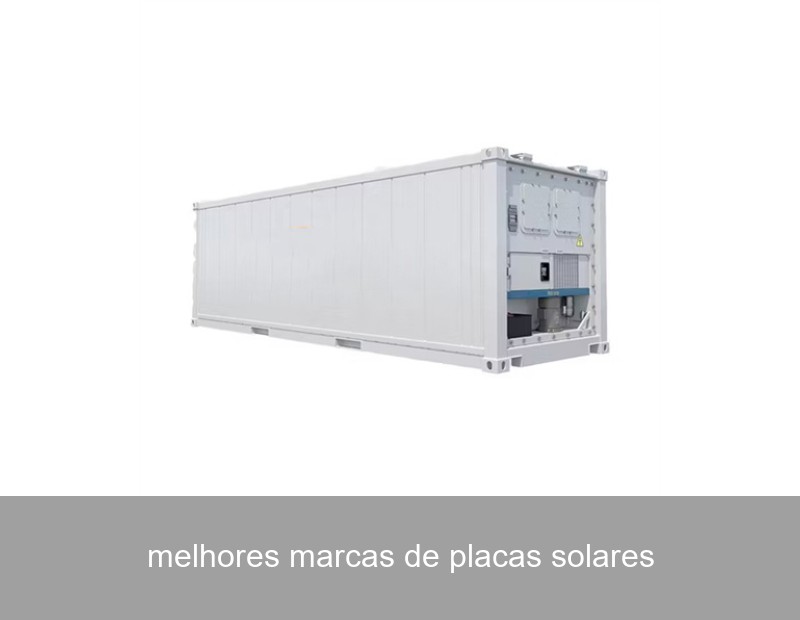
Image: A commercial-scale battery storage system enabling energy independence. Source: Unsplash
Making Your Choice: A Framework for Decision
So, how do you navigate the choice of melhores marcas de placas solares? Follow this framework:
- Define Your Primary Goal: Is it maximum bill savings, energy independence, backup power, or sustainability? Your goal dictates the system design.
- Select a Reputable Installer: A certified installer with experience with multiple top brands will provide honest comparisons and quality craftsmanship. The Solar Energy Industries Association (SEIA) is a good resource for finding certified professionals.
- Evaluate the System Quote, Not Just the Panel: Scrutinize the proposed inverter brand, mounting hardware, and most importantly, the economics of including storage from day one.
- Ask About Integration: Will the proposed system allow for easy addition of storage later? Is the inverter storage-ready? A future-proof design protects your investment.
Highjoule partners with leading installers across Europe and the U.S., providing them with the advanced storage technology and design support to create truly optimized systems for their clients. We believe the best solar investment pairs superior generation with intelligent management.
The Open Question: What Will Your Energy Do When the Sun Goes Down?
You're now equipped to look beyond the brand name and think in terms of a complete energy solution. The most efficient solar panels in the world still have an inherent limitation: the sun's cycle. The next-generation question isn't just "which panels?" but "how will I use every kilowatt-hour I produce?"
Are you ready to explore how intelligent storage can unlock the full potential of your solar investment, making your chosen panels work smarter and harder for you, 24 hours a day?
 Inquiry
 Online Chat