


Unlocking Maximum Solar Potential: A Deep Dive into the 550W Monocrystalline PERC Panel
Have you noticed the solar panels on rooftops and in large-scale farms getting larger and more powerful? It's not an illusion. The industry is rapidly moving towards higher-wattage modules to maximize energy harvest per square meter. At the forefront of this evolution is the 550W monocrystalline PERC panel. This isn't just an incremental upgrade; it represents a significant leap in photovoltaic technology, offering higher efficiency and better performance, especially in real-world conditions with varying light and temperature. But to truly harness the power of these advanced panels, you need a storage and management system that matches their intelligence. That's where the synergy between cutting-edge solar generation and advanced energy storage becomes critical for homeowners and businesses alike.
Table of Contents
- What is a 550W Monocrystalline PERC Panel?
- Why Higher Wattage and PERC Technology Matter
- Beyond the Panel: System Synergy is Everything
- Real-World Impact: A Case Study from Spain
- Future-Proofing Your Solar Investment
What Exactly is a 550W Monocrystalline PERC Solar Panel?
Let's break down this technical-sounding name. Monocrystalline refers to the silicon used: a single, pure crystal structure. This method produces the most efficient and space-efficient silicon cells commercially available, recognizable by their uniform dark color and rounded edges. PERC stands for Passivated Emitter and Rear Cell. It's a clever technological upgrade where a reflective layer is added to the back of the cell. This layer bounces light that would otherwise be lost back into the silicon, giving it a second chance to be converted into electricity. This simple addition boosts efficiency by 1% or more—a huge gain in the solar world.
Combine high-purity monocrystalline silicon with PERC technology, and you get a cell that is exceptionally good at converting sunlight into power. Now, pack more of these high-efficiency cells into a larger, but now standard-sized, panel format, and you arrive at the impressive 550-watt (W) power rating. Essentially, you're getting more kilowatt-hours from the same rooftop or ground space.

Image Source: Unsplash - A close-up view of high-efficiency monocrystalline solar cells.
Why Higher Wattage and PERC Technology Are Game Changers
The shift to 550W+ panels is driven by powerful economics and practical benefits:
- Lower Balance of System (BOS) Costs: Fewer panels are needed to reach a target system size. This means fewer racks, less wiring, less labor for installation, and reduced land/roof space requirements.
- Improved Performance in Low-Light & High Heat: PERC cells are particularly good at capturing diffuse light (on cloudy days or early mornings) and have better temperature coefficients, meaning they lose less efficiency on a scorching summer day compared to standard panels.
- Maximized ROI: Higher energy yield per installation directly translates to faster payback periods and greater savings or revenue over the system's 25+ year lifespan.
The Critical "Tensite" Factor: It's All About Durability
When discussing high-power panels like the 550W monocrystalline PERC, one term you'll often encounter is tensile strength or related mechanical load ratings (often referred to in industry specs as "tensite" or mechanical stress parameters). Why is this so important? These larger, denser panels are heavier and experience significant stress from wind, snow, and their own weight over decades. A panel's mechanical durability ensures it won't crack or degrade under these physical loads, safeguarding your long-term investment. When evaluating panels, always check their certification for mechanical load (e.g., 5400Pa wind/snow load). A robust frame and high-quality manufacturing are non-negotiable for a 25-year product.
Beyond the Panel: Why System Synergy is Everything
Here's a crucial insight many miss: An advanced panel is only as good as the system it's connected to. A 550W panel operating at peak noon produces a significant amount of DC power. If your inverter, charge controller, or battery system isn't optimized to handle that higher input efficiently, you're leaving energy—and money—on the table.
This is where Highjoule's expertise becomes pivotal. As a leader in advanced energy storage since 2005, we don't just see the panel; we see the entire energy ecosystem. Our HPS Series Hybrid Power Systems and IntelliBESS Commercial Battery Systems are engineered with precisely these high-density solar arrays in mind. They feature:
- High-voltage DC inputs that pair seamlessly with strings of 550W+ panels, minimizing conversion losses.
- Advanced Maximum Power Point Tracking (MPPT) algorithms that continuously extract the absolute maximum power from your PERC panels, even as weather conditions change.
- Scalable battery storage that captures every excess kilowatt-hour for use at night or during peak utility rate periods, ensuring none of your premium solar production goes to waste.
For residential applications, our Home Energy Hub integrates solar, storage, and smart home management into one sleek unit, providing homeowners with independence and resilience without compromising on aesthetics or simplicity.

Image Source: Unsplash - A modern home equipped with solar panels and a wall-mounted battery storage system.
Real-World Impact: A Case Study from Valencia, Spain
Let's move from theory to practice. In 2023, a medium-sized winery in the Valencia region of Spain faced rising energy costs and an unreliable grid that threatened its temperature-sensitive fermentation process. Their goal was energy independence and cost stabilization.
| Project Component | Specification |
|---|---|
| Solar Array | 120 x 550W Monocrystalline PERC Panels (66 kWp total) |
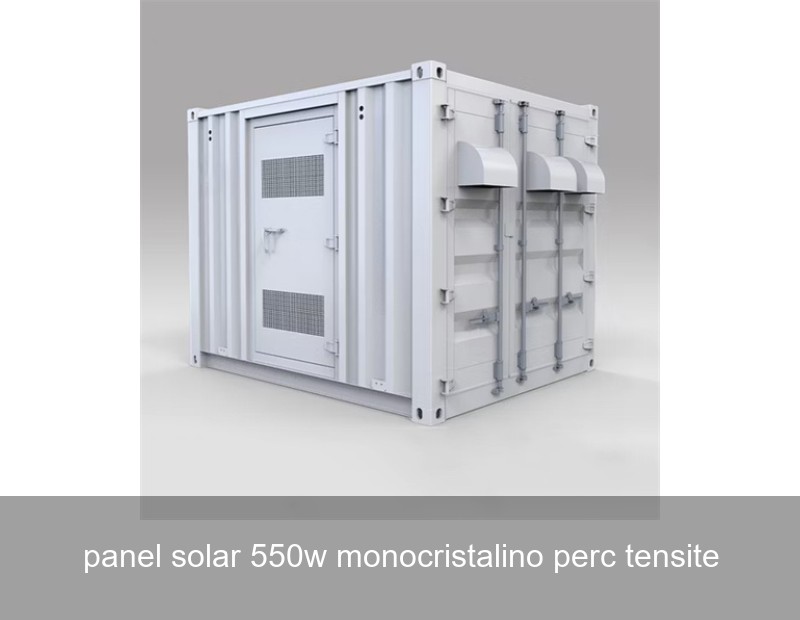
| Storage & Management | Highjoule IntelliBESS 100 kWh containerized system with integrated bi-directional inverter |
| Primary Challenge | High afternoon cooling loads and peak utility demand charges |
The high-efficiency 550W panels allowed them to install the needed capacity on their limited roof space. However, the key to success was the Highjoule system's intelligent energy management. The system was programmed to:
- Use solar power directly during the day to run operations and chillers.
- Charge the battery with excess solar, avoiding grid feed-in at low tariffs.
- Dispatch stored energy during the late afternoon/evening peak grid demand period, completely avoiding punitive demand charges.
- Provide seamless backup power during grid outages, protecting the wine production.
The Result? In the first year, the winery achieved a 92% reduction in grid consumption during peak hours and is on track for a return on investment in under 6 years. Their energy costs are now predictable, and their production is protected. (Source: IRENA - International Renewable Energy Agency) reports consistently show that solar-plus-storage projects deliver the highest value in commercial applications with time-of-use rates, just like this one.
Future-Proofing Your Solar Investment
The solar industry is innovating at a breakneck pace. Choosing a 550W monocrystalline PERC panel today is a step towards future-proofing, but your storage and management system must be equally forward-thinking. Highjoule's systems are designed with software-upgradable platforms. As new panel technologies emerge (like TOPCon or HJT), our firmware can be updated to optimize for their unique performance characteristics. This ensures your entire energy asset remains at peak performance for its entire lifespan.
Furthermore, for microgrid and large-scale industrial applications, our platform enables participation in grid services like frequency regulation, turning your solar+storage system from a cost center into a potential revenue stream. You can learn more about the grid-stabilizing potential of advanced storage from the National Renewable Energy Laboratory (NREL).

Image Source: Unsplash - A large-scale solar farm utilizing high-efficiency panels.
Ready to Harness the Full Power of Your Solar Potential?
The journey to true energy independence and maximized savings isn't just about buying the highest-wattage panel. It's about designing a holistic system where generation, storage, and intelligence work in perfect harmony. As you consider upgrading to or installing a system with 550W monocrystalline PERC panels, what strategy will you employ to ensure not a single watt of that premium power is wasted?
 Inquiry
 Online Chat