


Decoding the Price of BESS with Battery: A Smart Investor's Guide
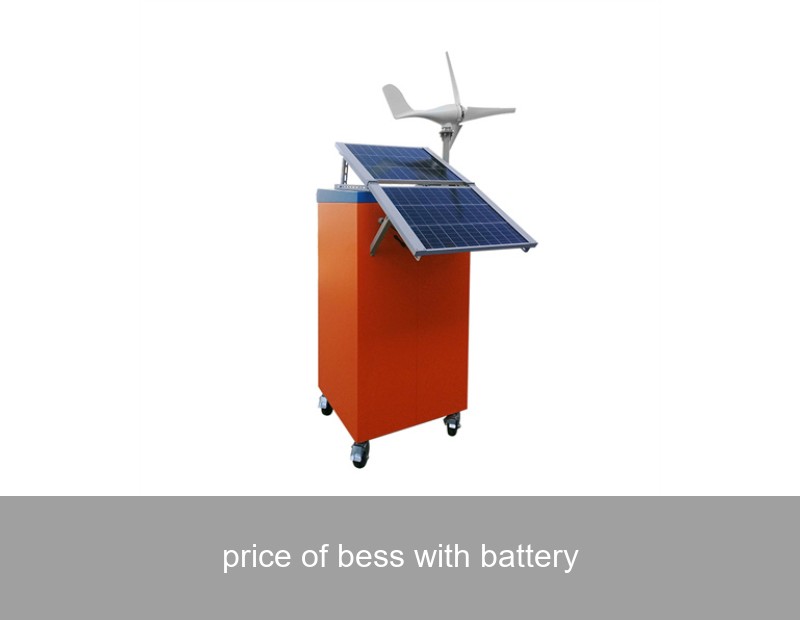
If you're exploring energy storage, you've undoubtedly asked the question: "What is the actual price of BESS with battery?" It's a crucial starting point, but here's the professional insight: the quoted dollar-per-kilowatt-hour figure is just the tip of the iceberg. The true cost—and value—of a Battery Energy Storage System (BESS) is a multifaceted equation involving technology, performance, longevity, and intelligence. For businesses and communities in Europe and the U.S. navigating the energy transition, understanding this holistic price is key to unlocking resilience, sustainability, and significant long-term savings. Let's peel back the layers.
Key Components That Shape the Price of BESS with Battery
Think of a BESS not as a simple commodity, but as a sophisticated, integrated power asset. Its price is a sum of several critical parts, each with its own cost drivers.
- The Battery Cells Themselves (The Core): This is often the largest single cost component. Prices vary by chemistry. While lithium-ion phosphate (LFP) has become the dominant choice for stationary storage due to its safety, longevity, and reducing cost curve, other factors like energy density and charge/discharge rates also play a role. Global commodity prices for lithium, cobalt, and nickel can cause fluctuations.
- The Battery Management System (BMS - The Brain): A top-tier BMS is non-negotiable. It's the guardian of your investment, ensuring each cell operates within safe limits, balancing the pack, and maximizing cycle life. A cheaper, inferior BMS can lead to premature degradation and safety risks, dramatically increasing the long-term price of BESS with battery ownership.
- The Power Conversion System (PCS - The Muscle): This inverter/rectifier handles the conversion between DC (battery) and AC (grid/building) power. Its efficiency rating (e.g., 98.5% vs. 97%) directly impacts how much stored energy you can actually use. Higher efficiency and advanced grid-support features add cost but deliver superior value.
- System Integration & Thermal Management (The Support System): This includes enclosures, cooling systems (air or liquid), fire suppression, and safety disconnects. A robust design for your specific climate (from Scandinavian winters to Arizona summers) ensures reliability and prevents costly downtime.
- Energy Management Software (The Intelligence): This is where modern BESS transforms from a simple battery to a revenue-generating asset. Advanced software enables automated control for peak shaving, time-of-use arbitrage, frequency regulation, and seamless integration with solar PV. The sophistication of this software is a major differentiator in system value.

Image Source: Unsplash (Professional photography of energy storage system components)
Why Highjoule's Approach to System Design Matters
At Highjoule, we engineer our systems with a Total Cost of Ownership (TCO) perspective. We integrate industry-leading LFP battery cells with our proprietary, adaptive BMS and high-efficiency PCS. Our Helios™ energy management platform is the cornerstone, allowing commercial and industrial clients to strategically dispatch stored energy for maximum financial return. This integrated, intelligent design ensures that the upfront price of BESS with battery translates into a lower lifetime cost and a faster payback period.
Beyond the Sticker Price: The Real Cost of Ownership
To make a sound investment, you must look beyond CAPEX. Consider these operational and financial factors:
| Cost Factor | Impact on Lifetime Cost | Highjoule's Mitigation Strategy |
|---|---|---|
| Cycle Life & Degradation | A system that retains 70% capacity after 6,000 cycles is far more valuable than one that degrades after 3,000 cycles. | We use LFP chemistry rated for 8,000+ cycles and employ predictive analytics in our BMS to optimize cycle life. |
| Round-Trip Efficiency (RTE) | A 4% difference in RTE (94% vs. 90%) means 4% more lost energy—and lost revenue—every single cycle. | Our system design targets >94% RTE, ensuring more of the energy you pay to store is delivered for use. |
| O&M & Warranty | Unplanned maintenance and short warranty periods can lead to unbudgeted expenses. | We offer comprehensive 10-year performance warranties and remote monitoring to predict and prevent issues. |
| Revenue Stacking Potential | A "dumb" battery can only do one job. A smart BESS can generate multiple revenue streams. | The Helios™ platform is designed for multi-market value stacking, from demand charge reduction to grid services. |
Case Study: The Real Price of BESS in Action for a European Factory
Let's ground this discussion with real data. A major automotive parts manufacturer in Germany faced volatile energy prices and steep grid demand charges that significantly impacted operating costs. Their goal was to stabilize energy expenses and support their corporate sustainability mandate.
The Project: Highjoule deployed a containerized 1.2 MWh GridMax™ BESS, integrated with the site's existing solar PV array and controlled by the Helios™ platform.
The Financial & Operational Outcome (First 12 Months):
- Demand Charge Reduction: By strategically discharging the battery during peak load periods, the site reduced its peak grid draw by 35%, saving over €85,000 annually in demand charges alone.
- Solar Self-Consumption Optimization: The system increased the consumption of on-site solar generation from 55% to over 90%, reducing grid electricity purchases.
- Payback Period: When accounting for all revenue streams and savings, the calculated simple payback period for the system's upfront price of BESS with battery fell under 5 years—well within the investment criteria. The system's 10+ year design life ensures years of positive cash flow thereafter.

Image Source: Unsplash (Industrial setting with solar and storage)
This case exemplifies how the intelligent application of storage transforms a capital expense into a strategic asset. You can explore more on the drivers of industrial energy costs in Europe from sources like the International Renewable Energy Agency (IRENA).
Future Trends: Where is the Price of BESS with Battery Heading?
Industry analysts, such as those at BloombergNEF, project a continued decline in the per-kWh cost of battery packs through this decade, driven by manufacturing scale, supply chain optimization, and technological improvements. However, for complete systems, the trend is towards value enhancement rather than just cost reduction.
- Grid-Forming Inverters: Future BESS will need to actively stabilize grids with high renewable penetration, a feature that adds capability and cost.
- Second-Life Batteries: Using batteries from EVs in stationary storage could lower entry costs for some applications, though with considerations for performance and lifespan.
- AI-Driven Optimization: Software intelligence will become even more critical, maximizing value in increasingly complex energy markets.
Highjoule's R&D is focused on these very trends, ensuring our clients' investments are future-proofed against evolving grid requirements and market structures.
Choosing the Right BESS for Your Investment
So, how do you navigate this complex landscape? Start by asking the right questions that go beyond the simple price of BESS with battery:
- What is my primary use case? (Peak shaving, backup, renewable integration, grid services?)
- What is the required cycle life and warranty to meet my financial model?
- How intelligent is the software? Can it adapt to changing tariffs and grid conditions autonomously?
- Does the provider have proven, bankable references in my region and for my application?
Highjoule's team of experts works with you from the initial consultation through to long-term operation. We model your specific load, tariff, and generation profile to provide a transparent TCO analysis and a clear picture of the value our GridMax™ (C&I) and HomePower™ (residential) systems can deliver.
Given the unique energy challenges and opportunities in your region, what would be the first financial or operational goal you'd want a BESS to tackle for your business or community?
 Inquiry
 Online Chat