


Unlocking the Full Potential of Your Solar Investment with a Smart PV Management System
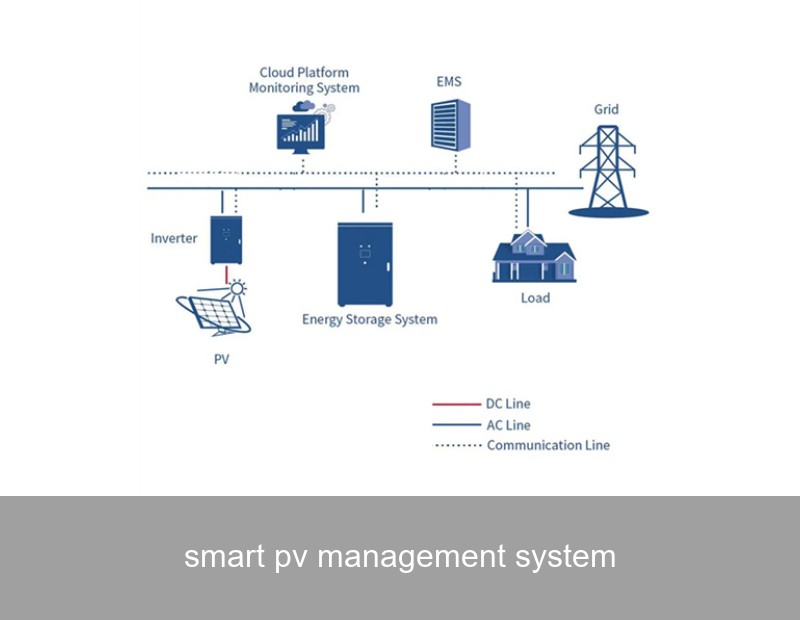
You've made the smart choice to go solar. The panels are on your roof, gleaming under the sun, promising lower bills and a cleaner footprint. But a few months in, you might be asking: "Why is my electricity bill still higher than expected?" or "Is my system really performing as well as it should?" This common experience points to a fundamental truth: solar panels alone are not a set-and-forget solution. The real key to maximizing your return lies in intelligent, real-time control—this is where a Smart PV Management System becomes indispensable. It's the brain that transforms a simple solar array into a resilient, efficient, and truly intelligent power asset.
Table of Contents
- The Phenomenon: The "Solar Gap" Between Expectation and Reality
- The Data: Quantifying Losses in Unmanaged Solar Systems
- The Solution: What is a Smart PV Management System?
- Core Components of an Advanced Smart PV Management System
- A Real-World Case Study: Commercial Bakery in Germany
- Highjoule's Role: Delivering Intelligence for Every Scenario
- Future-Proofing Your Energy Setup
The Phenomenon: The "Solar Gap" Between Expectation and Reality
Many solar system owners experience a "solar gap." This is the disconnect between the theoretical output of your panels and the actual financial and energetic benefits you realize. The causes are often invisible without the right tools: subtle shading over time, inverter inefficiencies, module mismatches, or simply consuming power when the sun isn't shining. Traditional systems lack the visibility and agility to address these issues dynamically, leaving potential savings and kilowatt-hours literally on the table.
The Data: Quantifying Losses in Unmanaged Solar Systems
The financial impact is significant. Studies and field data show that unoptimized residential PV systems can underperform by 10-25% compared to their potential. For commercial and industrial (C&I) sites, where scale amplifies every percentage point, losses can run into tens of thousands of euros or dollars annually. According to the National Renewable Energy Laboratory (NREL), system downtime, mismatches, and suboptimal operation are leading contributors to reduced lifetime energy yield. Furthermore, without smart management, the integration of battery storage becomes less effective, often leading to cycles that don't align with the most expensive tariff periods.

Image source: Unsplash (representative image of solar monitoring)
The Solution: What is a Smart PV Management System?
A Smart PV Management System is an integrated software and hardware platform that continuously monitors, analyzes, and optimizes the performance of your solar array, and when paired, your battery storage. Think of it as a sophisticated energy conductor. It doesn't just collect data; it uses advanced algorithms and weather forecasting to make proactive decisions, ensuring every watt of solar energy is either consumed efficiently, stored strategically, or sold back to the grid at the most profitable time.
Core Components of an Advanced Smart PV Management System
An enterprise-grade system, like those developed by Highjoule, typically includes:
- Advanced Monitoring & IoT Sensors: Granular, real-time data collection from every string, inverter, and meter.
- AI-Powered Analytics Engine: Identifies performance degradation, predicts issues, and provides actionable insights.
- Dynamic Energy Management System (EMS): The core logic that automates energy flows based on consumption patterns, tariffs, and weather forecasts.
- User-Friendly Dashboard: Provides clear visibility into system health, energy independence, and savings via web or mobile app.
- Grid & Market Interaction Interface: Enables participation in demand response programs or virtual power plants (VPPs).
| Feature | Traditional PV System | PV System with Smart Management |
|---|---|---|
| Performance Visibility | Basic, often delayed totals | Real-time, granular, per-module insights |
| Fault Detection | Reactive (after failure) | Proactive (alerts on deviation) |
| Self-Consumption Optimization | None or static | Dynamic, learning household/business patterns |
| Battery Integration | Simple time-based control | AI-driven, tariff-optimized cycling |
| ROI Maximization | Limited | Maximized via multiple value streams |
A Real-World Case Study: Commercial Bakery in Bavaria, Germany
Let's look at a concrete example. A mid-sized bakery in Munich with a 200 kWp rooftop solar system and a 100 kWh battery was experiencing high grid consumption during morning peaks, despite having storage. Their system operated on a simple timer.
The Intervention: Highjoule's team deployed its Neuron Smart EMS platform. The system was integrated with the site's smart meters, inverters, and battery. The AI was fed local utility tariffs (high peaks from 7-12 AM) and precise production forecasts.
The Data-Driven Outcome: Within one month, the Smart PV Management System reconfigured the energy flow logic. Instead of charging the battery indiscriminately, it began holding a reserve from the previous afternoon specifically for the morning production peak. It also slightly curtailed non-essential loads during the absolute peak 30 minutes.
The Results:
- Grid Peak Demand Reduction: 40% reduction during expensive morning hours.
- Self-Consumption Rate Increase: From 68% to 89%.
- Annual Savings Increase: An additional €8,200 saved on top of previous solar savings, improving the battery ROI by 2.5 years.
- Fault Prevention: The system detected a degrading string combiner box, prompting maintenance before it caused downtime.
This case, documented in a Fraunhofer ISE energy spotlight report on C&I flexibility, exemplifies the tangible value of intelligent management.

Image source: Unsplash (representative image of commercial solar installation)
Highjoule's Role: Delivering Intelligence for Every Scenario
Since 2005, Highjoule has been at the forefront of solving complex energy challenges. Our expertise lies in designing Smart PV Management Systems that are not one-size-fits-all but tailored to the unique load profiles and goals of our clients across Europe and North America.
For residential customers, our Home Energy Hub seamlessly integrates solar, battery, and EV charging, providing effortless optimization through an intuitive app. For commercial and industrial clients, the Highjoule Neuron Platform offers enterprise-level control, enabling participation in grid-balancing schemes and providing robust resilience for microgrid applications. We provide the full stack: from consultancy and design to advanced hardware and the continuous software intelligence that makes it all work harmoniously.
Future-Proofing Your Energy Setup
Investing in a smart system today prepares you for the energy landscape of tomorrow. As grids evolve and move towards time-of-use tariffs and dynamic pricing, your system will automatically adapt. It also creates a pathway to join a Virtual Power Plant (VPP), where your aggregated assets can contribute to grid stability and generate additional revenue—a concept gaining rapid traction in markets like California, Texas, and across the EU.
The International Energy Agency (IEA) emphasizes digitalization as a critical pillar for secure and sustainable solar growth. A Smart PV Management System is the embodiment of this digitalization at the consumer and producer level.
So, while your solar panels capture the sun's energy, the true question is: Is your system intelligently harnessing that energy to its fullest economic and operational potential for your specific needs? The difference between a good solar investment and a great one lies in the intelligence behind the panels.
 Inquiry
 Online Chat