


Understanding Solar Power Tanzania Price: A Guide to Sustainable Energy Investment
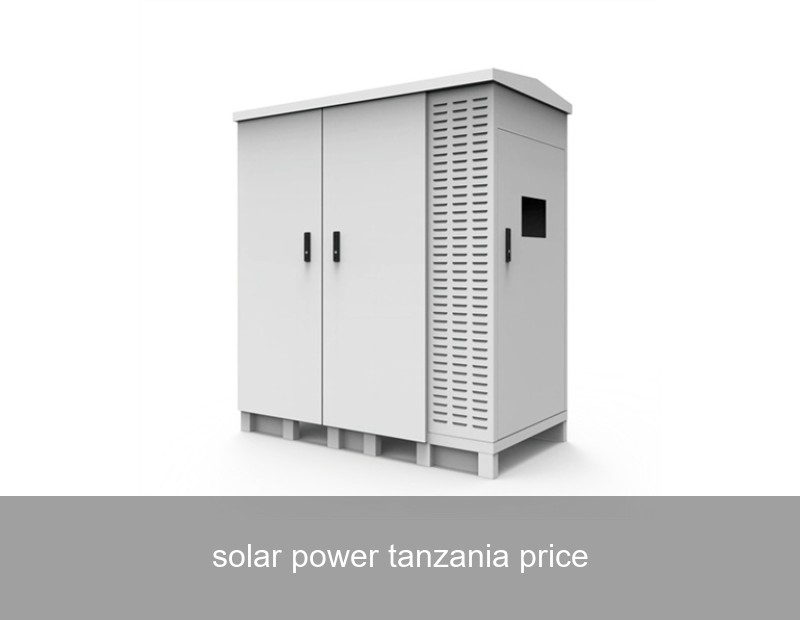
When exploring the "solar power Tanzania price," you're not just looking at a number. You're investigating a key to unlocking energy independence, economic growth, and a sustainable future for homes and businesses across Tanzania. The initial price tag is just the beginning of a story about long-term value, reliability, and smart technology. This article will demystify the costs, showcase real-world impact, and highlight how advanced energy storage is transforming the solar equation in Tanzania and beyond.
Table of Contents
- The Phenomenon: Tanzania's Solar Surge
- Breaking Down the Costs: More Than Just Panels
- The Game-Changer: Energy Storage's Role in Value
- Case Study: A Tanzanian Agri-Business Transformation
- Highjoule's Smart Solutions for the Tanzanian Market
- The Future Outlook for Solar in Tanzania
The Phenomenon: Tanzania's Solar Surge
Tanzania, with its abundant sunshine averaging over 2,800 hours per year, presents a perfect canvas for solar energy. Yet, for many businesses and households, grid connection remains unreliable or unavailable. The phenomenon is clear: a nation poised for an energy revolution, where solar power is not just an alternative but a primary, pragmatic solution for powering growth, education, and healthcare.
The conversation around "solar power Tanzania price" often starts with the challenge of upfront investment. However, the real narrative is about shifting from a cost-centric view to a value-centric one. What are you truly paying for? You're investing in predictable power, operational resilience, and freedom from volatile fuel costs and grid outages.
Breaking Down the Costs: More Than Just Panels
A functional solar power system's price is a composite of several critical components, each influencing performance and longevity.
- Photovoltaic (PV) Panels: The most visible component. Prices vary by efficiency, brand, and technology (monocrystalline, polycrystalline).
- Mounting Structures & Installation: Engineering for durability against local weather conditions is crucial.
- Inverters: The brain of the system, converting DC solar power to usable AC power.
- The Critical Component: The Battery Energy Storage System (BESS): This is where the real magic happens for off-grid and backup applications. A high-quality BESS stores excess solar energy for use at night or during cloudy periods, maximizing self-consumption and ensuring 24/7 power availability.
When evaluating the solar power Tanzania price, a system with integrated, intelligent storage will have a higher initial cost but delivers exponentially more value over its 15-25 year lifespan by providing consistent, usable power.

Credit: A solar installation in East Africa. The integration of reliable storage is key to maximizing the value of such systems. (Source: Unsplash)
The Game-Changer: Energy Storage's Role in Value
Think of it this way: solar panels are excellent at generating electricity, but only for about 5-8 peak hours a day. Without storage, any excess energy is often wasted, and you have no power when the sun goes down. This drastically reduces the return on your solar investment.
An advanced Battery Energy Storage System (BESS) solves this. It captures surplus daytime energy, making it available on-demand. This transforms the economics:
- Increased Self-Consumption: Use more of the solar energy you produce, reducing reliance on generators or the grid.
- Enhanced Reliability: Seamless backup power during grid failures, critical for businesses and clinics.
- Long-Term Savings: Drastically cuts or eliminates diesel generator fuel and maintenance costs.
Therefore, the most insightful discussion about "solar power Tanzania price" must center on the Levelized Cost of Energy (LCOE)—the total lifetime cost of the system divided by the total energy it produces. A solar-plus-storage system with a slightly higher upfront cost often has a lower LCOE than a panels-only system or a diesel generator, because it delivers cheap, solar energy around the clock. According to the International Renewable Energy Agency (IRENA), the cost of battery storage has fallen by over 80% in the last decade, making solar-plus-storage more viable than ever.
Case Study: A Tanzanian Agri-Business Transformation
Let's look at real data. Consider "GreenGrowth Farms," a medium-sized horticulture exporter near Arusha. Their challenge: unreliable grid power threatened cold storage facilities, risking spoilage of high-value produce. Diesel generators were expensive and noisy.
Solution & Data: In 2022, they installed a 50 kW solar PV system coupled with a 120 kWh lithium-ion battery storage system.
| Metric | Before Solar+Storage | After Solar+Storage |
|---|---|---|
| Monthly Energy Cost | ~$3,200 (Grid + Diesel) | ~$450 (System Maintenance) |
| Estimated Annual Savings | - | > $33,000 |
| Power Availability for Cold Storage | 14-16 hours/day | 24/7 |
| CO2 Emissions | ~48 tonnes/year | ~3 tonnes/year |
| Payback Period | - | Estimated 4-5 years |
The "solar power Tanzania price" for GreenGrowth was a significant but calculated investment. The integrated storage system ensured their cold storage never faltered, protecting revenue and allowing them to meet stringent export standards. The project's success hinged not just on the panels, but on the intelligence and resilience of the storage system.
Highjoule's Smart Solutions for the Tanzanian Market
This is where Highjoule, as a global leader in advanced energy storage since 2005, brings critical expertise to the Tanzanian context. We understand that a successful solar investment in Tanzania requires products built for the environment and applications at hand.
For commercial and industrial clients like GreenGrowth Farms, our H-Series Commercial Energy Storage Systems are ideal. They feature:
- High-Cycle Life Lithium-Ion Chemistry: Optimized for daily charge/discharge cycles in demanding climates.
- Integrated Smart Energy Management (iSEM): Our proprietary software intelligently manages energy flow between solar, battery, grid, and loads, prioritizing solar self-consumption and ensuring critical loads are always powered.
- Robust Design: Built to withstand high ambient temperatures and dusty conditions common in East Africa.
- Scalability: Systems can be scaled from tens to hundreds of kWh to match growing energy needs.
For larger-scale applications like microgrids for villages or telecom towers, Highjoule's Containerized Megawatt-Scale BESS provides a turn-key, utility-grade solution. Our approach goes beyond hardware; we partner with local integrators to provide design support, technical training, and a global warranty, ensuring the long-term performance and serviceability of your system. This comprehensive support structure is a vital part of securing your investment and achieving the promised return.

Credit: A modern, scalable Battery Energy Storage System (BESS), similar to Highjoule's solutions, enables reliable 24/7 renewable power. (Source: Unsplash)
The Future Outlook for Solar in Tanzania
The trend is undeniable. With supportive policies and continued cost declines, solar-plus-storage will become the default choice for new electrification projects. The World Bank and other development partners are actively funding renewable projects in the region, recognizing their role in sustainable development. The question is evolving from "What is the solar power Tanzania price?" to "What is the optimal system design to meet my specific energy security and financial goals for the next 20 years?"
Making the Right Investment
When you request quotes for a solar system, don't just compare the price per watt of the panels. Insist on a detailed lifecycle analysis that includes:
- A high-performance, cycle-life rated battery storage system.
- Intelligent energy management software.
- Total projected energy output and savings over 10+ years.
- Partnering with providers, like Highjoule and its certified integrators, who offer proven technology and long-term support.
The most expensive system can be the one that fails when you need it most. True value lies in resilience and predictable performance.
Ready to move beyond the basic price quote and design a solar-plus-storage system that delivers true energy independence for your Tanzanian operation? What would 24/7 clean power do for your business productivity or community services?
 Inquiry
 Online Chat